In this guide
- What this guide covers
- Key points at a glance
- What is dietary fiber?
- How much fiber per day (evidence-based targets)
- Common dietary fiber foods and fiber per-portion examples
- Practical daily menu examples (approximate fiber totals)
- Fiber increase checklist
- How to increase fiber gradually (strategy and timeline)
- Comparing food sources: whole foods vs supplements
- Whole foods versus supplements
- How to compare products later
- Limitations, side effects, and when to ask a clinician
- How to compare products later
- Bottom line
- Editorial note
- References
- Fiber portions in context
- Related VitaEvidence reading
Dietary fiber is the indigestible part of plant foods that supports digestion, helps regulate blood sugar and cholesterol, and contributes to feeling full. This guide explains common dietary fiber foods, evidence-based daily targets, simple swaps and meal ideas, and safe ways to raise intake without discomfort.
What this guide covers
- What dietary fiber is and the difference between soluble and insoluble fiber.
- Evidence-based daily targets for most adults and practical food examples that meet those targets.
- A stepwise plan to increase fiber gradually and reduce side effects.
- How to compare packaged products and supplements, and when to ask a clinician.
Key points at a glance
- Aim for the Academy of Nutrition and Dietetics/DRI targets: about 25 g/day for adult women and 38 g/day for adult men (lower targets for older adults); actual needs vary by calorie intake and age [1].
- Eat a variety of fiber-containing foods (whole grains, fruits, vegetables, legumes, nuts and seeds) rather than relying only on supplements [2][3].
- Increase fiber gradually over 1–4 weeks and drink more fluids to reduce bloating, gas, and constipation [2].
- Soluble fiber (oats, barley, legumes, fruit) dissolves in water and can help lower LDL cholesterol and slow blood sugar spikes; insoluble fiber (whole grains, wheat bran, vegetables) adds bulk and helps stool pass [1][2].
- Ask a clinician before large changes in fiber if you are pregnant or breastfeeding, have chronic GI conditions, recent surgery, kidney disease, or take certain medicines (e.g., some blood-pressure, diabetes, or mineral-binding drugs) [4].
What is dietary fiber?
Dietary fiber includes plant-based carbohydrates that resist digestion in the small intestine. Two broad types matter for health and recipes:
– Soluble fiber: forms a gel-like material in the gut; found in oats, barley, beans, lentils, apples, citrus, and psyllium. It is associated with modest reductions in blood LDL cholesterol and slower blood glucose rises after meals [1][2].
– Insoluble fiber: does not dissolve in water; found in whole-wheat flour, wheat bran, many vegetables, and whole grains. It increases stool bulk and can speed intestinal transit, which helps prevent constipation [1][2].
Most whole foods contain a mix of both types; food labels rarely list the split.
How much fiber per day (evidence-based targets)
- Adult women (19–50 years): about 25 g/day; men (19–50 years): about 38 g/day. Needs decrease slightly after age 50 (women ~21 g, men ~30 g) [1].
- The Dietary Guidelines for Americans and the U.S. Department of Agriculture recommend meeting fiber targets through a mix of fruits, vegetables, whole grains, and legumes rather than supplements when possible [2][3].
- For children, pregnant or breastfeeding people, and older adults, follow age- and condition-specific guidance and consult a clinician for personalized targets [1][2].
Common dietary fiber foods and fiber per-portion examples
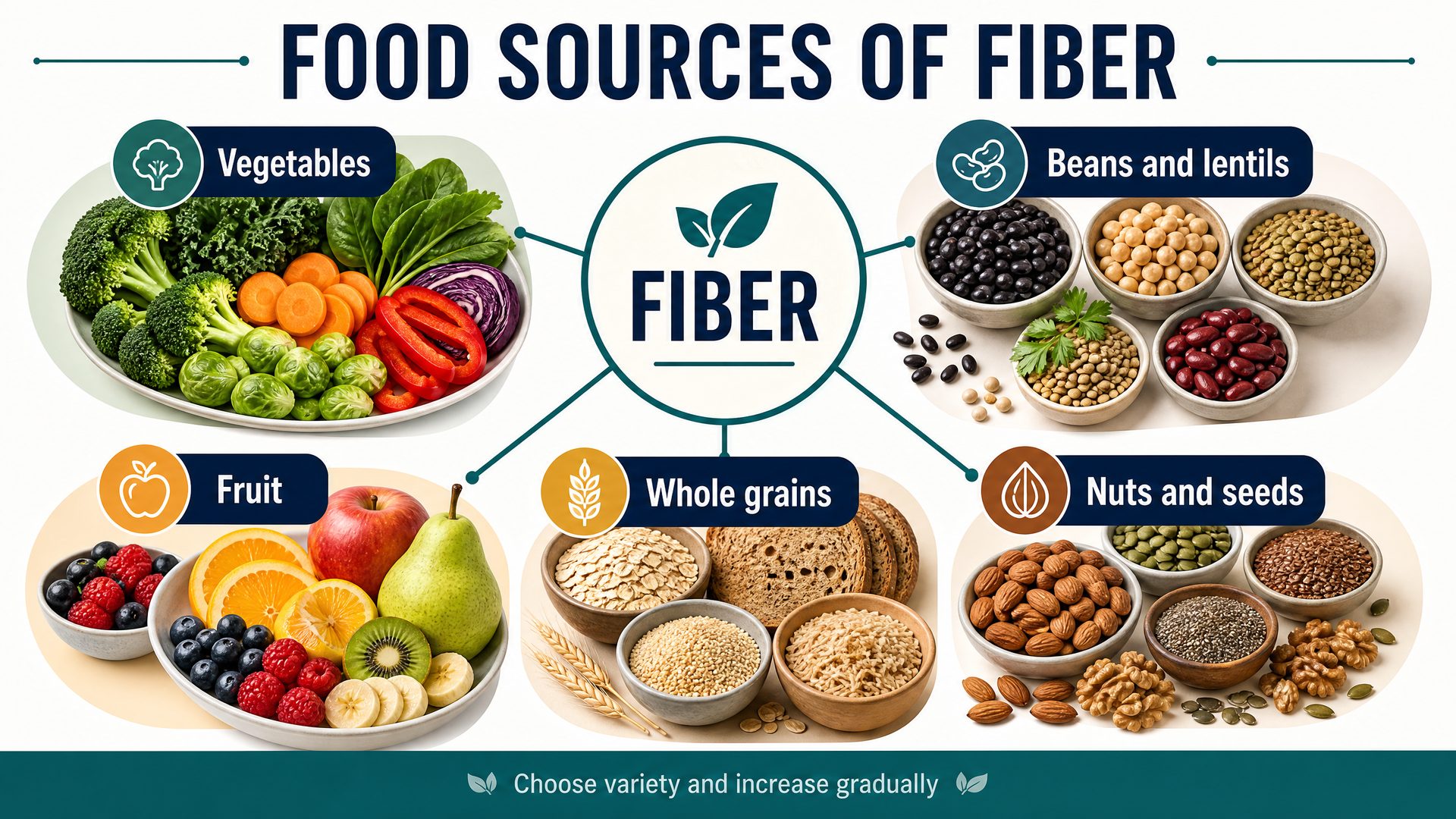
(Note: values are approximate; check product labels for exact numbers.)
– Oats (1/2 cup dry rolled oats): ~4 g soluble + insoluble.
– Beans and lentils (1/2 cup cooked): 6–9 g.
– Whole-grain bread (1 slice): 2–4 g.
– Brown rice (1 cup cooked): 3–4 g.
– Apple with skin (medium): ~4–5 g.
– Pear with skin (medium): ~5–6 g.
– Broccoli (1 cup cooked): ~5 g.
– Chia seeds (1 tablespoon): ~5 g (mostly soluble gel-forming fiber).
– Almonds (1 oz / ~23 nuts): ~3 g.
Use these examples to build meals that sum to your daily target.
Practical daily menu examples (approximate fiber totals)
Fiber increase checklist
- Add one manageable high-fiber choice.
- Increase portions gradually.
- Include fluids as appropriate.
- Monitor comfort and adjust with professional guidance if needed.
- Lower end adult target (~25–30 g):
- Breakfast: 1/2 cup oats with berries + 1 Tbsp chia (8–10 g)
- Lunch: whole-grain sandwich with vegetables + side salad (6–8 g)
- Snack: apple with peanut butter (4–5 g)
- Dinner: brown rice + steamed broccoli + chicken (5–7 g)
- Higher end adult target (~35–40 g):
- Breakfast: overnight oats with 2 Tbsp chia, banana, walnuts (10–12 g)
- Lunch: large salad with chickpeas, quinoa, mixed vegetables (10–12 g)
- Snack: pear + handful of almonds (6–8 g)
- Dinner: lentil soup + whole-grain roll (8–10 g)
These are illustrative; adjust portions and food choices to meet personal calorie needs.
How to increase fiber gradually (strategy and timeline)
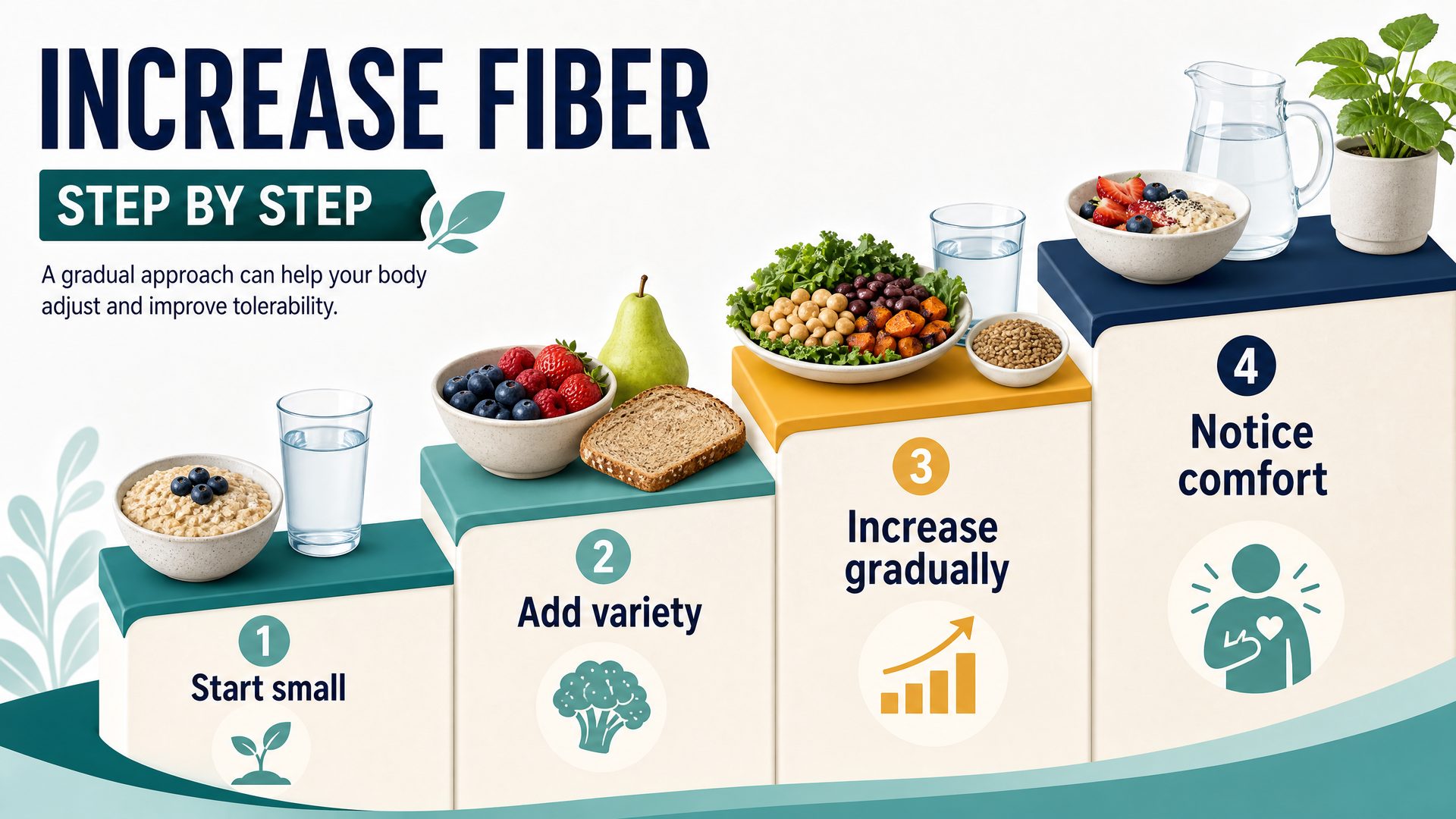
- Start slow: add 2–5 g of fiber per day every 3–4 days until you reach your target. This timeline helps your gut bacteria adapt and reduces gas and bloating.
- Increase fluids: higher fiber needs more water—aim to drink a little more than usual (unless your clinician advises fluid restriction).
- Mix types: include both soluble (oats, beans, fruits) and insoluble (whole grains, vegetables) fibers for balanced effects.
- Small, sustainable swaps: switch white bread for whole-grain, choose brown rice or barley, add a half-cup of beans to a salad or soup, snack on fresh fruit or raw vegetables instead of processed snacks.
- Use seeds wisely: chia or ground flax add fiber and omega-3s; start with 1 teaspoon to 1 tablespoon and increase over days.
- If using fiber supplements (psyllium, methylcellulose, inulin), follow package directions and add them slowly. Supplements can be helpful for constipation but do not replace a fiber-rich diet.
Comparing food sources: whole foods vs supplements
Whole foods versus supplements
| Option | Key consideration |
|---|---|
| Whole foods | Provide fiber within a broader food pattern. |
| Fiber supplement | Requires attention to product directions and tolerance. |
| Either option | Increase gradually and consider individual needs. |
- Whole foods deliver fiber plus vitamins, minerals, and phytochemicals; they are the preferred first choice for meeting fiber goals [2][3].
- Supplements (psyllium, inulin, wheat dextrin) can relieve constipation or help meet targets when dietary change isn’t possible, but effects and tolerability vary; some fermentable fibers increase gas and discomfort [4].
- Packaged “high-fiber” foods may add isolated fibers but also carry added sugars, fats, or sodium—check the ingredient list and nutrition facts.
How to compare products later
When you look at packaged foods or fiber supplements in the future, compare:
– Total grams of fiber per serving and serving size.
– Type of fiber if listed (psyllium, inulin, oat beta-glucan) and whether the product contains mainly soluble or insoluble fibers.
– Added ingredients: sugars, sodium, artificial sweeteners, or allergens.
– Whole-food vs isolated fiber source; whole-food products usually provide broader nutrients.
– Instructions and recommended fluid intake for supplements.
– Third-party testing or quality seals for supplements and clear manufacturer contact information.
[Affiliate product comparison block—add verified iHerb links after approval]
Limitations, side effects, and when to ask a clinician
- Side effects: rapidly increasing fiber can cause bloating, gas, cramping, and temporary changes in bowel habits. Increasing intake slowly and drinking more fluids usually helps [2].
- Medical conditions: during acute inflammatory bowel disease flare-ups, after certain GI surgeries, or with severe gastroparesis, high-fiber foods may be poorly tolerated; follow clinician or registered dietitian advice.
- Drug interactions: some fiber supplements may affect absorption of certain medicines (take medicines 1–2 hours before or after fiber supplements if advised). Always check with your clinician or pharmacist if you take prescription drugs regularly [4].
- Special populations: pregnant or breastfeeding people, children, older adults, and people with chronic kidney or liver disease should confirm individualized targets and safe strategies with their health care team [1][2].
- Eating disorders: rapid changes in dietary patterns can be risky; seek guidance from a clinician or registered dietitian familiar with disordered eating.
How to compare products later
(See the earlier “How to compare products later” section for label attributes to check, including fiber grams, fiber type, added ingredients, serving size, and testing. For supplements, also check FDA guidance on labeling and safety; dietary supplements are not pre-approved by the FDA for safety or effectiveness before sale [4].)
Bottom line
Most people in the U.S. fall short of evidence-based fiber targets. Meeting those targets is best accomplished by regularly choosing whole grains, fruits, vegetables, legumes, nuts, and seeds across meals. Increase fiber gradually, stay well hydrated, and consult a clinician for tailored advice if you have medical conditions, take regular medications, are pregnant or breastfeeding, or experience persistent digestive symptoms.
Editorial note
VitaEvidence Editorial Team. Last reviewed: August 2026. For general education, not personal medical advice. Read our Editorial Policy.
References
[1] NIH Office of Dietary Supplements — Dietary Fiber. https://ods.od.nih.gov/factsheets/DietaryFiber-Consumer/
[2] U.S. Department of Agriculture & U.S. Department of Health and Human Services — Dietary Guidelines for Americans 2020–2025. https://www.dietaryguidelines.gov/
[3] USDA MyPlate — Grains, Vegetables, Fruits, Legumes resources. https://www.myplate.gov/
[4] U.S. Food and Drug Administration — Dietary Supplements. https://www.fda.gov/food/dietary-supplements