In this guide
This article explains why increasing dietary fiber sometimes causes bloating and gives a practical, stepwise approach to add fiber with fewer side effects. It is a general guide for adults; discuss personal concerns with a health professional.
Why fiber can cause bloating
Fiber includes different types: soluble, insoluble, and fermentable fibers. Some fibers are broken down (fermented) by bacteria in the large intestine. Fermentation produces gas, which can cause pressure, belching, or bloating. Increasing fiber rapidly or changing the mix of fibers you eat may boost fermentation and gas production for a few days to a few weeks.
Reliable sources explain both the benefits of fiber and the common digestive responses. If you have a long-standing digestion issue, ask a clinician for evaluation before making large changes.
Principles for increasing fiber gradually
- Start from your current baseline. Track what you usually eat for a couple of days (meals and snacks). That shows where simple swaps can add fiber.
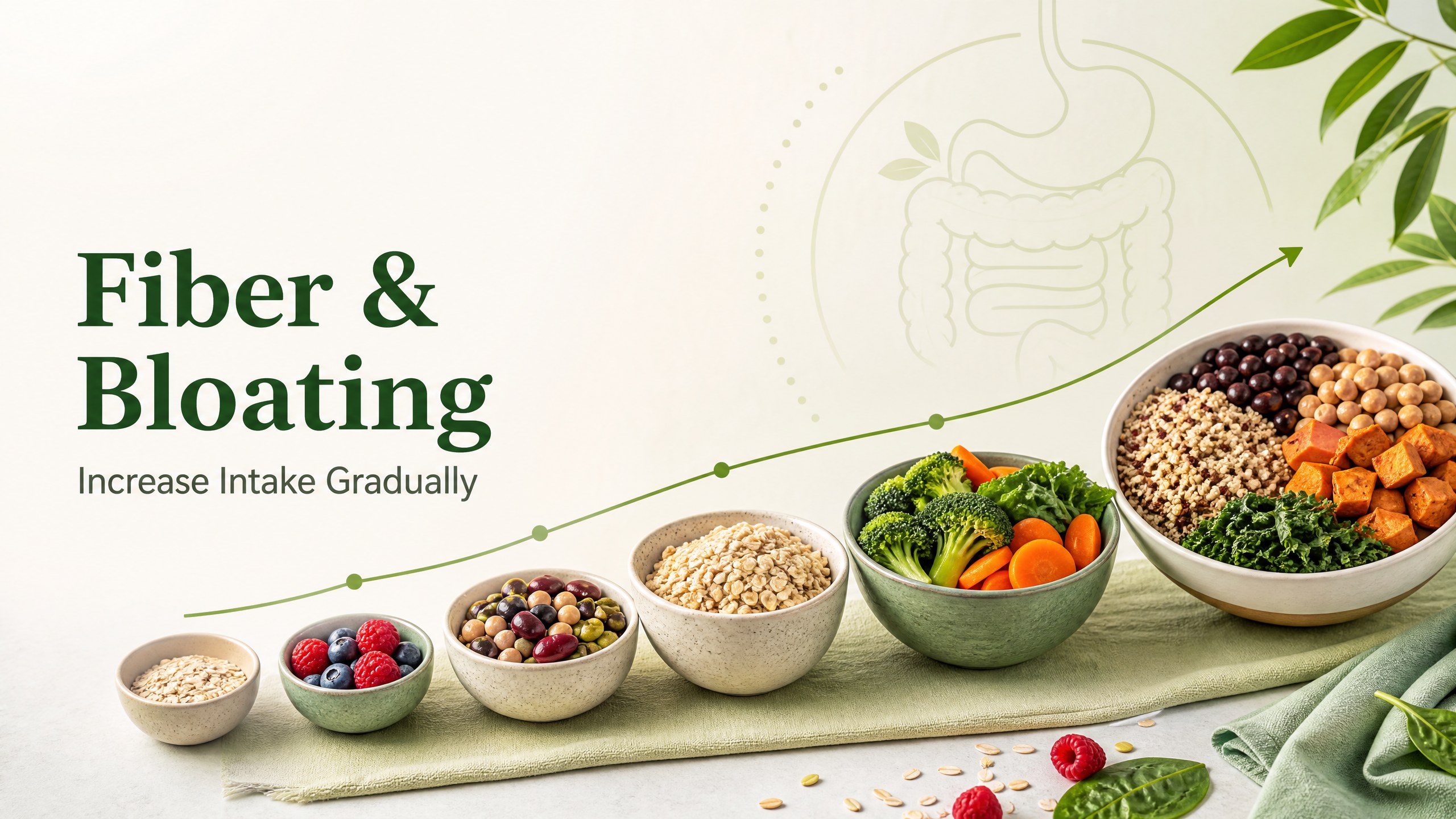
- Make small, steady changes. Add fiber over several days to weeks rather than all at once. Gradual increases give your gut bacteria time to adapt and often reduce gas and bloating.
- Distribute fiber across the day. Spread higher-fiber foods over meals and snacks instead of concentrating them in one meal.
- Match the type of fiber to how you tolerate it. Some people find cooked vegetables and whole-grain cereals easier to tolerate than raw vegetables or certain beans; try different sources.
- Increase fluids and physical activity. Drinking enough water and staying active help fiber move through the digestive tract and can ease bloating for many people.
Practical, stepwise food changes (examples)
Below are modest swaps and additions you can try. Choose one or two changes and keep them for several days before adding more.
- Swap a refined-grain breakfast (white toast or low-fiber cereal) for a whole-grain option or a higher-fiber cereal. Check the Nutrition Facts label for “Dietary Fiber” grams to compare products.
- Add a piece of fruit at breakfast or as a snack (fresh, canned in juice, or thawed frozen fruit).
- Include a vegetable at lunch and dinner; start with cooked vegetables if raw ones cause gas.
- If you eat little or no legumes, add a small portion of well-cooked canned or soaked beans once or twice a week, then increase frequency as tolerated.
- Top yogurt or salads with a tablespoon of nuts, seeds, or ground flaxseed for added fiber and texture.
Cooking tips that may reduce bloating
- Cook vegetables until tender instead of eating them all raw.
- Rinse canned beans and drain the liquid before using; start with small portions and increase gradually.
- Soak and rinse dried legumes and cook thoroughly; canned or pre-cooked legumes are easier for many people.
Using fiber supplements and processed products
Some people use fiber supplements (for example, products containing psyllium or methylcellulose) when food-based changes are not enough. The Office of Dietary Supplements provides information on types of fiber supplements. If you try a supplement, begin with the manufacturer’s recommended dose and increase slowly. Tell your clinician about any supplements because they can interfere with certain medicines or medical conditions.
How to read the label
The Nutrition Facts label lists grams of dietary fiber per serving. Compare products by serving size and fiber grams. A product’s % Daily Value can help you see whether it is a low or higher-fiber choice. For practical swaps, look for cereals, breads, and snacks with several grams more fiber per serving than what you currently eat.
When to seek care
See a healthcare provider promptly for severe abdominal pain, persistent vomiting, fever, blood in stool, unintentional weight loss, or if bloating or bowel changes are new and severe. If you have a chronic condition (for example, an inflammatory bowel disease, recent abdominal surgery, or a swallowing disorder), check with your clinician before making major dietary changes.
Bottom line
Fiber is an important part of a healthy eating pattern, but increasing intake too quickly can cause gas and bloating. Add fiber gradually over days to weeks, distribute it across meals, increase fluids, try different food sources, and consider a supplement only if needed. If symptoms are severe or puzzling, contact a healthcare professional.