In this guide
- What this guide covers
- Key points at a glance
- Dietary fat basics
- Types of fat and what they do
- Calories and portion context
- Foods high in healthy fats — practical examples
- Whole-food sources to emphasize
- Foods to limit or swap out
- Unsaturated vs saturated fat — a simple comparison framework
- Supplements and concentrated sources (omega‑3 oils)
- When they make sense
- Safety and quality notes
- Limitations and when to ask a clinician
- How to compare products later
- Bottom line
- Editorial note
- References
- Related VitaEvidence reading
Healthy fats are types of dietary fat that can support heart health, brain function, and nutrient absorption when chosen in place of less-healthy fats and refined carbohydrates. This guide explains the difference between unsaturated and saturated fats, offers food-based examples, and gives a simple framework for picking foods (and supplements) that fit a healthy eating pattern.
What this guide covers
- Basic biology and dietary roles of major fat types (unsaturated, saturated, trans).
- Practical food examples and swaps that increase healthy-fat intake.
- A comparison framework for choosing packaged foods and supplements.
- Limits, safety notes, and when to ask a clinician.
Key points at a glance
- Unsaturated fats (monounsaturated and polyunsaturated, including omega-3s) are the preferred fats for heart health when they replace saturated fats or refined carbohydrates [1].
- Dietary Guidelines recommend limiting saturated fat to less than 10% of daily calories and choosing oils and foods with unsaturated fats [1,2].
- Whole-food sources—fatty fish, nuts, seeds, avocados, and vegetable oils—provide healthy fats plus vitamins, minerals, and fiber that processed foods often lack [2].
- Packaged-food labels and, for supplements, third-party testing and EPA/DHA content are useful comparison points before buying [3,4].
Dietary fat basics
Types of fat and what they do
- Unsaturated fats: include monounsaturated fats (MUFAs) and polyunsaturated fats (PUFAs). PUFAs include omega-3 and omega-6 fatty acids. Replacing saturated fats with unsaturated fats lowers LDL (“bad”) cholesterol and is associated with reduced cardiovascular risk [1].
- Saturated fats: found mainly in animal fats and some tropical oils. Excessive intake raises LDL cholesterol; DGA recommends keeping saturated fat intake below 10% of calories [1].
- Trans fats: industrially produced partially hydrogenated oils raise cardiovascular risk and are being removed from the food supply; aim to avoid them [1,2].
Calories and portion context
All fats are energy-dense (about 9 kcal/g). Even “healthy” fats can contribute to excess calories if portions are large. Focus on replacing other energy sources (refined carbs, saturated fats) with unsaturated fats rather than simply adding extra fats.
Foods high in healthy fats — practical examples
Whole-food sources to emphasize
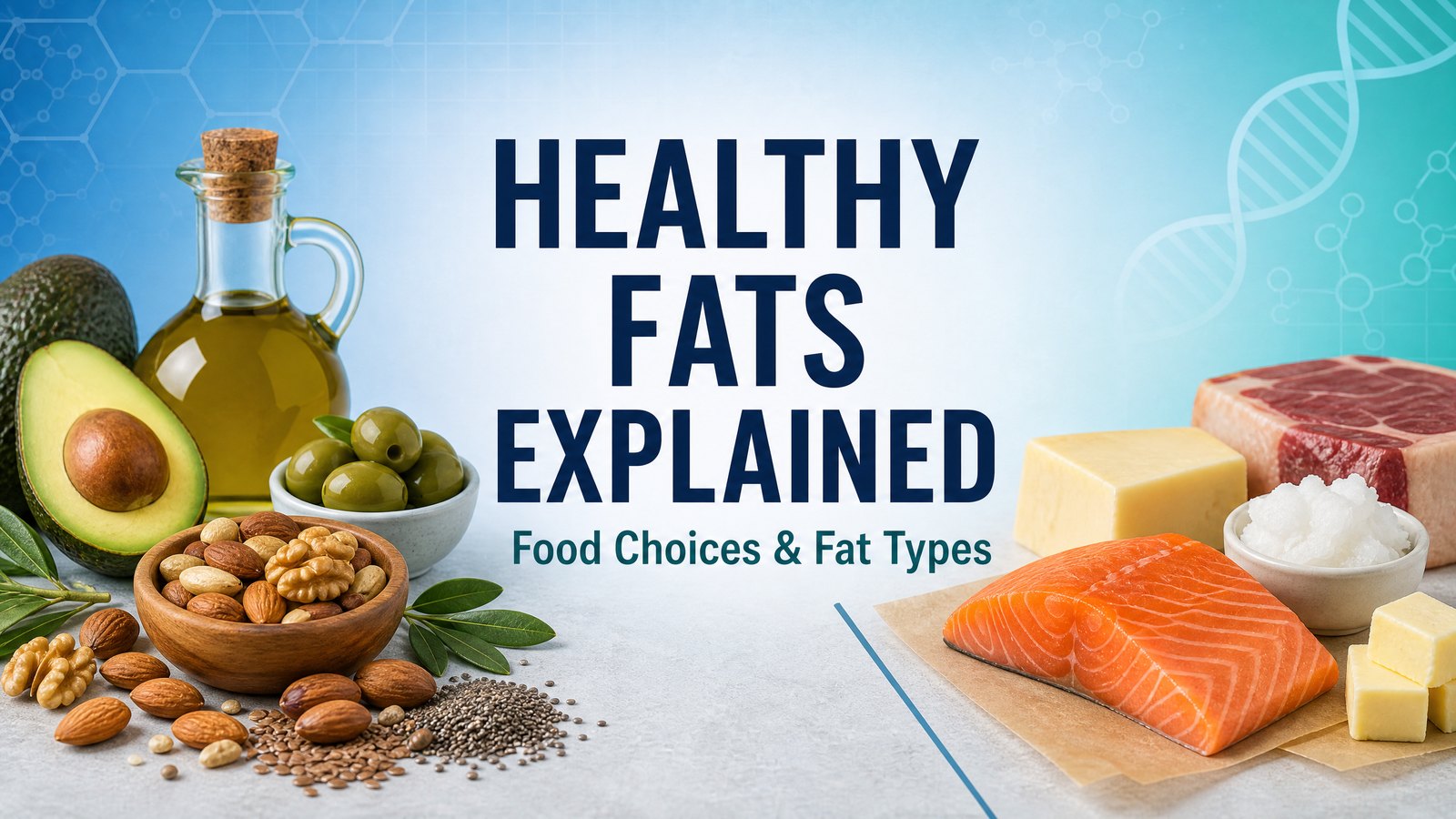
- Fatty fish: salmon, sardines, mackerel — sources of long-chain omega-3s (EPA and DHA) that support heart health [3]. Aim for about two seafood servings per week as part of a healthy pattern [1].
- Nuts and seeds: almonds, walnuts, chia, flaxseed — provide MUFAs, PUFAs, fiber, and micronutrients.
- Plant oils: extra-virgin olive oil, canola, soybean, sunflower — primarily unsaturated fats useful for cooking and dressings.
- Avocado: MUFA-rich whole food useful as a spread or salad ingredient.
Foods to limit or swap out
- Swap butter or stick margarine for olive oil or another liquid vegetable oil.
- Choose nuts or plain nut butter instead of chips or pastries for snacks.
- Prefer grilled or baked fish and plant-based fats over fried, heavily processed foods that may contain trans or excess saturated fats.
Unsaturated vs saturated fat — a simple comparison framework
When choosing a food, ask three quick questions:
1. What’s the dominant fat type? (Check Nutrition Facts: grams of saturated fat and ingredient list for hydrogenated oils.)
2. Is the fat coming with beneficial nutrients? (Whole foods like nuts/fish bring fiber, protein, vitamins.)
3. What are the serving size and overall energy contribution? (Portion control matters.)
Example comparison:
– 1 tbsp butter (mostly saturated fat) vs 1 tbsp extra-virgin olive oil (mostly MUFA): both are calorie-dense, but olive oil supports better blood-lipid profiles when used instead of butter [1,2].
Supplements and concentrated sources (omega‑3 oils)
When they make sense
- Some people use fish oil supplements to increase EPA/DHA intake when regular seafood intake is low. The NIH Office of Dietary Supplements provides evidence-based information on benefits and limits of omega-3 supplements [3].
Safety and quality notes
- Supplements are not regulated like drugs. Look for products with transparent EPA/DHA amounts, third-party testing, and clear expiration/lot information [4]. High-dose omega‑3s can interact with medications (for example, anticoagulants); consult a clinician before starting them.
Limitations and when to ask a clinician
- Pregnancy, breastfeeding, infants and young children: fat needs and safe‑seafood choices differ; consult prenatal or pediatric care teams.
- Chronic conditions: if you have high triglycerides, liver disease, pancreatitis, heart disease, or are taking prescription anticoagulants or other medications, ask a clinician before making major changes or starting omega‑3 supplements.
- Allergies and restrictive diets: nut, seed, soy, or fish allergies require tailored guidance.
- Weight loss or eating disorders: a registered dietitian or clinician can help fit fats into an overall calorie plan and provide support if disordered eating is present.
How to compare products later
For packaged foods:
– Nutrition Facts: serving size, total fat, grams and %DV of saturated fat and trans fat.
– Ingredient list: avoid “partially hydrogenated” oils; look for whole-food fat sources near the top (e.g., nuts, olive oil).
– Processing and additives: high sodium, added sugars, and refined flours can offset benefits of healthy fats.
For supplements (fish oil or plant-based oils):
– Active content per serving: exact EPA and DHA amounts.
– Purity and safety: third‑party testing (e.g., USP, NSF) and a Certificate of Analysis when available.
– Dosage form, serving size, expiration date, and manufacturer transparency.
– Medical considerations: potential interactions and conditions requiring oversight.
[Affiliate product comparison block—add verified iHerb links after approval]
Bottom line
“Healthy fats” means choosing unsaturated fats (MUFAs and PUFAs, including omega‑3s) from whole foods and cooking oils more often than saturated or trans fats. The Dietary Guidelines and MyPlate recommend shifting the fat composition of the diet toward unsaturated sources and limiting saturated fat to under 10% of daily calories; practical swaps (olive oil instead of butter, nuts and fish instead of processed snacks) can help achieve that pattern. For supplements or special medical situations, discuss options with a clinician.
Editorial note
VitaEvidence Editorial Team. Last reviewed: August 2026. For general education, not personal medical advice. Read our Editorial Policy.
References
[1] Dietary Guidelines for Americans 2020–2025. U.S. Departments of Agriculture and Health and Human Services. https://www.dietaryguidelines.gov/
[2] MyPlate — Fats. U.S. Department of Agriculture. https://www.myplate.gov/eat-healthy/fats
[3] Office of Dietary Supplements — Omega-3 Fatty Acids (Consumer Fact Sheet). National Institutes of Health. https://ods.od.nih.gov/factsheets/Omega3FattyAcids-Consumer/
[4] Dietary Supplements. U.S. Food & Drug Administration. https://www.fda.gov/food/dietary-supplements
[5] Dietary Supplement Fact Sheets — List All. National Institutes of Health, Office of Dietary Supplements. https://ods.od.nih.gov/factsheets/list-all/