
In this guide
Why food safety matters for packed lunches
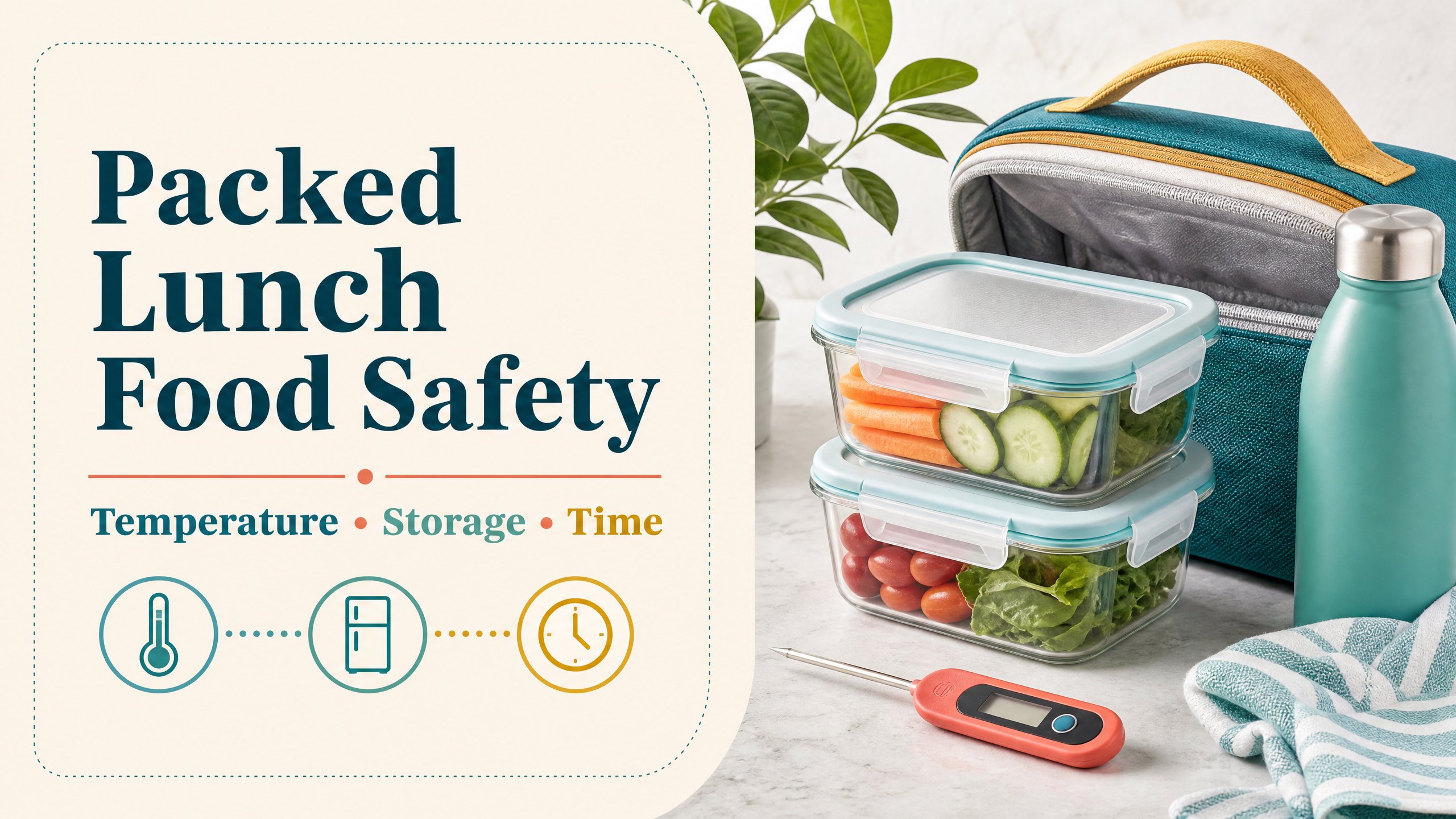
Packed lunches are convenient, budget-friendly, and can be healthy. But perishable foods left at room temperature for too long can allow bacteria to grow. This article summarizes practical, evidence-based rules for temperature, storage, and time so you can pack lunches that are safer to eat.
Key temperature and time rules
Follow these basic temperature and time principles from official food-safety guidance:
- Keep cold foods at 40°F (4°C) or below.
- Keep hot foods at 140°F (60°C) or above.
- Limit time in the 40–140°F “danger zone” to 2 hours; if the ambient temperature is 90°F (32°C) or higher, reduce that limit to 1 hour.
These are general rules used by government food-safety agencies. For many packed lunches, the practical goal is to keep perishable items cold with an insulated container and cold packs or to use an insulated thermos for hot foods.
Packing strategies and practical tips
Make the safe option the easy option by planning ahead:
- Chill foods before packing. Refrigerate cold foods until you’re ready to assemble the lunch so they start out cold.
- Use an insulated lunch bag or box plus frozen gel packs or a frozen drink box to maintain cold temperatures. Place packs above and around the food where possible.
- For hot items, use a preheated insulated thermos: fill it with boiling water for a few minutes, empty it, then add hot food. A good thermos can help keep soups, stews, or hot entrees in the hot range for several hours.
- Keep perishable items labeled “Keep refrigerated” in the fridge until leaving the house. If a food package has storage instructions, follow them.
- Separate foods that could cross-contaminate (for example, raw meat left-overs should not be in a lunch with ready-to-eat items). Use sealed containers.
Examples
- Cold lunch: whole-grain sandwich with lean protein, yogurt, and carrot sticks—use an insulated bag with at least one frozen gel pack and a chilled yogurt straight from the fridge.
- Hot lunch: warm soup in a properly preheated insulated thermos plus whole-grain crackers and fruit—pack only on days you can keep the thermos upright and insulated until mealtime.
- Nonperishable options: nut or seed butters, canned tuna (if allowed at school), dried fruit, whole fruits, and shelf-stable single-serve dairy alternatives when refrigeration is not available.
Label reading and ingredient/allergen precautions
Check labels for storage instructions and allergen information:
- Look for directions such as “refrigerate after opening” or “keep refrigerated.” If a product requires refrigeration, treat it as perishable.
- Read the ingredient list and any “Contains” statement to identify major food allergens and avoid cross-contact when packing for people with allergies.
- When sending lunches to school, follow the institution’s allergy policies and use sealed containers to reduce risk of accidental exposure.
Safe preparation habits
Good hygiene and basic food-handling steps lower risk:
- Wash hands with soap and water before preparing lunches.
- Use clean utensils and surfaces; avoid cross-contact between raw and ready-to-eat foods.
- Discard perishable leftovers that have been unrefrigerated longer than the time limits above.
When refrigeration isn’t available
If you cannot keep food cold, choose nonperishable items (e.g., whole fruits, shelf-stable snacks, sealed nut butters) or single-serving shelf-stable milks. For perishable items, consider keeping them chilled until eating time with cold packs or choosing freshly packed cold items consumed shortly after leaving home.
When to seek care
If someone develops symptoms that might be foodborne illness after eating a packed lunch, seek medical attention if they experience:
- Severe vomiting or diarrhea (especially if lasting more than 24 hours)
- High fever (consult a clinician)
- Signs of dehydration (dizziness, decreased urination, dry mouth)
- Bloody stools or severe abdominal pain
Mild, short-lived stomach upset commonly resolves on its own, but when in doubt, contact a healthcare provider or local health department.
Bottom line
Pack lunches with safety in mind by keeping cold foods at 40°F or below, hot foods at 140°F or above when possible, and limiting time in the 40–140°F danger zone to 2 hours (1 hour above 90°F). Use insulated containers, cold packs, and good hygiene. Read labels for storage and allergen information, and choose nonperishable options when refrigeration isn’t available. Follow these practical steps to reduce the risk of foodborne illness from packed lunches.
Note: This article is for general information and does not replace advice from local health authorities or a clinician. Follow specific guidance from your school or workplace about food policies and allergies.