
In this guide
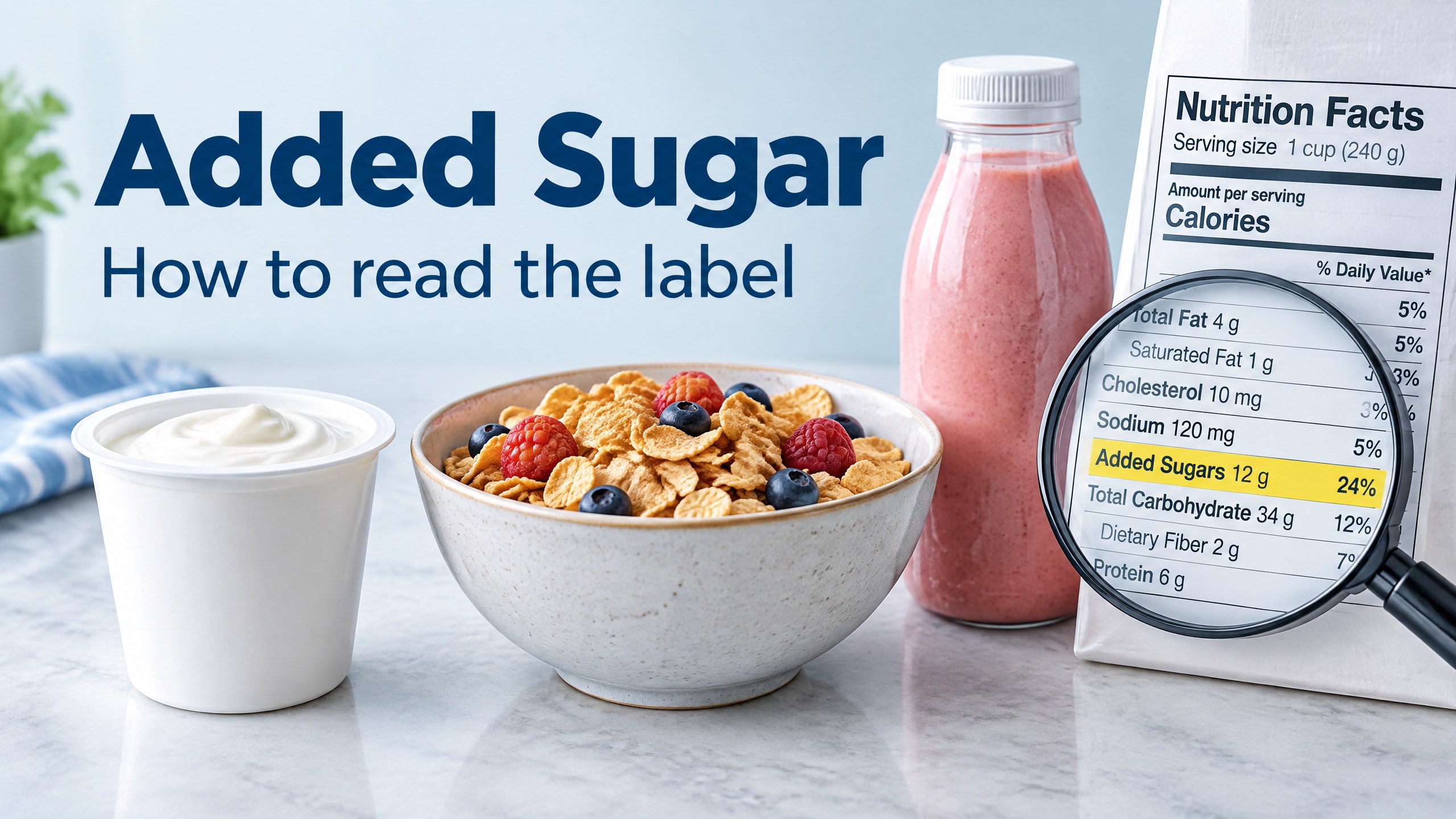
This guide explains how to find and judge added sugars on food labels for yogurt, breakfast cereal, and beverages. It summarizes official U.S. guidance and gives step-by-step label-reading tips and practical swaps you can try at the grocery store.
Why added sugars matter
Federal nutrition guidance encourages people to limit added sugars and focus on nutrient-dense foods and beverages. The Nutrition Facts label now shows “Added Sugars,” which makes it easier to compare products and control how much added sugar you consume.
How to read the label: a simple checklist
- Start with serving size. Nutrition information is based on one serving. If the package contains more than one serving, multiply the added sugars by the number of servings you actually eat or drink.
- Look for “Added Sugars” on the Nutrition Facts panel. The line lists grams of added sugars per serving. Use that number to compare products of similar serving size.
- Scan the ingredient list. Ingredients are listed by weight. Words to watch for include “sugar,” “syrup,” “concentrate” and names that end in “-ose.” Ingredients are listed in order, so if a sweetener is near the top, the product is likely higher in added sugar.
- Compare whole-package totals. If you typically eat a whole container or drink a full bottle, calculate the total added sugar by multiplying the per-serving amount by the number of servings in the package.
Yogurt: common traps and label tips
Plain yogurt contains naturally occurring milk sugar (lactose) and usually has no added sugars listed. Flavored yogurts often add sweeteners, fruit preparations, or concentrates. Use the checklist above:
- If the Nutrition Facts lists “Added Sugars” above zero, compare grams per serving between flavors and brands.
- Check the ingredient list for added sweeteners or fruit fillings high on the list.
- Consider plain yogurt and add fresh fruit, a sprinkle of cinnamon, or a small amount of a favorite topping to control added sugars yourself.
Cereals: look beyond colorful boxes
Marketing and colorful packaging can hide large differences in added sugars. When choosing a cereal:
- Choose options that list a whole grain ingredient first.
- Compare the grams of added sugars per serving, not just the word “low fat” or imagery on the front.
- Pay attention to serving size: a small bowl at home may have a larger portion than the label’s serving.
Drinks: check the bottle as well as the name
Beverages can be an easy source of added sugars. Check the label for “Added Sugars” and read the ingredient list even for drinks described as “fruit” or “fruit-flavored.” A product labeled “100% juice” contains naturally occurring sugars but no added sugars; other fruit-flavored drinks may contain added sweeteners.
For coffee, tea, flavored milk, sports drinks, and ready-to-drink beverages, compare calories and added-sugar grams per serving and consider unsweetened or water-based swaps when appropriate.
Practical shopping and planning tips
- Bring a shopping list and compare two similar products using the Nutrition Facts panel before you buy.
- When a favorite product is higher in added sugar, try a smaller portion or pair it with protein or fiber to help you feel satisfied.
- Rely on whole foods (plain yogurt plus fruit, unsweetened oatmeal with nuts, water, or plain milk) as base choices you can season to taste.
Food storage and safety reminder
Perishable items like yogurt should be stored and handled according to package instructions. Keep refrigerated, follow “use by” dates, and discard products with signs of spoilage. For general safe‑handling guidance, consult federal food-safety resources.
When to seek care
Talk with a healthcare provider or registered dietitian if:
- You have diabetes or another condition where carbohydrate or sugar intake must be managed.
- You notice sudden or severe symptoms after eating or drinking — for example, severe abdominal pain, persistent vomiting, or signs of dehydration — seek medical attention.
- You have special diet needs (infants, pregnant people, immunocompromised individuals) and are unsure how label information applies to you.
Bottom line
The Nutrition Facts label now makes added sugars easier to find. Start with serving size, read the “Added Sugars” line, and scan the ingredient list for sweeteners. For yogurt, cereals, and drinks, choosing plain or lower‑added‑sugar versions and preparing simple swaps at home are practical ways to lower added sugars while keeping nutrient needs in mind.