In this guide
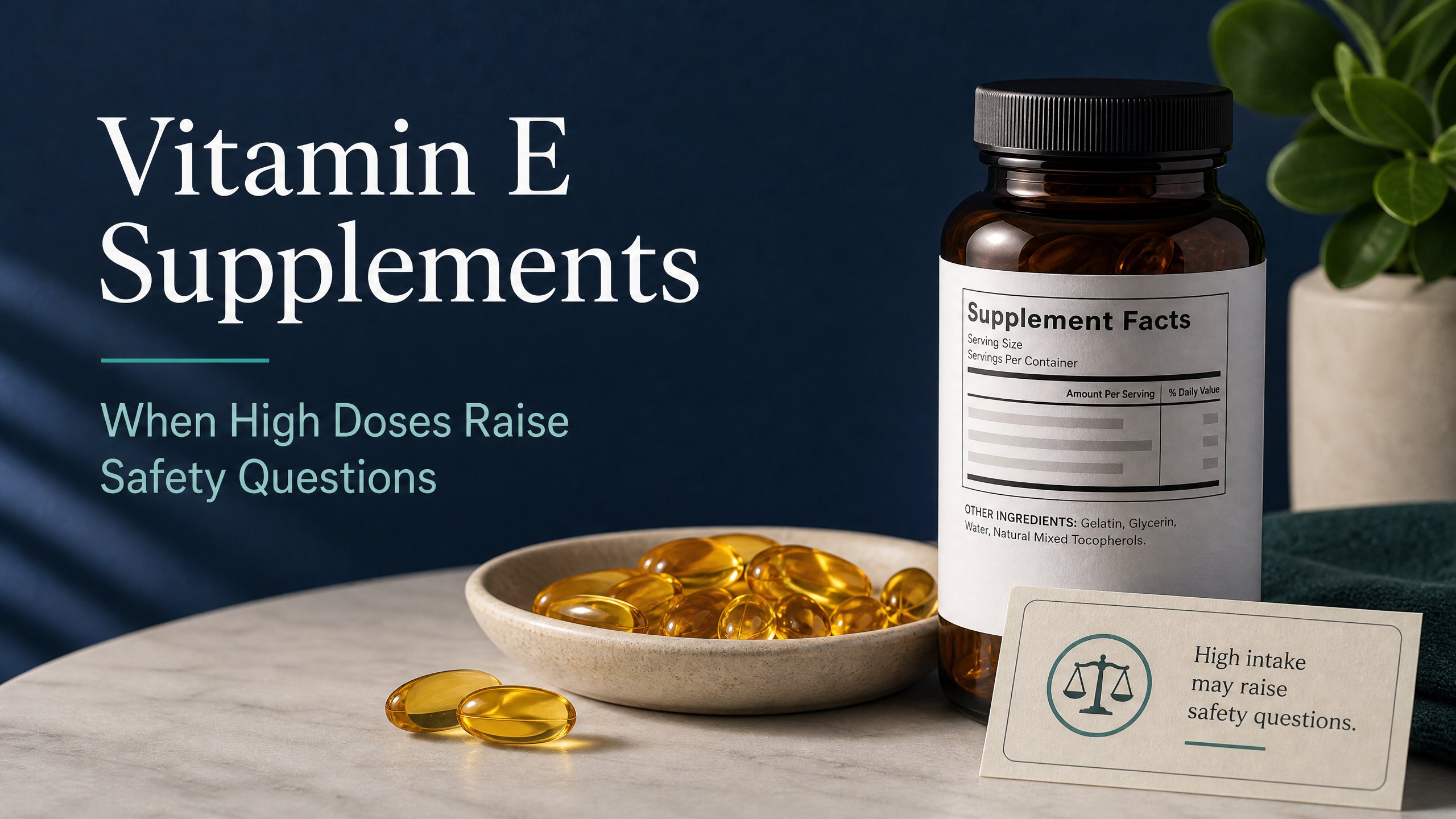
Vitamin E is a fat-soluble nutrient found in foods such as vegetable oils, nuts, seeds, and green leafy vegetables. Dietary vitamin E has important roles in the body, and most people get enough from food. But concentrated vitamin E supplements — especially at high doses — have raised safety questions in research and public-health guidance.
What the official sources say
The National Institutes of Health Office of Dietary Supplements (NIH ODS) provides facts and context about vitamin E, including what forms appear on supplement labels and evidence about benefits and risks. The U.S. Food and Drug Administration (FDA) regulates dietary supplements under a different framework than prescription drugs; manufacturers are responsible for safety and labeling, and most supplements do not require premarket FDA approval.
Why high doses raise concerns
Evidence summarized by NIH ODS notes that some clinical trials and reviews have linked long-term, high-dose vitamin E supplements to adverse outcomes in certain settings. Concerns cited in the scientific literature and by authorities include increased bleeding risk and signals of harm — findings that vary by dose, population, and study.
These safety questions are distinct from vitamin E obtained from food. Food sources of vitamin E do not raise the same safety flags as high-dose supplements.
Who may be at higher risk
- People taking blood‑thinning medications (anticoagulants or antiplatelet drugs), because vitamin E supplements can affect clotting and may increase bleeding risk.
- Anyone planning surgery or dental procedures: supplements that affect bleeding should be discussed with the surgical team.
- People with conditions that increase bleeding tendency.
- Individuals considering long-term, high-dose vitamin E for chronic disease prevention — decisions like this should be made only with clinical guidance, because large trials have shown mixed or unfavorable results for some outcomes.
Interactions and contraindications
NIH ODS and FDA materials emphasize known and possible interactions. Key considerations include:
- Drug interactions: vitamin E supplements can interact with anticoagulant and antiplatelet medications, possibly increasing bleeding risk. If you take warfarin (Coumadin), clopidogrel, aspirin, or other blood‑thinners, tell your clinician before starting vitamin E supplements.
- Surgery: stop or discuss supplements that affect bleeding with the surgeon or anesthesiologist in advance. Timing and recommendations vary by product and dose.
- Chronic conditions: discuss long-term supplement use with a clinician, especially when treating or preventing chronic diseases.
How to read a vitamin E supplement label
When you look at a supplement label, use these practical tips:
- Check the form listed: look for “alpha‑tocopherol” or “mixed tocopherols.” The label may state the specific form (for example, natural vs. synthetic names like d‑alpha‑tocopherol or dl‑alpha‑tocopherol).
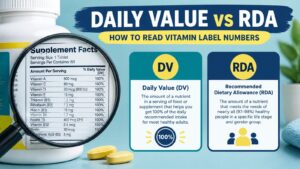
- Look at the amount per serving: it may be shown in milligrams (mg) or International Units (IU). Supplements also list % Daily Value (%DV), which helps you compare to recommended daily intake.
- Note serving size and how many servings are in the bottle — total daily intake depends on how many capsules or drops you take.
- Read other ingredients and cautions: some labels list interactions, warnings about use with blood thinners, or advice to consult a clinician before use.
- Choose reputable manufacturers and retailers. FDA materials explain that supplements are not subject to the same premarket approval as drugs, so quality can vary.
Practical advice
- Prefer food sources for most people. Food provides vitamin E along with other nutrients and does not carry the same safety questions as high-dose supplements.
- If a clinician recommends a vitamin E supplement (for a diagnosed deficiency or specific medical reason), follow the recommended form and dose closely and have ongoing monitoring as advised.
- Avoid starting high-dose vitamin E supplements on your own, especially if you take blood thinners or have bleeding risks.
When to seek care
Contact your clinician or seek urgent care if you experience:
- Unexplained or prolonged bleeding (nosebleeds, heavy menstrual bleeding, blood in stool or urine).
- Excessive bruising from minor bumps.
- Symptoms of a serious reaction after a supplement (difficulty breathing, swelling, or other signs of an allergic reaction).
Bottom line
Vitamin E is an essential nutrient, and most people meet needs through a balanced diet. High‑dose vitamin E supplements have raised safety questions in clinical research, particularly regarding bleeding risk and possible adverse outcomes in some trials. Because dietary supplements are not approved by the FDA before marketing, and because risks appear to increase at higher supplemental doses, avoid high‑dose vitamin E supplements without clinical supervision. Discuss any supplement use with your clinician, especially if you take blood thinners or are planning surgery.
Evidence snapshot
NIH Office of Dietary Supplements summarizes that while vitamin E is essential, some studies of high‑dose supplements have reported harms or no benefit for chronic disease prevention. FDA resources note that dietary supplements are marketed without the same premarket safety and effectiveness review as drugs.