In this guide
Multivitamin gummies are an attractive, chewable alternative to tablets and capsules. They are widely marketed for adults and children, but their nutrient content differs from traditional multivitamins. This article explains what gummies commonly add, what they often leave out, how to compare products on the label, and important safety considerations based on the U.S. National Institutes of Health Office of Dietary Supplements (ODS) and the U.S. Food and Drug Administration (FDA).
What multivitamin gummies commonly add
Manufacturers typically include a selection of water‑soluble and fat‑soluble vitamins that are easier to formulate into a chewable product. Common inclusions are:
- Many B vitamins (for example, thiamin, riboflavin, niacin, vitamin B6, biotin, folate) — these are often present because small amounts can be effective and are stable in gummy forms.
- Vitamin C — a common ingredient because it mixes easily and is familiar to consumers.
- Vitamin D and some vitamin A — these fat‑soluble vitamins may be included, but amounts vary by product.
Gummy formulations also commonly contain non‑nutritive ingredients such as sweeteners, pectin or gelatin (the gelling agent), flavors, and colors. Check the label if you need vegetarian, vegan, or allergen‑free options.
What gummies often omit or supply in lower amounts
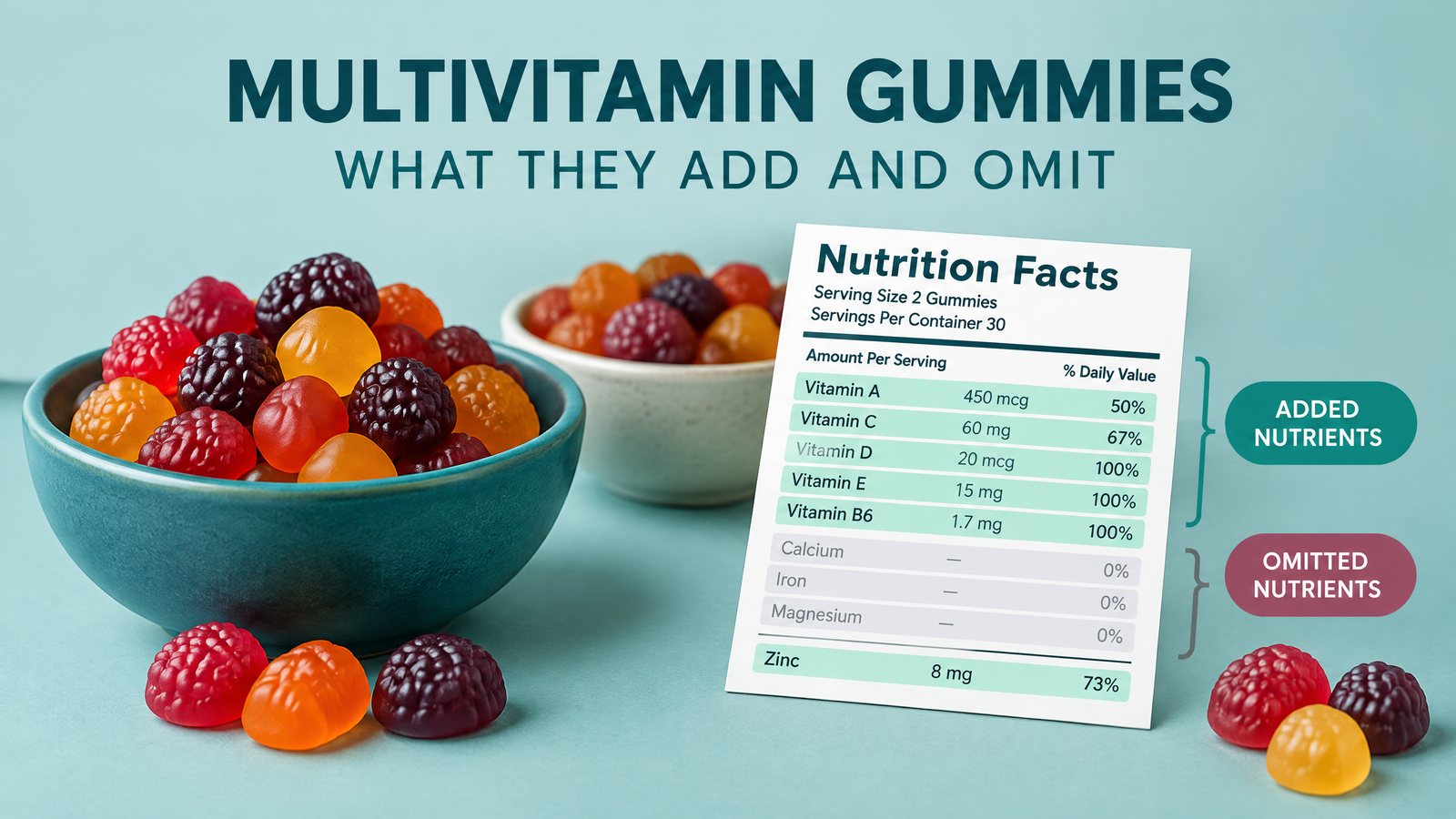
Compared with standard tablets, multivitamin gummies frequently omit or contain low amounts of certain minerals and nutrients for technical and taste reasons. Examples include:
- Minerals that require larger amounts by weight (for example, calcium and magnesium) are less commonly present at meaningful levels in gummies.
- Iron is often left out of adult multivitamin gummies; when present, iron levels can vary widely. Because iron has a metallic taste and can affect texture and stability, many gummy multivitamins marketed to adults do not include it.
- Trace minerals (for example, chromium, manganese, copper, selenium, zinc) may be present in some products but are not guaranteed across brands.
Because formulations vary, you cannot assume a gummy contains the same mix or amounts as a tablet multivitamin. The ODS maintains consumer factsheets describing nutrients and points to the variability in supplement content and labeling.
How to compare multivitamin gummy labels
- Check the serving size. Gummies often require two or more pieces for a full “serving” — look at how many pieces equal one serving.
- Look at % Daily Value (%DV). The %DV helps you compare the amount of each nutrient to the reference Daily Value used on food and supplement labels. The ODS explains how Daily Values are used on labels.
- Compare specific nutrients you need. If you want vitamin D, folate, or iron, confirm the exact form listed (for example, folate vs. folic acid) and the %DV. Some forms are more bioavailable or appropriate in specific circumstances — consult your clinician if you have special needs (pregnancy, medical conditions).
- Scan the ingredient list. Note sweeteners, allergens, gelling agents (gelatin vs. pectin), and other additives if you have dietary restrictions.
- Watch for added sugar. Chewable products can contain added sugars or sugar alcohols; check the label if sugar intake matters for you or your child.
- Evaluate claims cautiously. Structure/function statements on labels (for example, “supports immune health”) are allowed for supplements but do not mean the product is proven to prevent or treat disease. The FDA and ODS offer guidance on how supplements are regulated and labeled.
Interactions, contraindications, and precautions
- Some nutrients interact with medications. For example, vitamin K can affect how warfarin (a blood thinner) works. If you take anticoagulant medications, check vitamin K content and consult your clinician before using a multivitamin.
- Iron can interact with certain medicines and with other minerals’ absorption; it may also cause stomach upset. Ask a clinician before adding iron, especially if you take other medications or have chronic conditions.
- High intakes of some fat‑soluble vitamins or minerals may be harmful. The ODS factsheets list tolerable upper intake levels and describe risks of excess for many nutrients.
- Products labeled as dietary supplements are not evaluated or approved by the FDA for safety and effectiveness before marketing; manufacturers are responsible for product safety and label accuracy. The FDA provides consumer guidance about supplements and approval status.
Practical tips
- If your clinician has recommended a specific nutrient (for example, iron in pregnancy), confirm that the gummy provides that nutrient in the recommended form and amount. Many prenatal needs require specific dosing that gummy multivitamins may not supply.
- Store gummies out of children’s reach. Gummies can look like candy, and accidental overdose is a risk.
- When switching from a tablet to a gummy, compare ingredient lists and %DVs rather than assuming equivalence.
When to seek care
Seek immediate medical attention if you or a child has signs of an allergic reaction (hives, swelling, difficulty breathing), or if you suspect an overdose (severe vomiting, fainting, seizures, persistent abdominal pain). Contact your clinician before starting a multivitamin gummy if you are pregnant, breastfeeding, have a chronic medical condition, or take prescription medications, especially blood thinners or drugs with known interactions.
Bottom line
Multivitamin gummies can help people who prefer a chewable form, but formulations vary widely. They often include several B vitamins, vitamin C, and sometimes vitamin D and A, but they may omit or provide low amounts of minerals such as iron, calcium, or magnesium. Read the label carefully — check serving size, % Daily Value, nutrient forms, added sugars, and inactive ingredients — and discuss supplement use with your clinician, particularly if you have medical conditions or take medications.