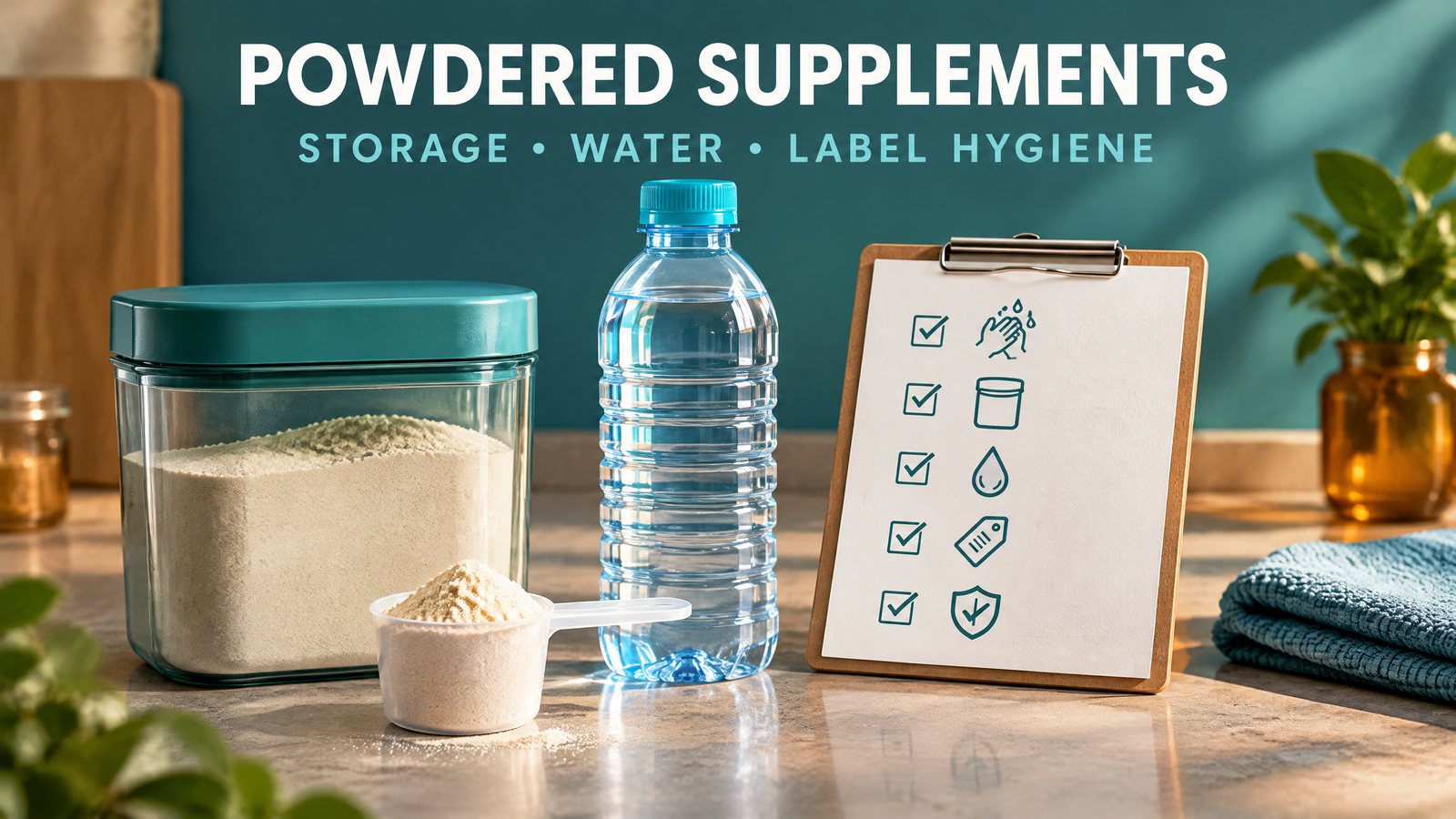
In this guide
- What counts as a powdered supplement?
- Established evidence and regulatory context
- Storage basics: follow the label and common-sense precautions
- Mixing with water: contamination and time limits
- What the official sources say
- Label-reading checklist (practical)
- Interactions and contraindications
- Marketing claims, evidence, and uncertainty
- When to seek care
- Summary
- Bottom line
- References
This article summarizes what official U.S. health agencies say about storing powdered dietary supplements, the risks of contamination when you mix them with water, and how to read product labels and warnings. This is a general informational article, not personal medical advice. If you have specific health concerns, talk with your clinician.
What counts as a powdered supplement?
Powdered supplements include protein powders, powdered vitamins/minerals, fiber supplements, probiotic powders, greens blends, and other powdered products labeled as dietary supplements. In the U.S., these products are sold under the dietary supplement regulations described by the FDA and are not reviewed and approved by the FDA for safety or effectiveness before marketing. Manufacturers are responsible for ensuring safety and truthful labels, and FDA oversees manufacturing practices and post‑market action when problems are reported.
Established evidence and regulatory context
- Dietary supplements are regulated differently than prescription drugs. The FDA provides information on the legal framework, labeling, and manufacturing oversight for supplements, including current Good Manufacturing Practices (cGMPs) that apply to supplement facilities.
- The Office of Dietary Supplements (ODS) offers consumer fact sheets on supplement types (for example, fiber and probiotics) that include safety considerations and typical storage recommendations found on product labels.
Storage basics: follow the label and common-sense precautions
Label instructions are the primary, authoritative source for how a manufacturer recommends storing a product. Practical steps to reduce quality loss and contamination risk:
- Keep unopened containers in a cool, dry place away from direct sunlight unless the label says otherwise.
- After opening, reseal containers tightly and follow any “store in refrigerator” or “use within X days” instructions that appear on the label.
- Avoid storing powders in the bathroom or above the stove where humidity and heat vary frequently.
- Use clean, dry scoops and hands; avoid touching powder with wet utensils or fingers.
- Note expiration or ‘‘best by’’ dates and batch/lot numbers so you can report problems if needed.
Mixing with water: contamination and time limits
Mixing powdered supplements with drinking water or other beverages is common. Key points based on agency guidance and product labeling practices:
- Mix according to label directions for concentration and intended use. The label may include instructions about whether to refrigerate or consume immediately.
- Reconstituted (mixed) drinks can become a medium for microbial growth if left at room temperature for long periods, particularly if they contain carbohydrates, proteins, or live microbes (as in probiotic products). When a label gives a time‑limit or refrigeration requirement after mixing, follow it.
- Some probiotic powders contain live microbes that may require refrigeration or other storage conditions to maintain potency; check the product label and the manufacturer’s guidance.
What the official sources say
The FDA provides general oversight about manufacturing and safety of dietary supplements and advises consumers to follow label directions and report problems. ODS fact sheets on probiotics and fiber discuss product‑specific storage and safety considerations; for example, probiotic products often include storage instructions to protect live organisms and fiber supplements list mixing and use guidance on labels.
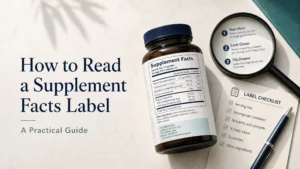
Label-reading checklist (practical)
- Product identity and form (e.g., “powder,” “probiotic powder”).
- Serving size and amount per serving—mixing directions with specified water volume if given.
- Storage instructions (e.g., “store in a cool, dry place,” “refrigerate after opening,” or “use within 24 hours of mixing”).
- Expiration or ‘‘best by’’ date and any lot/lot number for reporting problems.
- All ingredients and potential allergens (important when adding to foods or sharing containers/scoops).
- Warnings and contraindications, including any specific groups advised to avoid the product.
Interactions and contraindications
Powdered supplements can interact with medications or be inappropriate for some health conditions. Examples to check before use:
- Fiber supplements can affect the absorption of some medicines; labels often recommend taking fiber supplements at a different time from certain medications. Consult the ODS fiber fact sheet or your clinician for medication‑specific guidance.
- Probiotic products may not be appropriate for people with severely weakened immune systems or those with critical illnesses; consult a clinician before use.
- Herbal powder blends also carry the risk of interactions and side effects; check ODS or NCCIH herb resources and speak with a clinician if you take prescription medicines.
Marketing claims, evidence, and uncertainty
- Marketing claims on supplement labels (for example, “supports immune health” or “clinically studied”) are not the same as FDA approval. The FDA clarifies that supplements are not approved to treat or cure diseases.
- Official sources (ODS, FDA, NCCIH) can help evaluate specific ingredients. Evidence varies by ingredient; some supplements have reliable data on safety and use, while others have limited or conflicting evidence.
- If a label makes a strong medical claim or promises disease cure, treat that claim with skepticism and consult trustworthy sources or a clinician.
When to seek care
- Seek medical care promptly for severe allergic reactions (hives, swelling of the face or throat, difficulty breathing) after taking or handling a supplement.
- Seek care if you develop persistent gastrointestinal illness (severe vomiting, diarrhea, dehydration), fever after using a reconstituted product, or other worrying symptoms that may suggest contamination.
- Report suspected adverse events, contamination, or product problems to the product manufacturer and the FDA’s MedWatch program.
Summary
Follow product labels for storage and reconstitution, use clean utensils, and refrigerate or consume mixes as instructed. Be cautious with products containing live microbes (probiotics) or with powders that can support microbial growth when mixed. Use ODS and FDA resources to check ingredient fact sheets, label information, and how to report problems.
Bottom line
Practical, evidence-based guidance on storing powdered dietary supplements, minimizing contamination when mixing with water, reading labels, and understanding interactions and warnings. Distinguishes established regulation and uncertainties.