In this guide
- What evidence says (established vs. uncertain)
- Established
- Preliminary or variable
- Marketing claims and uncertainty
- Common nutrients to check on a vegan supplement
- How to check nutrient forms on the label (practical steps)
- Using federal databases for testing and label verification
- Interactions and contraindications
- When to seek care
- Bottom line
- References
This article explains how to evaluate vegan dietary supplements, what federal resources can tell you about label claims and measured nutrient content, and what often gets left out. It is a general information guide, not medical advice. For condition-specific guidance, talk with a clinician or registered dietitian.
What evidence says (established vs. uncertain)
Established
- The U.S. Food and Drug Administration (FDA) treats dietary supplements differently than prescription or over‑the‑counter drugs: supplements are not reviewed and approved by FDA for safety or effectiveness before they reach the market. Manufacturers are responsible for label accuracy and safety; FDA can act if a product is unsafe or misbranded (FDA: Dietary Supplements).
- The National Institutes of Health Office of Dietary Supplements (ODS) provides evidence summaries on individual nutrients and consumer guidance you can use to compare claims and needs (ODS: What You Need to Know (WYNTK) — Consumer, ODS: All Factsheets).
- Two U.S. government databases can help you check product labels (DSLD) and, for some products, laboratory‑measured nutrient amounts (DSID). These are tools to compare what’s on the label with independent data where available (DSLD, DSID).
Preliminary or variable
- Claims about superior absorption for one nutrient form over another (for example, among different chemical forms of a vitamin) may be supported in some contexts but vary by nutrient, dose, and individual. Summaries for each nutrient are available through ODS factsheets; the best choice can depend on health status and medications (ODS: All Factsheets).
Marketing claims and uncertainty
Labels and advertising may use statements such as “vegan,” “plant‑based,” “bioavailable,” or “clinically formulated.” These are marketing claims, not proof of safety, completeness, or therapeutic effect. FDA does not approve dietary supplements for effectiveness before sale (FDA: It Really is FDA Approved?).
Common nutrients to check on a vegan supplement
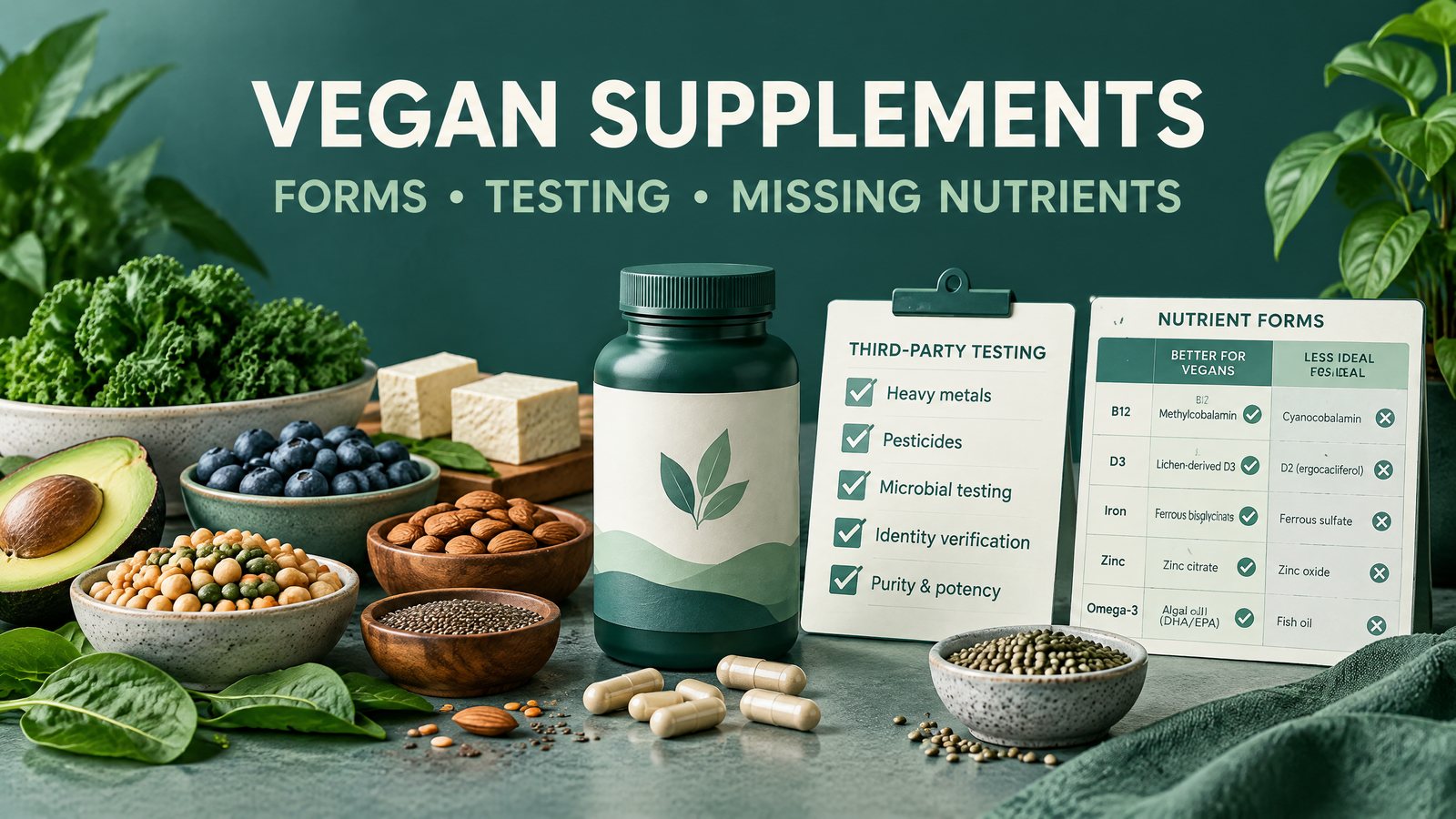
Depending on your diet, clinicians commonly focus on several nutrients that may need attention on a strict plant‑only diet. For evidence and details about each nutrient, consult the ODS factsheets linked above. Examples include:
- Vitamin B12
- Vitamin D
- Iron
- Calcium
- Iodine
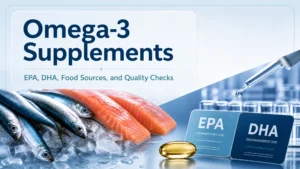
- Long‑chain omega‑3 fatty acids (EPA/DHA)
- Zinc
ODS factsheets provide nutrient‑specific information about food sources, supplement forms, and health considerations (ODS: All Factsheets).
How to check nutrient forms on the label (practical steps)
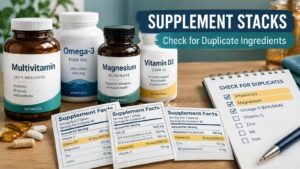
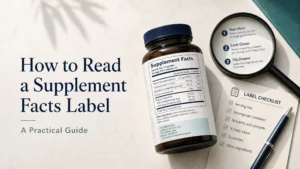
- Read the “Supplement Facts” panel. Note the nutrient name, the amount per serving, and the % Daily Value (%DV).
- Look for the chemical form. The label should list the form (for example, a specific salt or derivative) rather than just the nutrient name. Different forms can have different stability or considerations; consult ODS factsheets for the nutrient to learn about meaningful differences (ODS: All Factsheets).
- Check the ingredient list for non‑nutrient additives (fillers, binders, colorants) if you prefer to avoid certain excipients.
- Confirm manufacturer contact, lot number, and expiration date—these are important for traceability if there’s a problem.
Using federal databases for testing and label verification
- DSLD (Dietary Supplement Label Database): searchable product labels submitted by manufacturers. Use DSLD to view the exact label claims and ingredient lists for many products (DSLD).
- DSID (Dietary Supplement Ingredient Database): provides laboratory‑measured amounts of selected nutrients in certain supplement types. DSID can show how measured nutrient content compares to label claims for some products and nutrients (DSID).
- Neither database guarantees safety or quality for every product—DSID covers selected nutrients and product types, and not all brands have been tested.
Interactions and contraindications
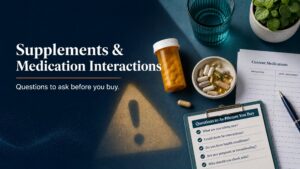
- Supplements can interact with prescription or over‑the‑counter medications and with medical conditions. Always tell your healthcare provider and pharmacist about supplements you take (NCCIH: A–Z Health Topics, NCCIH: Herbs at a Glance).
- Certain life stages (pregnancy, breastfeeding) and planned or recent surgeries are situations where some supplements are contraindicated or need medical oversight—ask your clinician.
When to seek care
- Stop the product and get medical help if you develop signs of a severe allergic reaction (difficulty breathing, swelling), severe gastrointestinal symptoms, jaundice, or other new concerning symptoms.
- Discuss abnormal lab tests (for example, unexpected high nutrient levels) or suspected interactions with a clinician.
- If you believe a supplement caused harm, report adverse events to FDA per the guidance on the FDA dietary supplements pages and discuss reporting with your clinician (FDA: Dietary Supplements).
Bottom line
For people following a vegan diet, supplements can help fill nutrient gaps, but product labels and marketing claims require careful evaluation. Use the federal resources listed below to compare labels (DSLD), to check measured nutrient content where available (DSID), and to read evidence summaries for individual nutrients (ODS). Always review supplements with your healthcare team, especially if you take medications or have health conditions.