In this guide
This article explains the practical differences between calcium citrate and calcium carbonate, how each is absorbed, when timing matters, and how to compare products on the label. The discussion is based on official U.S. sources and is intended as general information, not medical advice.
How the two forms differ
Calcium in supplements is sold as different salts. The two most common are calcium carbonate and calcium citrate. Both supply the mineral you want — calcium — but they differ in how they dissolve and how the body absorbs them.
Key differences summarized:
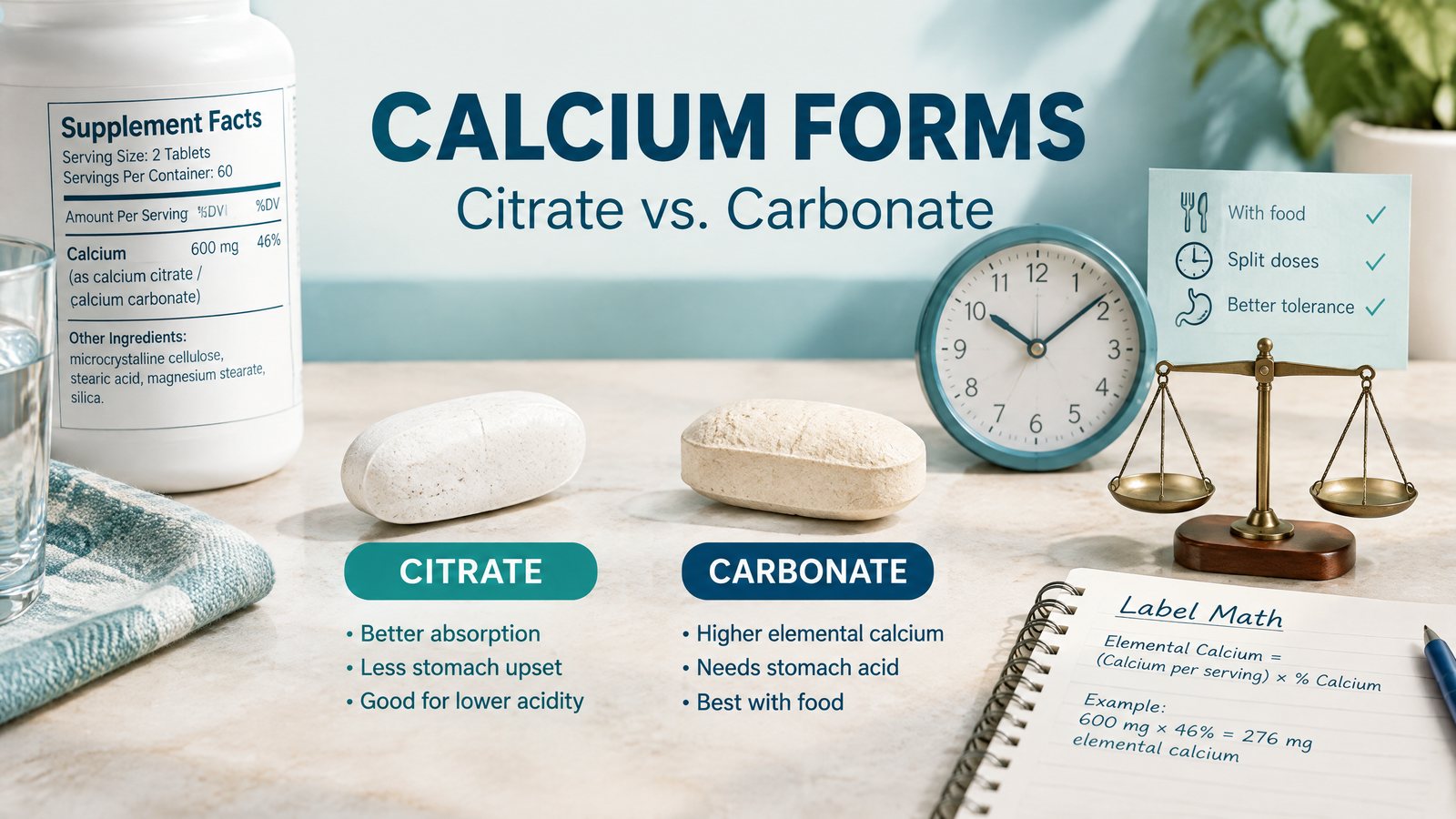
- Absorption environment: Calcium carbonate requires an acidic stomach environment to dissolve well, so it is usually best taken with a meal. Calcium citrate does not rely on as much stomach acid and can be taken with or without food.
- Elemental calcium: Tablets and capsules list the amount of elemental calcium — the actual calcium available — on the Supplement Facts label. Because the two compounds weigh differently, the same weight of carbonate and citrate will deliver different amounts of elemental calcium. Always compare the elemental calcium amount on the label rather than the weight of the compound.
Timing: when to take each form
Because calcium carbonate dissolves better in the presence of stomach acid, taking it with food generally improves its absorption. Calcium citrate’s greater solubility across a range of stomach acid levels gives more flexibility — it can be taken with or without food.
Other practical timing considerations:
- If you have low stomach acid (for example, from some medications or age-related changes), calcium citrate may be easier for your body to absorb.
- Large single doses of calcium from supplements may be less well absorbed than smaller amounts taken at separate times; splitting a supplemental dose over the day can sometimes improve total absorption.
- Taking calcium with vitamin D supports calcium absorption because vitamin D helps the body take up calcium.
How to do the label math
When comparing products, ignore the weight of the calcium salt and look at two things on the Supplement Facts label:
- The milligrams (mg) of elemental calcium listed. This is the actual calcium you get per serving.
- The %Daily Value (%DV) for calcium, if listed. The %DV shows how the amount in one serving compares to the daily value used for nutrition labeling.
Example guidance: two different products may both list “1000 mg calcium” on the bottle but mean different things depending on whether that number refers to the salt or to elemental calcium. The label should state elemental calcium explicitly; if it does not, use the Supplement Facts panel and the ingredient list to confirm what is being measured.
Interactions and precautions
Calcium supplements can affect absorption or action of other nutrients and medications. Official sources note several common concerns:
- Vitamin D: Vitamin D increases calcium absorption. Many calcium supplements include or recommend vitamin D because the two work together.
- Other minerals: Calcium can influence absorption of other minerals when taken at the same time. For example, calcium may reduce absorption of iron when both are taken together; separating dosing can help in some situations.
- Medications: Certain prescription medications can interact with calcium supplements. Because formulations and medical situations vary, check the supplement label and talk with your clinician or pharmacist before starting calcium if you take regular prescription medications.
Also keep in mind regulatory context: dietary supplements are regulated differently from prescription drugs. The FDA does not approve dietary supplements for safety and effectiveness before they are marketed. Labels can make structure/function claims but must follow FDA rules; rely on your clinician for dosing and safety decisions.
Reading labels: practical checklist
- Find “elemental calcium” on the Supplement Facts panel and use that number to compare products.
- Check whether the product includes vitamin D and the amount stated for it.
- Look for warnings about interactions with medications and consult your clinician or pharmacist if you take prescription drugs.
- Be cautious about high-dose supplements and large single doses; consider discussing splitting doses with a clinician if you take significant supplemental calcium.
When to seek care
Contact a clinician or emergency services if you experience severe or sudden symptoms after taking a supplement, such as severe abdominal pain, difficulty breathing, fainting, or signs of a serious allergic reaction. Talk to your clinician if you have persistent gastrointestinal side effects, new or worsening kidney stone symptoms, or other concerns about your calcium intake and medications.
Bottom line
Calcium carbonate and calcium citrate both provide calcium but differ in how and when they are absorbed. Carbonate is best taken with meals because it needs stomach acid; citrate is more flexible and can be taken without food and may be preferable for people with low stomach acid. Always compare the amount of elemental calcium on the Supplement Facts label, consider whether vitamin D is included, and talk with your clinician about interactions with medications or medical conditions. Supplements are not FDA-approved drugs; use them with care and professional guidance.