In this guide
This article reviews what is known from authoritative U.S. government sources about iron supplements and constipation, practical ways people commonly try to improve tolerance, and safe label- and interaction-checking before you change or start a product. This is general information, not personalized medical advice—talk with your clinician about options that suit your health needs.
Why iron supplements can cause constipation
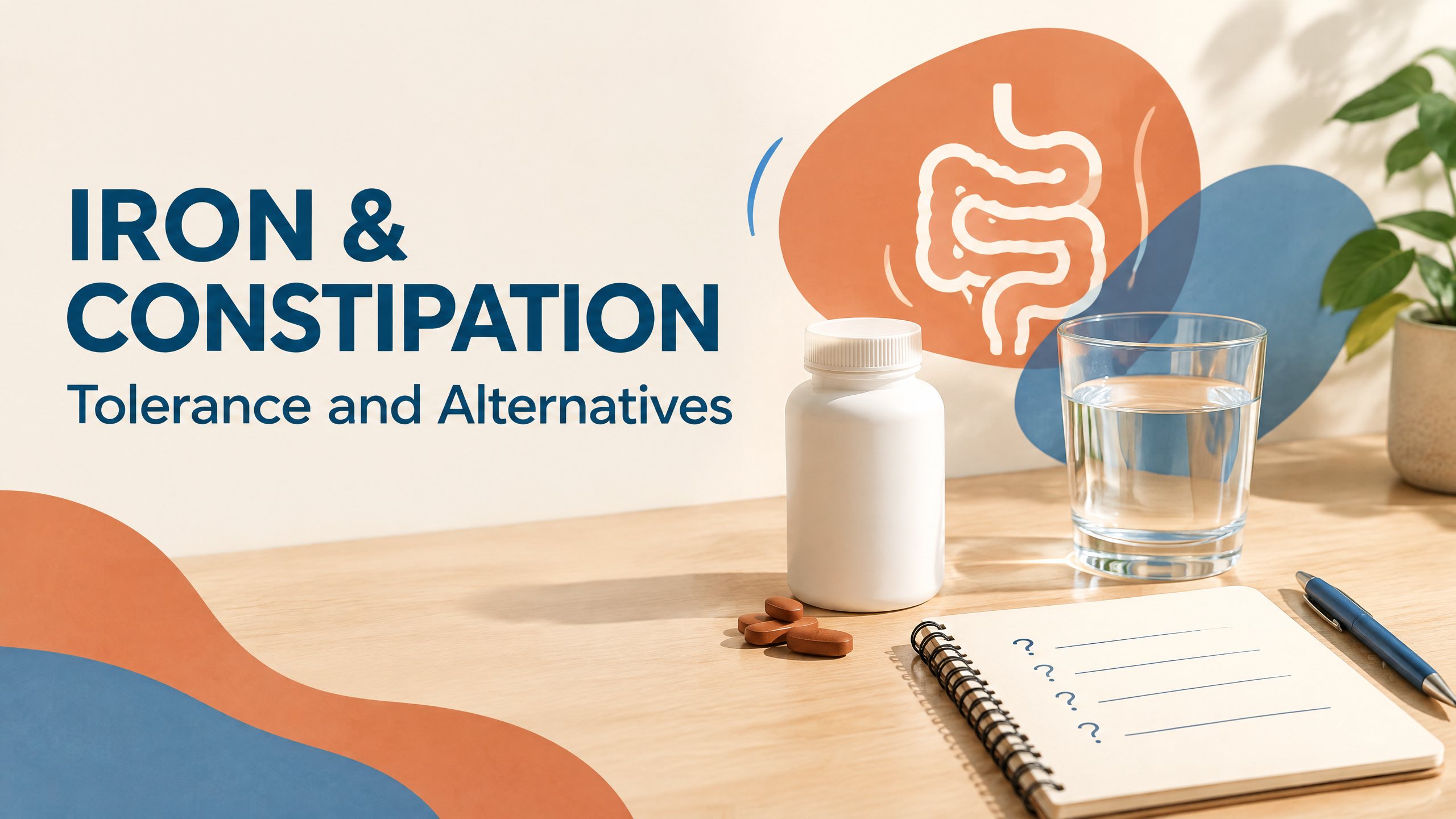
Oral iron is a well-recognized cause of gastrointestinal side effects. The NIH Office of Dietary Supplements (ODS) iron fact sheet for consumers notes that iron supplements commonly cause stomach upset, constipation, or dark stools. The mechanism is not completely detailed in consumer summaries, but these effects are frequently reported and are among the main reasons people stop taking iron products.
Practical approaches people try to improve tolerance
Different strategies may help reduce constipation or other stomach symptoms. The evidence summarized by ODS supports some general approaches; for specific changes (product, dose, or schedule) discuss options with your clinician.
- Taking iron with food — Many people take iron with a small amount of food to reduce stomach upset. ODS notes that taking iron with meals can reduce gastrointestinal side effects, though food may change how much iron is absorbed. Your clinician can advise on trade-offs based on your iron status and reasons for treatment.
- Changing the formulation — Iron supplements come in several chemical forms (for example, different iron salts) and in tablets, liquids, or slow‑release formulations. Some people tolerate one form better than another; ODS describes different product types but emphasizes choosing products under clinician guidance.
- Timing and interactions — Certain foods and medicines can reduce iron absorption (for example, calcium‑containing foods or antacids). ODS advises spacing iron away from these agents when absorption is important. Vitamin C can increase iron absorption, which may be relevant if you take iron with a meal.
- Alternate dosing strategies — Some clinicians use different dosing schedules (for example, alternate‑day dosing) to balance benefit and side effects. ODS provides background about iron use but recommends individualized medical decisions rather than one‑size‑fits‑all dosing.
- Addressing constipation symptoms — If constipation develops, discuss short‑term measures with your clinician or pharmacist. They can advise whether fiber changes, stool softeners, or laxatives are appropriate in your situation and whether to continue iron while treating the symptom.
Label‑reading and product quality: what to check
Dietary supplements are regulated differently than prescription drugs. The FDA’s dietary supplements page explains that manufacturers are responsible for product safety and labeling and that dietary supplements do not require premarket FDA approval for effectiveness. The ODS “What You Need To Know” consumer sheet also gives practical tips for choosing and using supplements.
- Read the Supplement Facts panel to see the amount of elemental iron and the form (the label often lists the chemical form of iron used).
- Check the list of other ingredients—some formulations include added vitamin C (to boost absorption) or calcium (which can reduce absorption).
- Follow the product directions and discuss with your clinician whether the product and schedule are appropriate for your needs.
- Be aware that a manufacturer’s quality claims are not the same as FDA approval; you can look for information from independent testing organizations and talk with a pharmacist if you want additional quality assurance.
Important interactions and cautions
- Drug interactions: ODS notes that iron can interact with several medications (for example, antacids, some antibiotics, and certain thyroid medicines). Spacing iron apart from these drugs can be important; check with the prescriber or pharmacist.
- Accidental overdose risk: Iron-containing products can be dangerous in accidental overdose, particularly for young children. Keep supplements stored safely out of reach and seek urgent care for suspected ingestion. The ODS fact sheet highlights safety concerns about iron poisoning.
- Pregnancy and medical conditions: If you are pregnant, breastfeeding, or have chronic medical conditions, discuss iron use with your clinician. ODS provides pregnancy-related information and emphasizes individualized care.
When to seek care
- Seek urgent medical attention for severe abdominal pain, persistent vomiting, fainting, or signs suggestive of a serious reaction or overdose.
- Dark or black stools are a common effect of many iron products and usually are not harmful, but contact your clinician if you have heavy bleeding, dizziness, or other concerning symptoms.
- If constipation is severe, persistent, or accompanied by severe abdominal pain or inability to pass gas or stools, get medical evaluation.
Bottom line
Iron supplements commonly cause gastrointestinal side effects, including constipation. Strategies that people and clinicians use include taking iron with food, changing the formulation or dosing schedule, and managing constipation symptomatically, but the best approach depends on why you need iron and your overall health. Read supplement labels, be aware of interactions, store products safely, and discuss any changes with your clinician. If you experience severe symptoms or suspect accidental ingestion, seek prompt medical care.