In this guide
This article is a draft for editorial review and not medical advice. It summarizes official U.S. government information about dietary supplements and general guidance for consumers.
What chlorophyll supplements are
Products sold as chlorophyll or chlorophyllin appear on the market as dietary supplements in forms such as liquids, tablets, or powders. Like other supplements, they are regulated differently from prescription drugs: the U.S. Food and Drug Administration (FDA) does not review or approve dietary supplements for safety or effectiveness before they are sold. Manufacturers are responsible for ensuring products are labeled accurately and not adulterated, and they must follow post‑market reporting rules.
What “detox” claims usually mean — and what they don’t prove
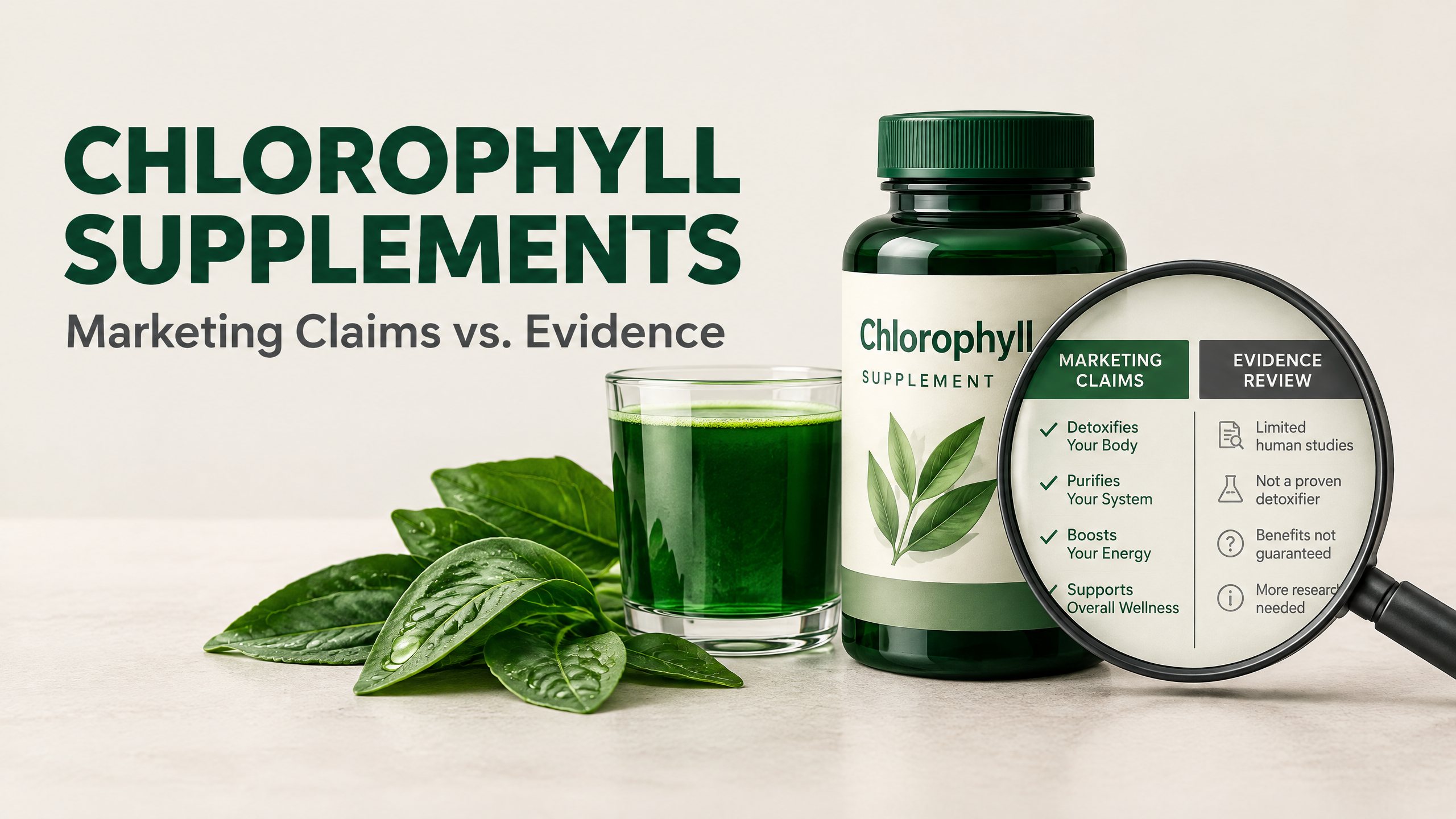
Marketing language such as “detox,” “cleanse,” or “flush out toxins” is typically a consumer-friendly phrase rather than a specific, measurable biological claim. Under U.S. rules, supplements may carry structure/function statements (for example, about supporting health or normal body functions) but cannot lawfully claim to treat or cure diseases unless the claim is supported and reviewed as a drug. A product labeled with a structure/function claim must include the FDA‑required disclaimer that the statement has not been evaluated by the FDA.
What the evidence shows
Authoritative federal sources that evaluate dietary supplements generally find that many marketing claims for supplements are not supported by strong clinical evidence. For most dietary ingredients marketed to produce a generalized “detox” effect, reliable proof that taking the product removes a defined toxin from the body or improves health outcomes is lacking. Official information from federal agencies stresses that isolated marketing claims are not the same as high‑quality scientific evidence.
Why rigorous evidence matters
Claims about removing toxins or improving long‑term health should be supported by well‑designed clinical research showing measurable benefits and acceptable safety. The regulatory framework for supplements differs from that for drugs, so consumers should be cautious about inferring effectiveness from advertising alone.
Label reading: practical steps
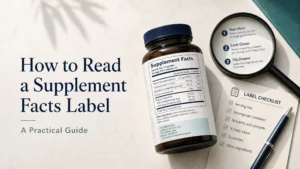
- Read the ingredient list. Note whether the label lists “chlorophyll,” “chlorophyllin,” or another botanical/ingredient name and what other ingredients (fillers, flavorings, preservatives) are present.
- Check serving size and total amount per serving. Labels should list how much of each ingredient is in a serving and how many servings are in a container.
- Look for manufacturer contact information. Reputable companies provide a way to reach them and to report adverse events.
- Search federal label databases. The Dietary Supplement Label Database (DSLD) provides copies of many product labels so you can compare products and wording; the Dietary Supplement Ingredient Database (DSID) can help you compare reported versus analytically measured ingredient content for some products.
- Beware of broad disease claims. Claims that a supplement will “detoxify organs,” “prevent disease,” or “treat a medical condition” are different from structure/function statements and raise concern if not supported by regulatory review.
Interactions, safety, and who should be cautious
Dietary supplements can vary in content and quality, and some have caused adverse effects or interacted with prescription medicines in other contexts. Because chlorophyll supplements are sold as dietary supplements, they do not undergo the premarket approval required for drugs. People who are pregnant or breastfeeding, children, individuals with chronic medical conditions, or anyone taking prescription medications should consult a health care professional before starting any supplement. If you are using supplements in place of medically recommended treatments for a health problem, discuss this with your clinician.
When to seek care
- Stop the supplement and seek immediate care for signs of a severe allergic reaction (hives, swelling of the face or throat, difficulty breathing).
- Consult a clinician if you develop new or worsening symptoms after starting a supplement, such as severe gastrointestinal symptoms, jaundice (yellowing of the skin or eyes), unexplained fatigue, or other concerning changes.
- Report serious adverse events to the FDA via the MedWatch program; contact information is available on FDA consumer pages.
Bottom line
Marketing claims that chlorophyll supplements “detox” the body are not the same as scientific proof. Because dietary supplements are regulated differently than drugs, consumers should evaluate claims critically, read labels carefully, and consult health professionals before use. Use federal resources like the DSLD and DSID to check labels and ingredients, and rely on credible, evidence‑based guidance rather than advertising when making decisions about supplement use.