In this guide
- Soluble vs. Insoluble Fiber: Food Sources and Practical Differences
- What are soluble and insoluble fiber?
- How they act in the digestive tract (practical differences)
- Common food sources
- Practical label-reading and shopping tips
- How to add both types of fiber to meals (easy swaps and examples)
- Possible short-term effects and safety
- When to seek care
- Bottom line
- References
Soluble vs. Insoluble Fiber: Food Sources and Practical Differences
Fiber is a key part of plant foods that we can’t fully digest. Different kinds of fiber behave differently in the digestive tract. This article explains the practical differences between soluble and insoluble fiber, lists common food sources, and gives realistic tips for choosing and using them. It is a general informational summary and not individualized medical advice.
What are soluble and insoluble fiber?
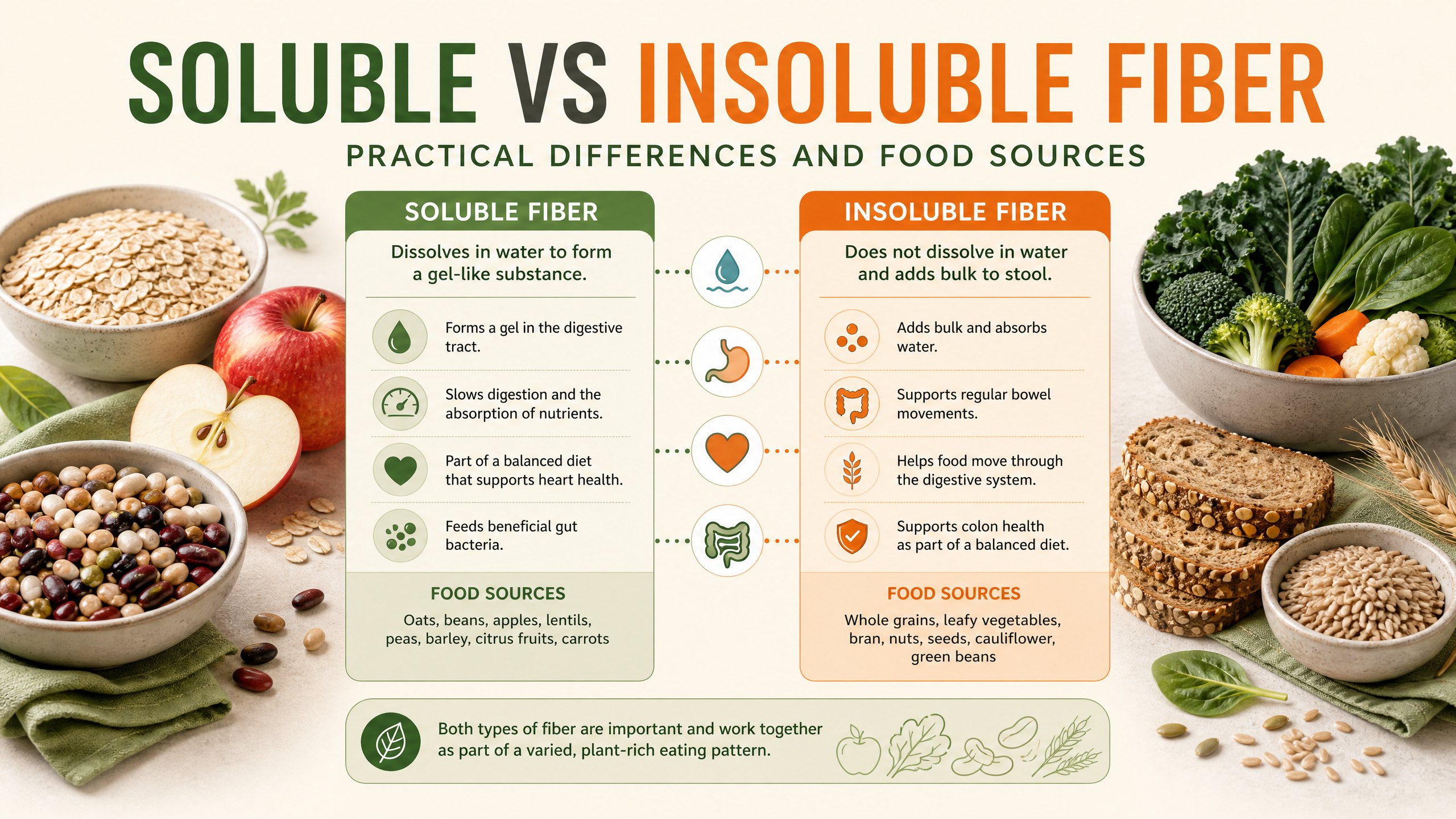
Soluble fiber dissolves or swells in water and forms a soft gel-like substance in the gut. Insoluble fiber does not dissolve in water and tends to add bulk and texture to stool. Both types are naturally present in whole foods, and most high-fiber foods contain a mix of soluble and insoluble fibers.
How they act in the digestive tract (practical differences)
- Soluble fiber: absorbs water and creates a gel. This can slow digestion modestly and may affect intestinal transit time and stool consistency. Commonly sought for easing occasional loose stools or to help with regularity when used as part of an overall eating pattern.
- Insoluble fiber: adds bulk and can help move material through the digestive tract more quickly. It’s usually recommended when aiming to support regular bowel movements.
Both types contribute to overall dietary fiber intake recommended in public nutrition guidance and are components of fruit, vegetables, whole grains, legumes, nuts, and seeds. The Dietary Guidelines and MyPlate encourage a variety of fiber-rich foods as part of a healthy eating pattern rather than focusing on individual fiber types alone.
Common food sources
- Soluble-fiber–rich foods: oats and oat bran, barley, beans and lentils, many fruits (for example apples and citrus), peas, flaxseed, and psyllium-containing products.
- Insoluble-fiber–rich foods: whole-wheat products, wheat bran, brown rice, whole-grain cereals, vegetables like cauliflower and potatoes (especially with skins), and many nuts and seeds.
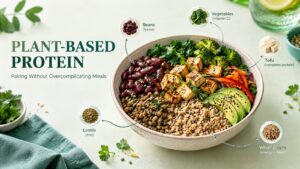
Remember that whole foods usually provide a mix of soluble and insoluble fibers. For example, beans and lentils contain both types, as do many whole grains and vegetables.
Practical label-reading and shopping tips
- Use the Nutrition Facts label to compare total “Dietary Fiber” between products. The label does not usually separate soluble and insoluble fiber, so look at ingredient lists for clues (e.g., oats, beans, whole wheat, psyllium, flaxseed).
- Choose whole-food sources first: whole fruits and vegetables, whole grains (look for whole-grain ingredients near the top of the list), and legumes. These provide fiber along with vitamins, minerals, and other beneficial compounds.
- When considering fiber supplements or highly processed “high-fiber” foods, check the ingredient list to see the fiber source (psyllium, inulin, oat fiber, etc.) and consider how that product fits your usual meals and preferences.
- Follow the broader guidance of MyPlate and national dietary guidance to include a variety of vegetables, fruits, whole grains, and legumes across meals rather than relying on single foods or supplements.
How to add both types of fiber to meals (easy swaps and examples)
- Breakfast: choose oatmeal with sliced fruit and a tablespoon of ground flaxseed (soluble + insoluble mix).
- Lunch: add a generous portion of mixed greens and raw vegetables plus a bean-based salad (legumes provide both fiber types).
- Dinner: include a serving of brown rice or barley, a side of roasted vegetables with skins on, and a lentil or bean side dish.
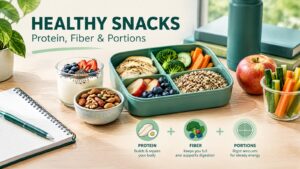
- Snacks: fruit with a handful of nuts, raw vegetables with hummus, or whole-grain crackers with nut butter.
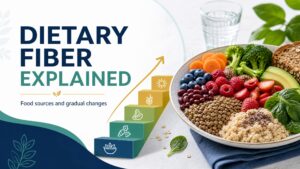
Introduce higher-fiber foods gradually and spread them across the day to reduce temporary digestive side effects.
Possible short-term effects and safety
Increasing fiber intake quickly can cause gas, bloating, and cramping for some people. The National Institute of Diabetes and Digestive and Kidney Diseases (NIDDK) suggests gradual increases and adequate fluid intake to help the gut adjust. Also follow standard food-safety practices when preparing high-fiber foods such as legumes, grains, fruits, and vegetables (safe handling, storage, and cooking guidance from FDA and USDA/FSIS).
When to seek care
Contact a healthcare professional if you experience severe or persistent symptoms after changing your diet, including intense abdominal pain, blood in the stool, unintentional weight loss, difficulty swallowing, or prolonged constipation or diarrhea. These signs need prompt evaluation to rule out underlying conditions.
Bottom line
Soluble and insoluble fibers have different physical properties in the gut but both are important. Aim for a variety of fiber-rich foods—vegetables, fruits, whole grains, legumes, nuts, and seeds—rather than focusing on one type. Increase intake gradually, pay attention to how your body responds, and follow food-safety guidance when preparing fiber-rich foods.