In this guide
- Key takeaways
- Why this matters
- How the FDA’s oversight works (short overview)
- Why a product might not be listed — and what that means for you
- Sources and limits of FDA lists
- Practical steps to lower your risk
- When to contact a clinician or seek urgent care
- How to report suspicious or harmful products
- Limitations and realistic expectations
- Short safety disclaimer
- Safety disclaimer
- References
- Related VitaEvidence reading
Category: Supplement Safety Basics
Key takeaways
- FDA warning lists and its Health Fraud Product Database do not include every unsafe, mislabeled, or adulterated dietary supplement or consumer product.
- Supplements are not pre‑approved by the FDA for safety or effectiveness; absence from an FDA list does not guarantee a product is safe or accurately labeled.
- Reasons a product may not appear on an FDA database include limited testing, recent emergence on the market, distribution through informal or overseas channels, and reporting or investigation delays.
- Practical steps: read labels carefully, look for high‑quality third‑party testing, avoid products with “miracle” claims, check authoritative sources before use, and report suspicious or harmful products to the FDA.
- Seek medical help for adverse reactions or if you’re considering a supplement that could interact with prescription medicines.
Why this matters
Many people assume that if a product isn’t on an FDA warning list or in the agency’s Health Fraud Product Database, it must be safe. That’s not necessarily true. The FDA does identify and take action against products that are dangerous, misbranded, or contain hidden prescription drugs, but the agency does not test every product on the market and has limits on the speed and scope of investigations. Understanding those limits helps you make safer choices.
How the FDA’s oversight works (short overview)
- Dietary supplements sold in the U.S. are regulated under a different framework than prescription drugs. Manufacturers are responsible for ensuring products are safe and accurately labeled, but the FDA generally does not review or approve supplements before they are sold. (See the FDA’s overview of dietary supplements for more.) [https://www.fda.gov/food/dietary-supplements]
- The FDA investigates reports of adulteration, contamination, and misleading claims and posts notifications and recalls when specific products are found problematic. The agency also maintains the Health Fraud Product Database and issues Medication Health Fraud Notifications and product-specific alerts (for example, sexual enhancement or energy products found to contain undeclared drugs). [https://www.fda.gov/consumers/health-fraud-scams/health-fraud-product-database] [https://www.fda.gov/drugs/medication-health-fraud-notifications/sexual-enhancement-and-energy-product-notifications] [https://www.fda.gov/drugs/medication-health-fraud/medication-health-fraud-notifications]
Why a product might not be listed — and what that means for you
Below are common reasons a product won’t appear in an FDA warning database, with practical advice you can use.
| Reason it may not be listed | What it means for you | What to do |
|---|---|---|
| The product hasn’t been tested or reported yet | FDA lists come from inspections, lab tests, consumer complaints, and industry reports. Many products never get evaluated. | Be cautious with new or niche products; verify claims and look for third‑party testing. |
| Adulteration is intermittent or limited to certain lots | A single batch could be contaminated while others are not; only the affected lots may be flagged. | Check lot numbers and expiration dates on any FDA notice; don’t generalize a single recall to every product with the same brand name without evidence. |
| The product is sold through informal channels or overseas sellers | Products imported or sold via some online marketplaces are harder to trace and regulate. | Prefer reputable retailers and be extra cautious with products from international sellers whose supply chains are unclear. |
| The product is newly introduced or reformulated | Investigations and testing take time; there can be a lag between a problem arising and an FDA notification. | Search multiple sources (FDA database, consumer news, third‑party lab reports) and allow some time for follow‑up before assuming safety. |
| The product makes claims that haven’t yet triggered enforcement | Some products may make exaggerated health claims but haven’t been targeted yet. | Treat extraordinary claims skeptically; the FTC and FDA both warn against deceptive health claims. [https://www.ftc.gov/news-events/topics/truth-advertising/health-claims] |
| The FDA found problems but the product name differs from what you expect | A warning may identify a particular label, formulation, or packaging; other products with similar names may not be involved. | Read FDA notices carefully and don’t generalize a warning to all products with similar names. |
Sources and limits of FDA lists
- The FDA’s Health Fraud Product Database and other notifications are important resources, but they reflect only investigations the agency has completed or is actively publicizing. They are not exhaustive inventories of all unsafe or mislabeled products. [https://www.fda.gov/consumers/health-fraud-scams/health-fraud-product-database]
- The FDA provides specific guidance on avoiding products that are contaminated with hidden ingredients and describes patterns the agency sees in tainted products (for example, some honey‑based products and sexual enhancement supplements have been found to contain undeclared active drugs). Those findings apply to the specific products identified in the notices, not to all products of a type or brand unless explicitly stated. [https://www.fda.gov/drugs/medication-health-fraud/avoiding-products-contaminated-hidden-ingredients] [https://www.fda.gov/consumers/health-fraud-scams/tainted-honey-based-products-hidden-active-drug-ingredients]
Practical steps to lower your risk
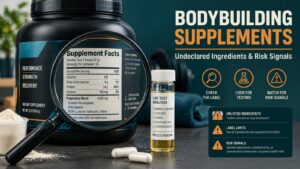
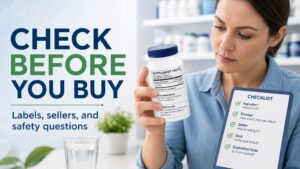
- Read the Supplement Facts and ingredient list carefully. Learn how to interpret labels: /how-to-read-supplement-facts-label/. Be aware that not all contents are always listed accurately. [internal link placeholder]
- Prefer products that have undergone independent third‑party testing (for example from USP, NSF, or ConsumerLab). These programs test for ingredient accuracy and contaminants, though they do not guarantee safety for every individual or application.
- Be skeptical of products that promise rapid, dramatic results or use terms like “miracle,” “secret formula,” or “clinically proven” without clear citations to reputable studies. The FTC also provides guidance for businesses and consumers about health claims. [https://www.ftc.gov/news-events/topics/truth-advertising/health-claims] [https://www.ftc.gov/business-guidance/resources/health-products-compliance-guidance]
- Check multiple authoritative sources before using a product, including the FDA’s Health Fraud Product Database and medication health fraud notifications. [https://www.fda.gov/consumers/health-fraud-scams/health-fraud-product-database] [https://www.fda.gov/drugs/medication-health-fraud/medication-health-fraud-notifications]
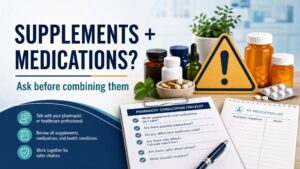
- Avoid supplements marketed as replacements for prescription medicines, and never stop or alter prescribed therapy without discussing it with your clinician. If you’re taking medicines, consult a clinician about potential interactions; see /supplements-medication-interactions-questions/ for related information. [internal link placeholder]
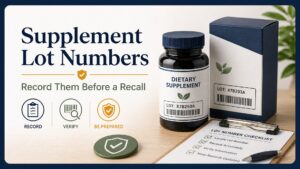
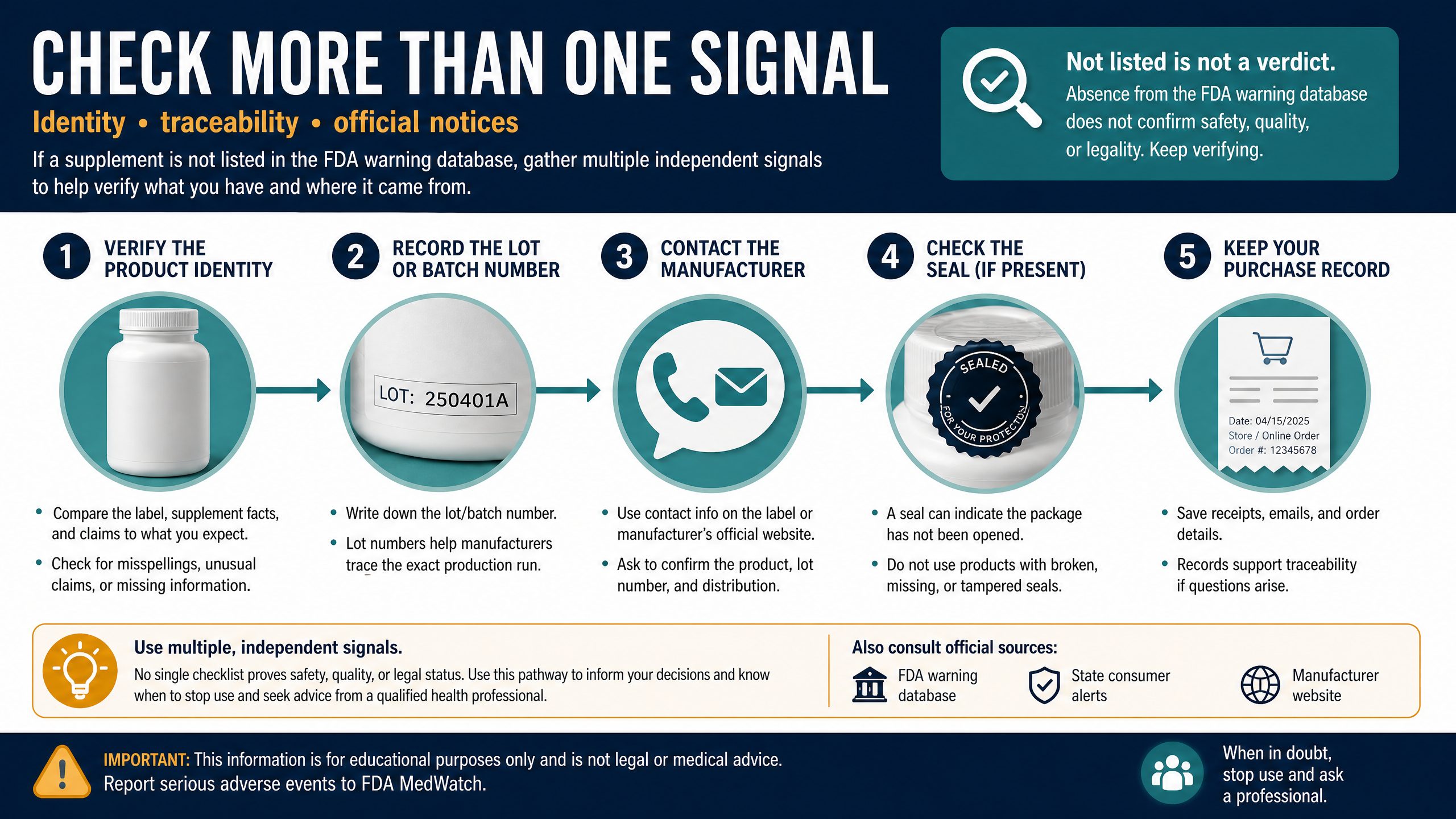
- Keep an eye on lot numbers and packaging differences. If an FDA warning names specific lot numbers, only those lots may be affected. Don’t assume all versions of a product are implicated unless the FDA says so.
When to contact a clinician or seek urgent care
- Contact your clinician promptly if you experience new or severe symptoms after taking a supplement (such as chest pain, fainting, shortness of breath, severe headache, jaundice, allergic reactions, or signs of a serious interaction with other medications).
- Seek emergency care for life‑threatening symptoms.
- Tell your clinician about all supplements and over‑the‑counter products you use, including brand names, doses, and where you purchased them. This information helps assess interactions and adverse effects.
How to report suspicious or harmful products
If you suspect a product is adulterated, mislabeled, or caused harm:
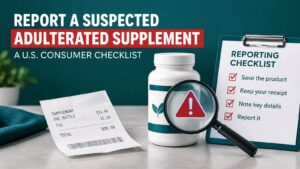
– Report it to the FDA through available channels. The FDA provides ways for consumers to contact the Center for Drug Evaluation and Research (CDER) about human drugs and suspicious products. [https://www.fda.gov/about-fda/cder-contact-information/ways-consumers-contact-fda-about-human-drugs]
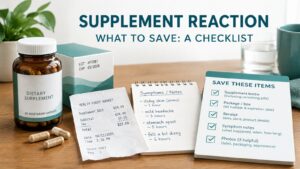
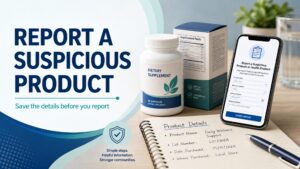
– File a safety report through MedWatch for adverse events related to supplements or drugs, and include product packaging, lot numbers, and purchase details if possible.
– Reporting helps the FDA identify trends and take action that may protect other consumers.
Limitations and realistic expectations
- Even with careful choices, you cannot eliminate all risk. Some unsafe or mislabeled products may never be identified publicly, and testing will never cover every product or batch.
- Third‑party testing reduces risk but does not eliminate it; independent labs test samples, not every production run.
- Regulatory action can be slow; a product may be unsafe for some time before it appears in any official list.
Short safety disclaimer
This article is educational and not a substitute for professional medical advice. If you have health concerns or questions about supplements and medications, speak with a qualified healthcare professional.
Safety disclaimer
This article provides general information and is not medical advice. It is not a substitute for professional medical evaluation. If you have health concerns, consult a licensed clinician.
References
https://www.fda.gov/drugs/medication-health-fraud/avoiding-products-contaminated-hidden-ingredients
https://www.fda.gov/consumers/health-fraud-scams/tainted-honey-based-products-hidden-active-drug-ingredients
https://www.fda.gov/consumers/health-fraud-scams/health-fraud-product-database
https://www.fda.gov/food/dietary-supplements
https://www.fda.gov/food/information-consumers-using-dietary-supplements/questions-and-answers-dietary-supplements
https://www.fda.gov/food/dietary-supplements-guidance-documents-regulatory-information/dietary-supplement-labeling-guide
https://www.fda.gov/drugs/medication-health-fraud-notifications/sexual-enhancement-and-energy-product-notifications
https://www.fda.gov/drugs/medication-health-fraud/medication-health-fraud-notifications
https://www.ftc.gov/news-events/topics/truth-advertising/health-claims
https://www.ftc.gov/business-guidance/resources/health-products-compliance-guidance
https://www.fda.gov/about-fda/cder-contact-information/ways-consumers-contact-fda-about-human-drugs
Last reviewed: August 2026
VitaEvidence Editorial Team