In this guide
- Key takeaways
- Why the distinction matters
- What a supplement “recall” usually means
- What an FDA public notification is
- How the two can interact
- Table — Quick comparison
- Why FDA public notifications are common for “tainted” supplements
- What you should do if you learn of a recall or FDA notification
- How to find credible information
- Limitations and realities to keep in mind
- When to contact a clinician
- Safety disclaimer
- Practical checklist if you suspect a supplement problem
- Conclusion
- Safety disclaimer
- References
- Related VitaEvidence reading
Category: Supplement Safety Basics
Key takeaways
- A “recall” usually refers to an action by a manufacturer or distributor to remove a product from the market; FDA may request, participate in, or publicize recalls but does not always itself recall supplements.
- An FDA “public notification” is a communication from the agency warning the public about specific products or safety problems (for example, products found to contain hidden drug ingredients).
- Manufacturers are primarily responsible for supplement safety and labeling; FDA monitors the market and can take enforcement actions when it identifies unsafe or misbranded products.
- If you see a recall notice or FDA public notification for a supplement you used, stop using the product, keep the packaging and lot number, and contact your health care provider for symptoms or concerns. Report suspicious products to the FDA.
Why the distinction matters
Consumers often see language like “recall” and “FDA warning” used interchangeably, but they refer to different types of actions and come from different sources. Understanding the difference helps you decide how urgently to act, how to find trustworthy information, and what to expect from regulators and manufacturers.
What a supplement “recall” usually means
- Who initiates it: Most recalls are initiated voluntarily by the company that makes or distributes the product. A manufacturer may recall a dietary supplement when it discovers contamination, mislabeling, or another problem that could harm consumers.
- Legal context: Dietary supplements are regulated differently than prescription drugs. Manufacturers are responsible for ensuring safety and truthful labeling before marketing. The FDA monitors the market and can request a recall or use enforcement tools when needed, but the manufacturer commonly conducts the recall steps (removing product from shelves, notifying distributors/retailers).
- What you’ll see: A company recall notice typically includes the product name, lot or batch number(s), expiration dates, the reason for the recall, and instructions for consumers (for example, stop using the product and return or dispose of it). The seriousness ranges from precautionary to urgent.
What an FDA public notification is
- Purpose: An FDA public notification (also called an alert, consumer update, or safety communication) is intended to inform the public about a safety issue involving a product on the market. For dietary supplements, FDA public notifications commonly warn about products that contain hidden drug ingredients, contaminants, or serious safety concerns identified through agency review and testing.
- Who issues it: The FDA issues these notifications directly. They may be posted on FDA webpages such as the Medication Health Fraud Notifications and the Health Fraud Product Database.
- What you’ll see: FDA public notifications name the product(s) of concern, describe the risk (for example, undisclosed active drug ingredients), and tell consumers how to avoid harm. They may recommend stopping use and seeking medical care for adverse effects, and they often point to manufacturer-recall actions when those are underway.
How the two can interact
- Joint response: Often you will see both: a manufacturer recall and an FDA public notification. For example, if the FDA detects that a supplement contains a hidden pharmaceutical ingredient, the manufacturer may issue a voluntary recall while the FDA posts a public notification and, where appropriate, takes enforcement action.
- Not always parallel: A manufacturer may recall a product without a high-profile FDA alert. Conversely, FDA may post notifications when it discovers dangerous products in the market even if a manufacturer has not yet organized a recall.
Table — Quick comparison
| Feature | Manufacturer Recall | FDA Public Notification |
|---|---|---|
| Who issues it | Manufacturer/distributor (often voluntary) | U.S. Food and Drug Administration (FDA) |
| Legal authority | Company action; FDA may request/oversee | FDA communication; can be followed by enforcement |
| Typical content | Product ID, lot numbers, return/disposal instructions | Product ID, safety finding, public guidance |
| Consumer action | Follow recall instructions (stop use, return/dispose, seek refund) | Stop use if advised; follow health guidance; seek care if symptomatic |
| Examples | Recall for contamination, mislabeling | Alerts about supplements with hidden drug ingredients |
Why FDA public notifications are common for “tainted” supplements
The FDA frequently uses public notifications to warn consumers about dietary supplements that test positive for undeclared pharmaceutical ingredients or other contaminants. These situations are examples of “medication health fraud” when products marketed as supplements contain active drugs or controlled substances that are not listed on the label. The FDA maintains a Health Fraud Product Database and posts medication health fraud notifications to alert consumers when it finds these problems.
What you should do if you learn of a recall or FDA notification
- Stop using the product immediately. If an alert specifically says to stop, follow that advice.
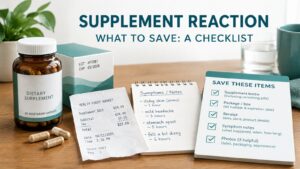
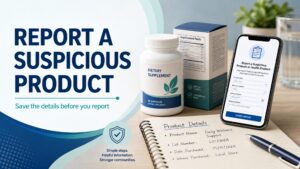
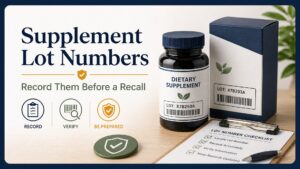
- Keep the product packaging and label (including lot/lot number, expiration date, and where you bought it). Those details will be important for determining whether your particular bottle or batch is affected.
- Check the official recall notice or FDA notification for instructions. A manufacturer recall may provide return or refund procedures. An FDA notification may give additional safety information and, in some cases, advice to seek medical attention.
- If you experience symptoms you think are related to the product, contact your health care provider. If you have severe or life‑threatening symptoms (for example, chest pain, difficulty breathing, fainting, severe allergic reaction), seek emergency care.
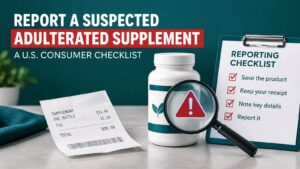
- Report problems to the FDA. Consumers can report adverse events or suspicious products using FDA reporting channels; the agency provides ways to contact its drug center about human drugs and to submit safety reports.
How to find credible information
- Use the FDA’s Health Fraud Product Database and Medication Health Fraud Notifications to check whether specific products appear on agency lists. The FDA often posts detailed findings when supplements are found to contain hidden ingredients or other hazards.
- Look for product identifiers such as brand name, lot number, and UPC code in notices. Without those identifiers, it can be hard to tell whether the product you have is included.
- Be cautious of marketing claims. The Federal Trade Commission (FTC) and FDA both regulate advertising and labeling claims; products that promise to “treat,” “cure,” or deliver dramatic health results with no evidence may be suspect.
Limitations and realities to keep in mind
- Not every problematic product will generate a national recall or FDA alert immediately. Some issues are identified and resolved locally or by the company without broad publicity.
- Absence from FDA lists does not guarantee a product is safe; it may simply not have been tested or reported yet.
- Manufacturers are responsible for supplement safety and truthful labeling before marketing. FDA oversight is post‑market and focuses on identifying and addressing problems that arise after products reach consumers.
When to contact a clinician
Contact your health care provider if you:
– Have new or worsening symptoms after taking a supplement that you think may be related to the product.
– Are taking prescription drugs, over‑the‑counter medicines, or other supplements and are concerned about possible interactions; see guidance on drug–supplement interactions (/supplements-medication-interactions-questions/).
– Have underlying medical conditions (for example, heart disease, high blood pressure, diabetes) and are unsure whether a supplement you used could affect your health.
Safety disclaimer
This article is for educational purposes and does not provide individualized medical advice, diagnosis, or treatment. If you have health concerns related to a supplement, speak with a qualified health care professional.
Practical checklist if you suspect a supplement problem
- Stop using the product.
- Save the bottle and label; photograph lot number and UPC.
- Check the FDA Health Fraud Product Database and recent FDA notifications for your product.
- Follow recall instructions if a manufacturer recall applies.
- Report the product and any adverse events to the FDA.
- Seek medical care for concerning symptoms.
Conclusion
“Recalls” and “FDA public notifications” serve different but complementary roles in protecting consumers. A recall is typically a company’s action to remove a product from the market; FDA public notifications are agency communications to warn the public about specific safety risks and may coincide with recalls or other enforcement actions. Being able to identify and respond to both kinds of messages helps you protect your health and report problems that may prevent harm to others.
Safety disclaimer
This article provides general information and is not medical advice. It is not a substitute for professional medical evaluation. If you have health concerns, consult a licensed clinician.
References
https://www.fda.gov/drugs/medication-health-fraud/avoiding-products-contaminated-hidden-ingredients
https://www.fda.gov/consumers/health-fraud-scams/tainted-honey-based-products-hidden-active-drug-ingredients
https://www.fda.gov/consumers/health-fraud-scams/health-fraud-product-database
https://www.fda.gov/food/dietary-supplements
https://www.fda.gov/food/information-consumers-using-dietary-supplements/questions-and-answers-dietary-supplements
https://www.fda.gov/food/dietary-supplements-guidance-documents-regulatory-information/dietary-supplement-labeling-guide
https://www.fda.gov/drugs/medication-health-fraud-notifications/sexual-enhancement-and-energy-product-notifications
https://www.fda.gov/drugs/medication-health-fraud/medication-health-fraud-notifications
https://www.ftc.gov/news-events/topics/truth-advertising/health-claims
https://www.ftc.gov/business-guidance/resources/health-products-compliance-guidance
https://www.fda.gov/about-fda/cder-contact-information/ways-consumers-contact-fda-about-human-drugs
Last reviewed: August 2026
VitaEvidence Editorial Team