In this guide
- Key takeaways
- What are hidden drug ingredients and why they’re risky
- Red flags on a label and product page
- Where to check official information
- Practical steps to reduce risk
- 2. Evaluate the claims
- 3. Research the product and seller
- 4. Watch for specific categories with higher known risk
- 5. Keep packaging and lot numbers
- 6. Ask a clinician or pharmacist if you have medicines or health conditions
- When to contact a clinician or seek urgent care
- How to report a suspicious product
- Limitations and realistic expectations
- Safety disclaimer
- Further reading and tools
- References
- Related VitaEvidence reading
Category: Supplement Safety Basics
Key takeaways
- “Hidden drug ingredients” are undeclared pharmaceutical compounds found in some products labeled as dietary supplements or natural remedies. They can cause harmful side effects and dangerous interactions.
- The FDA has repeatedly identified tainted products (including some honey-based remedies and sexual‑enhancement/energy supplements) that contain undisclosed drugs. Use label checks, seller/supply‑chain clues, and official databases to reduce risk.
- If you take prescription medicine, are pregnant, breastfeeding, or have a chronic condition, consult a clinician before using a new supplement. Report suspicious products to the FDA.
What are hidden drug ingredients and why they’re risky
Hidden drug ingredients are pharmaceutical‑grade chemicals that do not appear on a product’s label. They are sometimes added to increase a product’s apparent effectiveness for weight loss, sexual enhancement, pain relief, or other uses.
These undeclared ingredients are risky because:
– You cannot know the dose. A hidden ingredient may be present at unsafe levels.
– They can interact with prescribed medicines (for example, blood thinners, diabetes drugs, or blood‑pressure medications), increasing the risk of adverse events.
– People with certain conditions — pregnancy, breastfeeding, heart disease, liver disease, or kidney disease — may be especially vulnerable.
The U.S. Food and Drug Administration (FDA) has alerted consumers that some products, including honey‑based remedies and supplements marketed for sexual enhancement or weight loss, have contained hidden active drug ingredients. The FDA maintains an online health‑fraud product database and posts medication health‑fraud notifications describing specific products found to be tainted (see References).
How common is this problem?
Dietary supplements in the U.S. do not require premarket approval by the FDA. The agency monitors products after they enter the market and issues warnings, recalls, and alerts when it finds contamination or undeclared drugs in specific items. While many supplements are unlabeled or labeled correctly, the FDA’s findings show that tainted products remain a real concern—especially for certain categories (sexual‑enhancement, weight‑loss, unapproved pain relievers, and some “natural” remedies). For context and examples, consult the FDA’s medication health fraud notifications and the health‑fraud product database (see References).
Red flags on a label and product page
No single label element proves a product contains hidden drugs. But these signs can raise concern:
- Overblown claims: Promises of “fast,” “guaranteed,” or “miraculous” cures for chronic conditions. The Federal Trade Commission (FTC) and FDA warn against false or unsubstantiated health claims.
- Lack of “Dietary Supplement” designation: If a product is sold as a “supplement” but the label looks like a drug label or claims to cure disease, that mismatch is suspicious. See the FDA’s guidance on dietary supplement labeling.
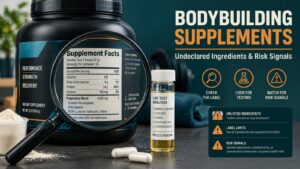
- Proprietary blends with no quantities: “Proprietary blend” listings that hide the amounts of individual ingredients make it impossible to judge dose and safety.
- Short or no ingredient list in online photos: Sellers who post few or blurry label photos or provide incomplete ingredient information.
- Unverified seller or foreign manufacturer: Products from obscure websites, third‑party marketplaces without seller information, or manufacturers without contact details or U.S. addresses can be higher risk.
- Unusual product forms or packaging: Repackaged powders, syrups, or honey‑based products marketed for medical uses may have been subject to FDA warnings in the past.
Table: Common red flags and what to do
| Red flag | Why it matters | What to do |
|—|—:|—|
| Bold “miracle” claims or “cure” language | Likely unsubstantiated; could be marketing a tainted product | Avoid product; check FTC & FDA guidance on health claims |
| Missing or vague Supplement Facts | Prevents dose evaluation | Look for clear Supplement Facts and declared ingredient amounts |
| Proprietary blend with no amounts | Dose and safety unknown | Prefer products that list quantities for each ingredient |
| Seller hides contact/manufacturer info | Hard to trace or report problems | Avoid; choose brands with clear company info |
| Product is a honey‑based or sexual‑enhancement item with aggressive claims | FDA has found hidden drugs in some such products | Check FDA health‑fraud notifications and database before use |
Where to check official information
- FDA health‑fraud product database: search for a product name, brand, or ingredient to see whether the FDA has identified it as tainted.
- FDA medication health‑fraud notifications and sexual enhancement/energy product notifications: these pages list specific products that the FDA has flagged and describe the hidden ingredients found.
- FDA pages on dietary supplements and labeling: explain what a lawful dietary supplement label should include.
Practical steps to reduce risk
- Read the label carefully
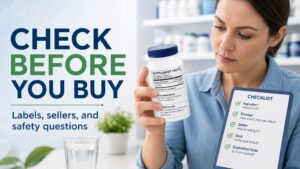
– Look for a clear “Supplement Facts” panel that lists ingredient names and quantities.
– Note any “proprietary blend” and be cautious when amounts aren’t shown. If you’re unsure how to read a label, see our guide: /how-to-read-supplement-facts-label/.
2. Evaluate the claims
- Avoid products promising rapid cures, dramatic weight loss, or “secret” formulas. Check FTC and FDA guidance about misleading health claims.
3. Research the product and seller
- Search the FDA health‑fraud product database and medication health‑fraud notifications for the product name and the seller.
- Prefer established manufacturers with contact information and transparent testing practices.
4. Watch for specific categories with higher known risk
- The FDA has repeatedly found hidden drugs in some sexual‑enhancement and energy products and in certain honey‑based remedies. That does not mean all products of these types are tainted, but extra caution is warranted.
5. Keep packaging and lot numbers
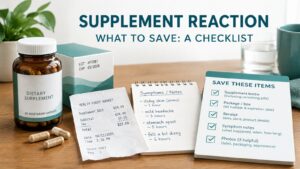
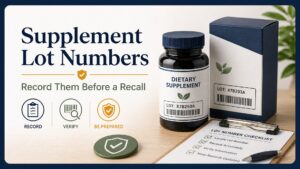
- If you experience an adverse effect, having the product label, lot number, and where/when you purchased it will help authorities investigate.
6. Ask a clinician or pharmacist if you have medicines or health conditions
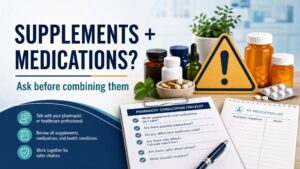
- If you take prescription drugs, especially blood thinners, diabetes medications, blood‑pressure drugs, or have cardiovascular disease, consult your clinician or pharmacist before starting any supplement. For general questions about supplement–medication interactions, see /supplements-medication-interactions-questions/.
When to contact a clinician or seek urgent care
Contact a clinician or seek emergency care if you experience:
– Chest pain, sudden shortness of breath, fainting, or palpitations.
– Severe dizziness, sudden changes in vision, speech difficulties, or weakness.
– Signs of a serious allergic reaction: difficulty breathing, swelling of face/lips/tongue, hives.
– Any severe or unusual symptoms after taking a supplement—especially if you also take prescription medications.
How to report a suspicious product
If you suspect a supplement contains undeclared drugs or has caused harm:
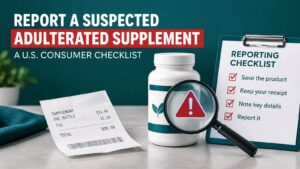
– Search the FDA health‑fraud product database to see whether the FDA has already issued a notification about the product.
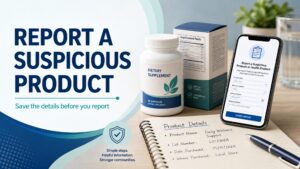
– Report your complaint and any adverse events to the FDA. The FDA provides ways for consumers to contact them about human drugs and health fraud. Include as much detail as possible: product name, lot number, purchase location, photos, and description of symptoms.
– You may also report misleading advertising to the FTC.
Limitations and realistic expectations
- The absence of an FDA warning does not guarantee a product is safe—many products never get tested proactively. FDA notifications typically follow laboratory testing or consumer reports.
- Testing every supplement you buy is impractical; use the risk‑reduction steps above.
- Manufacturers can change formulations; a single positive review or past safety does not guarantee current safety.
Safety disclaimer
This article provides general information and is not medical advice. It is not a substitute for professional medical evaluation. If you have health concerns, consult a licensed clinician.
Further reading and tools
- If you need help interpreting a Supplement Facts label, see our how‑to guide: /how-to-read-supplement-facts-label/
- If you have questions about interactions between supplements and medications, see: /supplements-medication-interactions-questions/
References
- https://www.fda.gov/drugs/medication-health-fraud/avoiding-products-contaminated-hidden-ingredients
- https://www.fda.gov/consumers/health-fraud-scams/tainted-honey-based-products-hidden-active-drug-ingredients
- https://www.fda.gov/consumers/health-fraud-scams/health-fraud-product-database
- https://www.fda.gov/food/dietary-supplements
- https://www.fda.gov/food/information-consumers-using-dietary-supplements/questions-and-answers-dietary-supplements
- https://www.fda.gov/food/dietary-supplements-guidance-documents-regulatory-information/dietary-supplement-labeling-guide
- https://www.fda.gov/drugs/medication-health-fraud-notifications/sexual-enhancement-and-energy-product-notifications
- https://www.fda.gov/drugs/medication-health-fraud/medication-health-fraud-notifications
- https://www.ftc.gov/news-events/topics/truth-advertising/health-claims
- https://www.ftc.gov/business-guidance/resources/health-products-compliance-guidance
- https://www.fda.gov/about-fda/cder-contact-information/ways-consumers-contact-fda-about-human-drugs
Last reviewed: August 2026
VitaEvidence Editorial Team