In this guide
- How “fast results” marketing can signal hidden drugs
- What kinds of hidden ingredients have regulators found?
- Why hidden active drugs are dangerous
- Marketing and labeling that often indicate higher risk
- Practical consumer checklist
- How to check whether a product has a known problem
- When to contact a clinician or seek immediate care
- How and where to report suspicious products
- Limitations and realistic expectations
- Safety disclaimer
- References
- Related VitaEvidence reading
Category: Sexual Enhancement and Energy Products
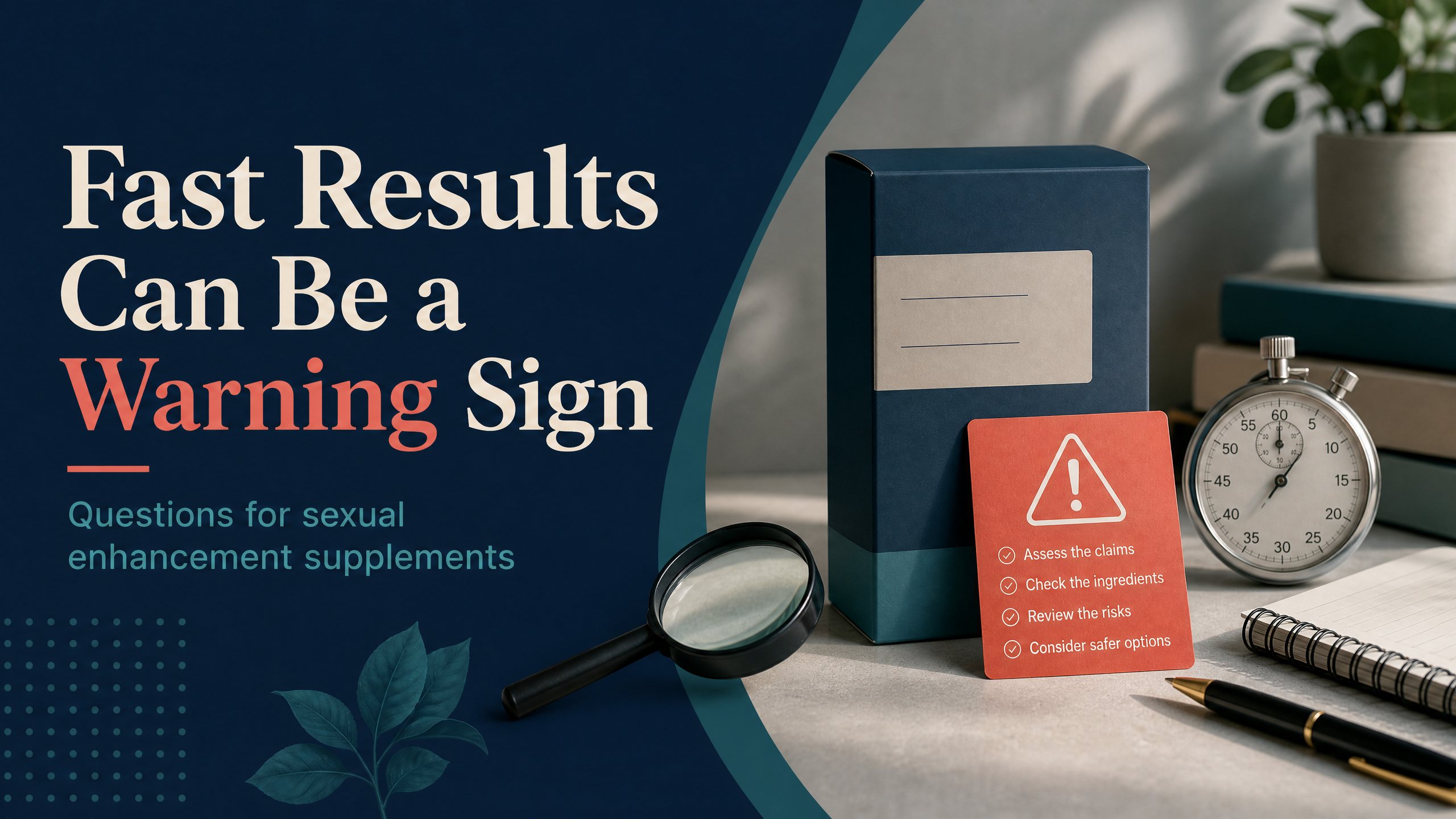
Many products marketed for sexual enhancement promise quick or dramatic benefits: “feel results in minutes,” “overnight performance,” or “fast-acting formula.” Those kinds of claims can sound appealing, but they warrant caution, especially when combined with missing ingredient amounts, vague seller information, or unsupported promises. Federal regulators have identified specific sexual-enhancement products containing hidden prescription-drug ingredients or other undeclared substances; that evidence should not be generalized to every product in the category. This article explains why “fast results” claims can indicate risk, how these hidden ingredients create real safety concerns, and practical steps you can take when considering a sexual enhancement product.
How “fast results” marketing can signal hidden drugs
Products are sometimes spiked with active pharmaceutical ingredients so they produce obvious, rapid effects. The U.S. Food and Drug Administration (FDA) has repeatedly identified sexual enhancement and energy products that contain undeclared prescription drugs or analogs (chemical relatives) of prescription drugs added to create quick results. These hidden ingredients are not disclosed on labels and are not evaluated for safety in the product as sold to consumers [FDA sexual enhancement and energy product notifications, FDA hidden ingredients guidance].
Because supplements are not pre‑approved by the FDA for safety or effectiveness, an immediate physiologic effect cannot establish what is in a product. When rapid-effect claims appear alongside incomplete labeling or an unidentified seller, they justify checking official FDA notices and avoiding use until the product can be evaluated.
What kinds of hidden ingredients have regulators found?
FDA testing has uncovered undeclared active ingredients in sexual enhancement and related products, including drugs belonging to classes that affect blood pressure and sexual function. These have included phosphodiesterase type 5 (PDE5) inhibitors or unapproved analogs — the same class as common prescription erectile dysfunction medications — and other active drug substances. Regulatory announcements and the FDA’s health‑fraud product database document numerous instances where marketed “supplements” contained such hidden ingredients [FDA sexual enhancement and energy product notifications, FDA health fraud product database].
Why hidden active drugs are dangerous
- Unknown dose and purity: When a prescription drug is added to an unlabeled product, you can’t know how much of the drug you’re getting or whether it’s contaminated. Doses may vary widely from pill to pill or batch to batch.
- Interaction risk: Hidden drugs can interact dangerously with prescription or over‑the‑counter medicines you already take. For example, PDE5 inhibitors can cause severe drops in blood pressure if taken with nitrates used for chest pain; they can also interact with certain blood‑pressure drugs and some antifungal or antibiotic medicines. Because the drug is undisclosed, a clinician can’t anticipate or account for that interaction [FDA hidden ingredients guidance].
- Underlying medical conditions: A hidden active ingredient may be unsafe if you have heart disease, low blood pressure, liver or kidney problems, or other medical conditions.
- Adverse effects and delays in care: Side effects may be attributed to the supplement company rather than to the active drug, and consumers may not receive appropriate medical care promptly because neither they nor their clinicians know what substance was taken.
Marketing and labeling that often indicate higher risk
Be especially cautious when you see products that combine these features:
- Promises of rapid or dramatic effects, e.g., “fast‑acting” or “results in minutes.”
- Claims of “secret” formulas, “miracle” results, or guarantees of outcomes that sound too good to be true.
- Labels that say “all natural” or “herbal” while also claiming drug‑like benefits.
- Little or no ingredient information, vague ingredient names, or missing “Supplement Facts” panels.
- Sales channels that prioritize secrecy or use off‑label distribution (certain online marketplaces, direct‑to‑consumer mailers, or foreign websites).
The Federal Trade Commission (FTC) and FDA both warn against deceptive health claims and product labeling practices; companies that make extreme or unsubstantiated claims may be using marketing tactics to disguise unsafe or illegal practices [FTC health claims, FDA dietary supplements labeling guidance].
Practical consumer checklist
Use the table below as a simple guide when you’re evaluating sexual enhancement products.
| What you see | What it may mean | What to do |
|---|---|---|
| “Fast‑acting,” “results in minutes,” “overnight” | A claim that warrants additional scrutiny; it does not prove adulteration | Do not treat the claim as proof of safety; verify the label and consider clinician advice |
| No clear “Supplement Facts” or incomplete ingredient list | Product may be mislabeled or adulterated | Don’t use; report to FDA and consider notifying your clinician if you’ve taken it |
| Claims of “secret” or proprietary ingredients | Manufacturer may be hiding drug additives | Avoid; request full ingredient disclosure before use |
| Sold through unregulated online sellers, foreign sites, or unsolicited mail | Harder to trace and higher risk of adulteration | Prefer reputable retailers; check product in FDA health‑fraud database |
| Advertisements that mimic prescription drug benefit claims | Marketing trying to substitute for medical treatment | Consult a clinician about safe, approved treatment options |
How to check whether a product has a known problem
- Search the FDA’s Health Fraud Product Database and the FDA’s medication health‑fraud notifications to see if a product or ingredient has been flagged for hidden drugs [FDA health fraud product database, FDA medication health‑fraud notifications].
- Review FDA consumer alerts and specific notifications about sexual enhancement or energy products that have been found to contain undisclosed drugs [FDA sexual enhancement and energy product notifications].
- Be wary of products not registered or sold with transparent labeling consistent with FDA dietary supplement rules [FDA dietary supplements, FDA dietary supplement labeling guide].
When to contact a clinician or seek immediate care
- Seek immediate medical care if you experience severe symptoms after taking a product: fainting, chest pain, sudden dizziness, shortness of breath, or signs of a serious allergic reaction.
- Contact your prescribing clinician before taking any supplement if you are on prescription medicines — especially nitrates (for chest pain), blood‑pressure medications, blood thinners, or medications that affect the liver enzyme system CYP3A4. Hidden ingredients can interact with these drugs.
- If you took a suspicious sexual enhancement product and later have unexplained symptoms, bring the product or its packaging to your clinician or local emergency department if you seek urgent care. If the product is known to contain an undeclared drug, your clinician can take that into account in treatment decisions.
How and where to report suspicious products
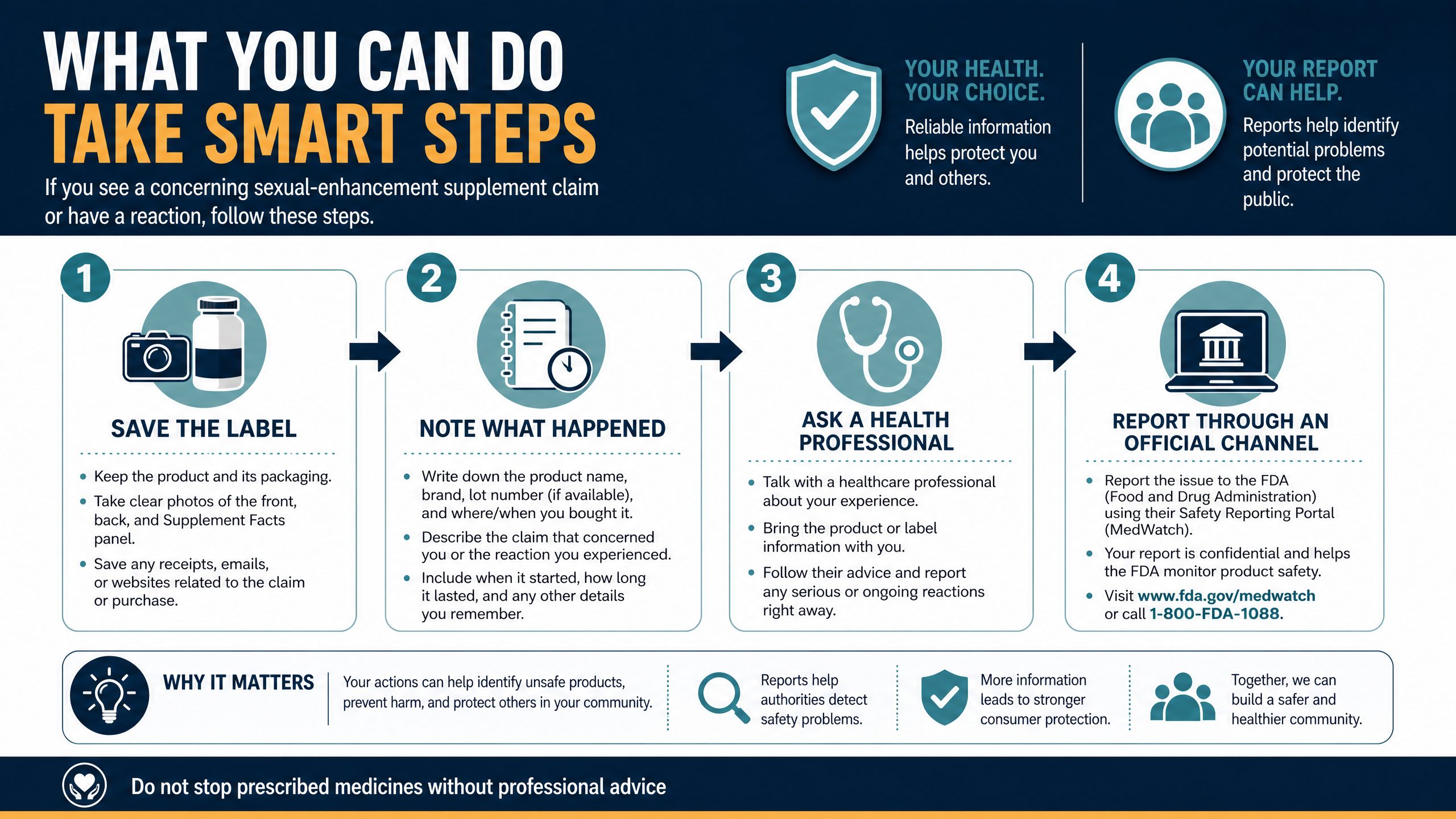
If you suspect a product is adulterated, mislabeled, or caused harm:
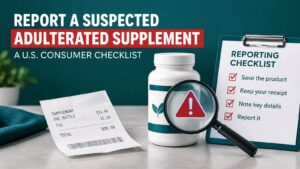
- Report it to the FDA. The FDA provides ways for consumers to contact them about human drugs and suspicious products [FDA reporting suspicious products].
- Consult the FDA’s health‑fraud product database to find prior warnings and notifications about similar products [FDA health fraud product database].
Limitations and realistic expectations
- Regulatory action does not guarantee that all dangerous products are removed immediately; new adulterated products can appear.
- Not all sexual difficulties will be helped by over‑the‑counter supplements. Clinicians can evaluate underlying causes and recommend safe, evidence‑based treatments. If you are considering treatment, a health care professional can discuss proven options and potential interactions. For questions about how supplements interact with medications, see our resource: /supplements‑medication‑interactions‑questions/.
- Reading a label is helpful but not foolproof. Even labeled supplements have been found adulterated. When rapid action is a selling point, skepticism is warranted.
Safety disclaimer
This article is educational and not medical advice. It does not diagnose, treat, or prescribe. If you have health concerns or are considering a product that claims fast results, talk with your health care provider before use.
References
- FDA: Sexual Enhancement and Energy Product Notifications
- FDA: Avoiding Products Contaminated with Hidden Ingredients
- FDA: Health Fraud Product Database
- FDA: Questions and Answers on Dietary Supplements
- FTC: Health Products Compliance Guidance
Last reviewed: August 2026
VitaEvidence Editorial Team