In this guide
- Key takeaways
- What the FDA actually found
- Why hidden ED drugs are risky
- What the FDA’s notices do — and don’t — prove
- Evidence, limits, and action
- Table — Common categories of hidden ingredients and associated risks
- How the FDA tracks and warns about these products
- Practical steps for consumers
- Warning-to-action path
- When to contact a clinician or emergency services
- Limitations and realistic expectations
- Safety disclaimer
- Safety disclaimer
- References
- Reading a safety notice
- Related VitaEvidence reading
Category: Sexual Enhancement and Energy Products
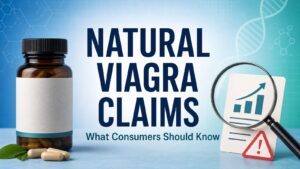
Products sold as “Royal Honey” or similar honey-based sexual enhancers have attracted attention because the U.S. Food and Drug Administration (FDA) has warned that some of these products contain hidden drug ingredients. This article explains what the FDA found, why it matters, and what consumers can do to reduce their risk.
Key takeaways
- The FDA has identified specific honey-based sexual-enhancement products that contained undeclared prescription-strength erectile dysfunction (ED) drugs or chemical analogues. These are not listed on the product label. (FDA)
- Hidden ED drugs can cause serious, even life‑threatening interactions with other medications (for example, nitrates) and in people with certain health conditions. (FDA)
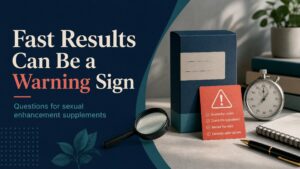
- FDA warnings apply to the particular products or lots tested — they do not automatically mean every honey product or every product with a similar name is unsafe. (FDA)
- If you use any over‑the‑counter sexual‑enhancement product and take prescription medications or have heart disease, talk with your clinician before using it and stop using suspicious products. Report concerns to the FDA. (FDA)
What the FDA actually found
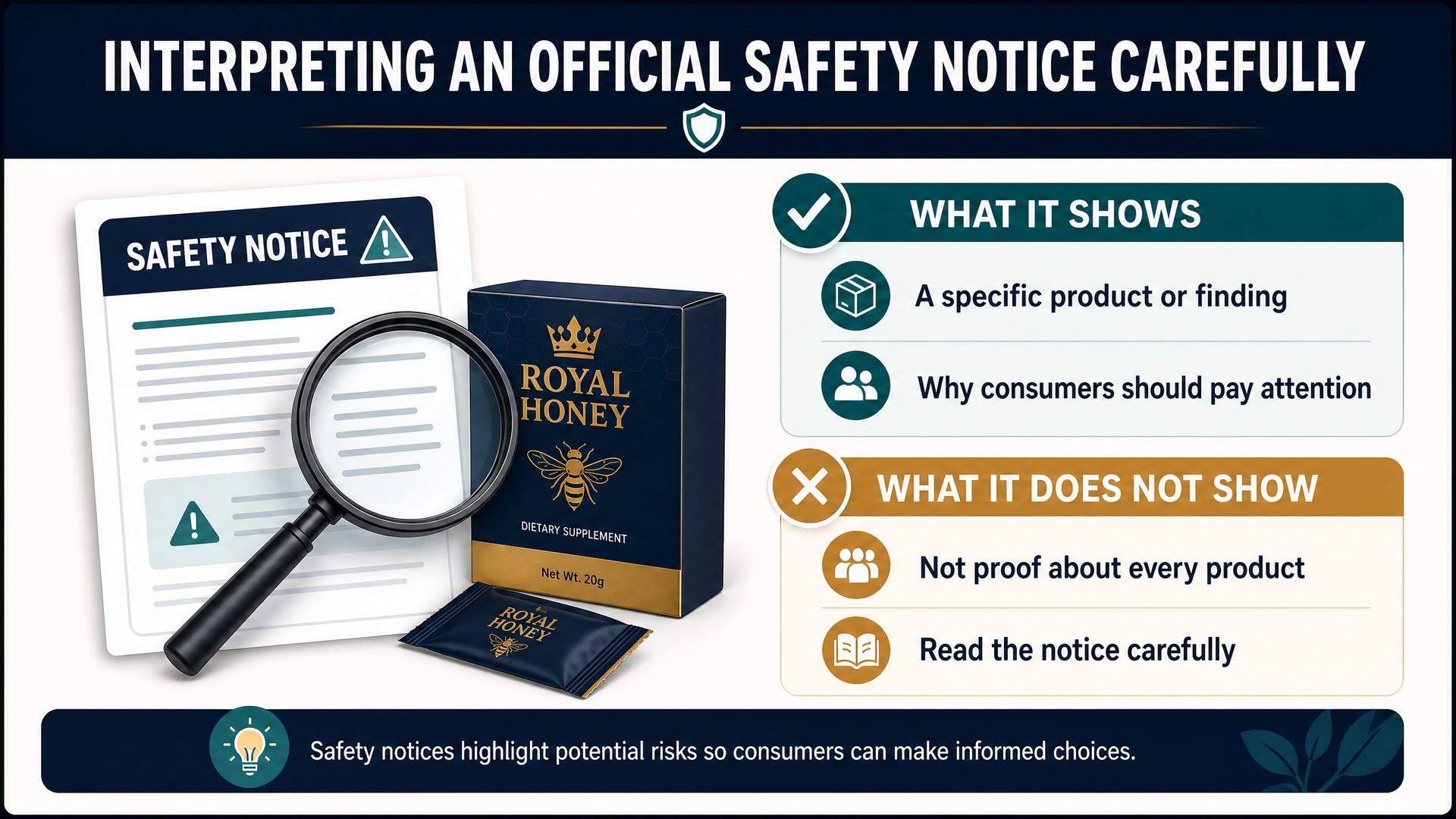
The FDA has posted consumer alerts and notifications showing that laboratory testing of certain honey-based products sold for sexual enhancement — often marketed under the name “Royal Honey” or similar branding — found undeclared active drug ingredients. These undeclared ingredients have included prescription erectile dysfunction drugs and chemically related analogues. The FDA has added examples to its Health Fraud Product Database and issued specific medication-health-fraud notifications about these products. (FDA)
Why hidden ED drugs are risky
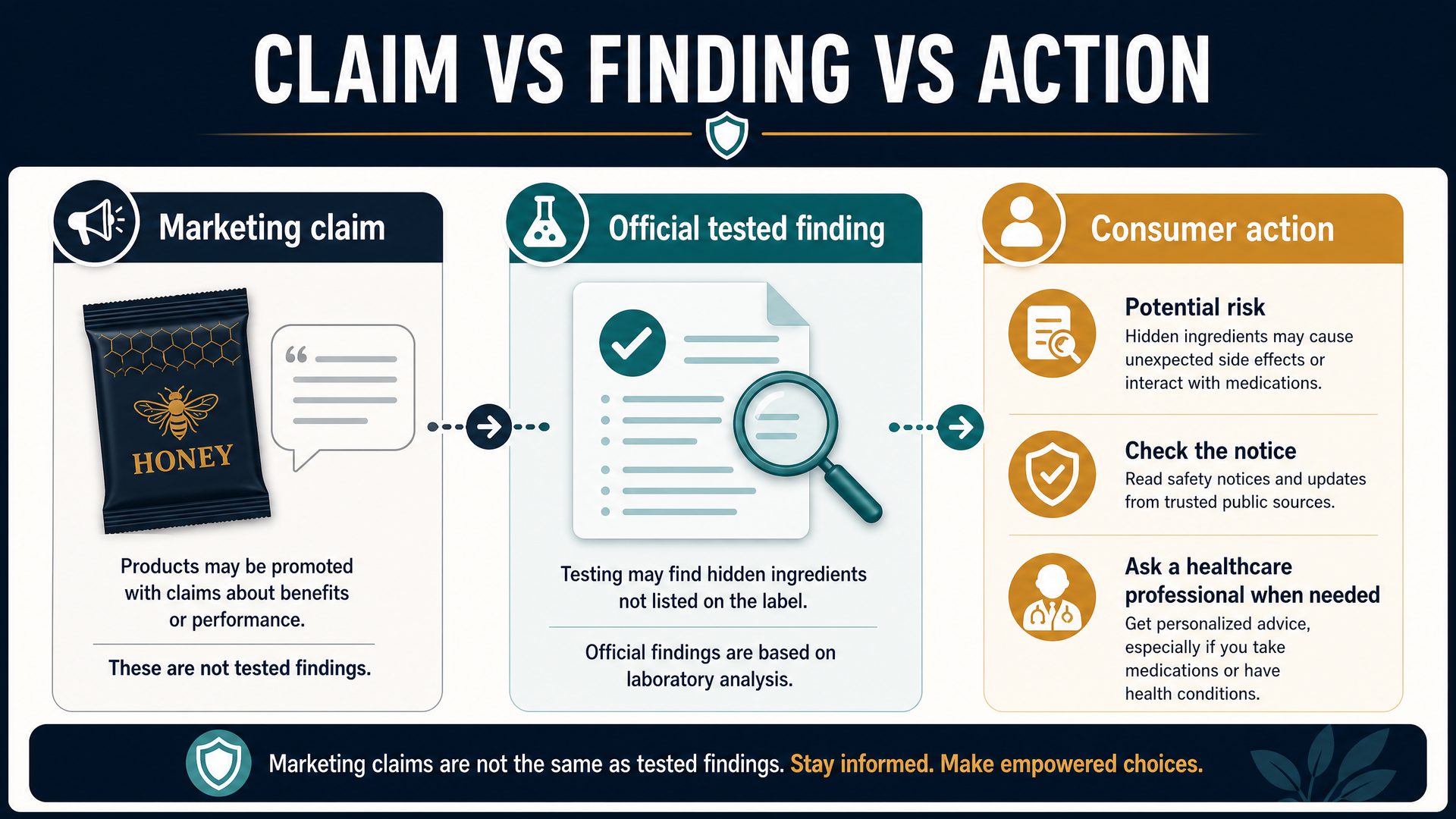
When a product contains an undeclared drug, you can’t predict dose, purity, or whether the substance is safe for you. The main concerns with hidden ED drugs are:
- Drug interactions: Some prescription ED drugs can dangerously lower blood pressure if taken with nitrate medicines (commonly prescribed for chest pain) or certain recreational substances. Because the active ingredient is not listed, people cannot safely avoid hazardous combinations. (FDA)
- Unpredictable dosing and contaminants: Over‑the‑counter or imported products may include variable amounts of active drug or chemical analogues not tested in humans, and manufacturing quality is not guaranteed. (FDA)
- Delayed or missed medical care: Relying on an unregulated product for a medical issue could delay evaluation of an underlying condition that needs treatment.
What the FDA’s notices do — and don’t — prove
Evidence, limits, and action
| Notice content | What it supports | What it does not establish |
|---|---|---|
| Tested product or lot | A product-specific finding | Every similar product is affected |
| Identified hidden ingredient | A stated safety concern | A diagnosis for every user |
| Consumer instruction | The recommended next step | Individual medical advice |
- Do: FDA testing proves that the specific product samples they tested contained undeclared active drug ingredients. The agency has used this evidence to post alerts and add entries to its health-fraud database. (FDA)
- Don’t: These actions do not mean every jar, batch, or product with “Royal Honey” on the label is contaminated. FDA communications typically apply to identified products, brands, or lots and reflect the samples tested. Consumers should treat the FDA notices as a warning to be cautious, not as a blanket label for every similar product. (FDA)
Table — Common categories of hidden ingredients and associated risks
| Hidden ingredient (examples identified by FDA notices) | Potential hazard | Who may be at higher risk |
|---|---|---|
| Undeclared prescription ED drugs (e.g., sildenafil, tadalafil) and analogues | Dangerous drop in blood pressure with nitrates; unpredictable effects and side effects | People taking nitrates (for chest pain), alpha‑blockers, some blood pressure meds, or those with heart disease |
| Unspecified synthetic analogues of prescription drugs | Unknown toxicity, untested interactions | Anyone, especially older adults and people with chronic disease |
| Other undeclared drug ingredients reported in different product types | Allergic reactions, side effects, interactions | People on multiple prescription drugs |
How the FDA tracks and warns about these products
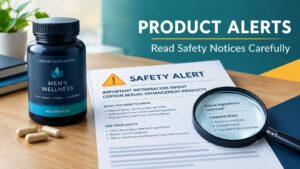
The FDA maintains a Health Fraud Product Database and issues medication‑health‑fraud and consumer health notifications about products found to contain hidden or dangerous ingredients. The agency’s consumer pages and product notifications describe the samples tested and the hidden ingredients identified. The FDA also publishes guidance on avoiding products contaminated with hidden ingredients and on how it regulates dietary supplements and labeling. (FDA — Health Fraud Database; FDA — Medication Health Fraud Notifications; FDA — Hidden Ingredients Guidance; FDA — Dietary Supplements)
Practical steps for consumers
Warning-to-action path
- Read the complete notice.
- Match the exact product and lot.
- Follow the stated action.
- Seek care for concerning symptoms.
- Stop using any sexual‑enhancement product that you suspect is contaminated or that was the subject of an FDA alert. (FDA)
- Read labels carefully, but know that a clean label doesn’t guarantee a product is free from undeclared drugs. For help reading labels, see our guide: /how-to-read-supplement-facts-label/. (FDA)
- If you take prescription medications — especially nitrates for chest pain, some blood‑pressure medicines, or drugs that affect circulation — consult your clinician before using sexual‑enhancement supplements. If you are unsure whether your medicines could interact, ask a pharmacist or clinician. (FDA)
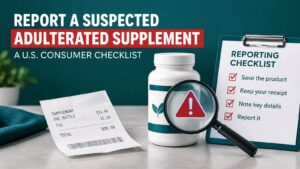
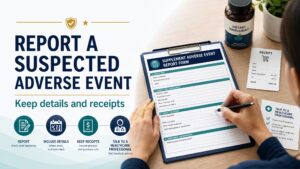
- Report suspicious products or adverse events to the FDA. The FDA provides ways for consumers to contact them about human drugs and medication health fraud. Reporting helps the agency investigate and issue warnings. (FDA — Ways to Contact FDA About Human Drugs)
- Search the FDA’s Health Fraud Product Database and medication‑fraud notifications to see whether a specific product has been flagged. (FDA — Health Fraud Database; FDA — Medication Health Fraud Notifications)
- Be skeptical of claims that a product is “natural,” “safe,” or “effective” for treating a medical condition without published scientific evidence and appropriate regulatory review. The Federal Trade Commission (FTC) also enforces truthfulness in health‑product advertising; misleading claims can trigger FTC action. (FTC)
When to contact a clinician or emergency services
Seek immediate medical attention (call 911) if you experience any of the following after taking a supplement or sexual‑enhancement product:
– Chest pain, pressure, or new shortness of breath.
– Severe dizziness, fainting, or loss of consciousness.
– Sudden, severe headache, vision changes, or sudden hearing loss.
– An erection lasting longer than 4 hours (priapism) — this is a medical emergency.
For non‑emergency concerns such as side effects, new symptoms, or questions about drug interactions, contact your clinician or pharmacist. If you believe an over‑the‑counter product caused a health problem, report it to the FDA to help public health monitoring. (FDA)
Limitations and realistic expectations
- FDA testing is sample‑based. A warning reflects what was found in the tested samples; it does not necessarily mean every similar product is contaminated. (FDA)
- The FDA’s role includes monitoring and warning, but many dietary supplements and imported products are not reviewed or approved for safety or effectiveness before they reach consumers. (FDA — Dietary Supplements)
- Consumer vigilance and clinician involvement are important supplements to regulatory oversight. If you have ongoing sexual‑health concerns, discuss proven, regulated treatment options with your clinician.
Safety disclaimer
This article provides general information about FDA warnings and consumer steps to reduce risk. It is educational and not a substitute for medical evaluation or advice. If you have health questions or medical conditions, talk with your clinician before starting or stopping any treatment.
Safety disclaimer
This article provides general information and is not medical advice. It is not a substitute for professional medical evaluation. If you have health concerns, consult a licensed clinician.
References
- https://www.fda.gov/drugs/medication-health-fraud/avoiding-products-contaminated-hidden-ingredients
- https://www.fda.gov/consumers/health-fraud-scams/tainted-honey-based-products-hidden-active-drug-ingredients
- https://www.fda.gov/consumers/health-fraud-scams/health-fraud-product-database
- https://www.fda.gov/food/dietary-supplements
- https://www.fda.gov/food/information-consumers-using-dietary-supplements/questions-and-answers-dietary-supplements
- https://www.fda.gov/food/dietary-supplements-guidance-documents-regulatory-information/dietary-supplement-labeling-guide
- https://www.fda.gov/drugs/medication-health-fraud-notifications/sexual-enhancement-and-energy-product-notifications
- https://www.fda.gov/drugs/medication-health-fraud/medication-health-fraud-notifications
- https://www.ftc.gov/news-events/topics/truth-advertising/health-claims
- https://www.ftc.gov/business-guidance/resources/health-products-compliance-guidance
- https://www.fda.gov/about-fda/cder-contact-information/ways-consumers-contact-fda-about-human-drugs
Last reviewed: August 2026
VitaEvidence Editorial Team