In this guide
- Key takeaways
- Why hidden ingredients are a concern
- Common red flags on labels and marketing
- How to check a product and verify safety
- What to do if you suspect a product contains hidden ingredients
- When to contact a clinician or emergency services
- Limitations and what the FDA and FTC can do
- Practical shopping tips
- Safety disclaimer
- Safety disclaimer
- Marketing red flags versus evidence
- Product-check pathway
- When symptoms need urgent attention
- References
- Related VitaEvidence reading
Category: Weight-Loss and Bodybuilding Products
Weight‑Loss Supplements With Hidden Ingredients: Common Red Flags
Unlisted active ingredients in weight‑loss supplements can cause harm by interacting with medicines, causing unexpected side effects, or exposing people to unapproved drugs. The U.S. Food and Drug Administration (FDA) and Federal Trade Commission (FTC) regularly identify and act on products that are adulterated or make deceptive claims. This article explains common red flags, practical steps to evaluate a product, and what to do if you suspect a product is tainted.
Key takeaways
- Some over‑the‑counter weight‑loss supplements have been found to contain undeclared active drug ingredients; check the FDA’s Health Fraud Product Database and related notifications for known examples.
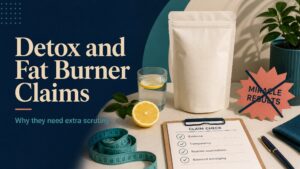
- Red flags include dramatic claims (“melt fat fast”), undisclosed “proprietary blends,” products marketed as “secret” or “miracle,” and labels that lack a clear Supplement Facts panel.
- You can search FDA resources to see if a product has been flagged; report suspicious products to the FDA if you suspect contamination or hidden ingredients.
- If you develop new or severe symptoms after taking a supplement, seek medical attention and tell your clinician about the supplement and where you bought it.
Why hidden ingredients are a concern
- The FDA does not “approve” dietary supplements for safety and effectiveness before they go on the market; manufacturers are responsible for ensuring their products are safe and accurately labeled. The FDA can intervene after products are marketed if they are adulterated or misbranded (FDA: Dietary Supplements and labeling guidance).
- “Hidden” or undeclared ingredients may be prescription drugs, stimulants, or other chemicals that can cause harmful reactions or interact with prescription medicines. The FDA has publicly identified specific products — including some marketed for weight loss or sold in honey‑based formulations — that contained undeclared active drug ingredients (see FDA tainted honey‑based products and the Health Fraud Product Database).
- The FTC enforces truth‑in‑advertising rules for health claims; products that make unsupported health claims may be fraudulent (FTC: Health claims and health products compliance guidance).
Common red flags on labels and marketing
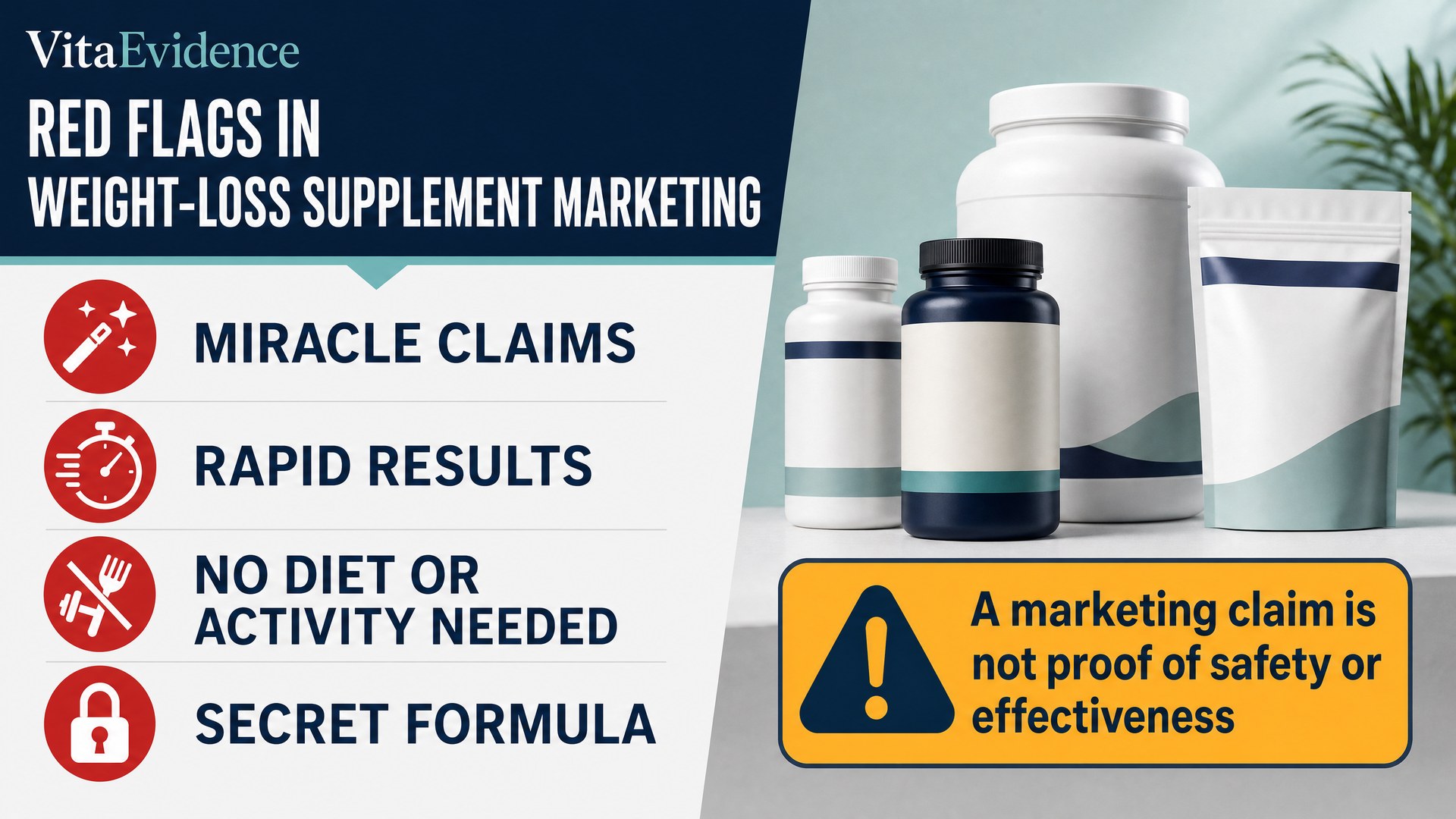
Below are warning signs that a weight‑loss product may be risky or misrepresented. None of these alone proves a product contains hidden drugs, but the more red flags present, the greater the need for caution.
- Grandiose promises: “Lose X pounds in Y days” or “guaranteed” rapid weight loss with little or no lifestyle change.
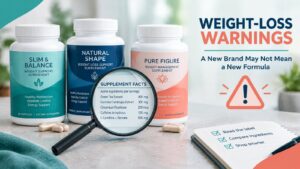
- “Secret” or proprietary formulas: Labels that list a “Proprietary blend” without disclosing ingredient amounts can hide problematic ingredients.
- No clear Supplement Facts panel or missing manufacturer contact information.
- Ingredients described with vague names (e.g., “herbal complex,” “plant extract”) without scientific names.
- Claims that the product is “clinically proven” without citing credible studies or with references that are not peer‑reviewed.
- Sales channels that rely on anonymous online marketplaces or social media influencers without verifiable seller information.
- Unusual formulations or delivery modes (such as “honey‑based” weight‑loss products) that the FDA has previously found to be adulterated in specific cases.
Table: Red flags, why they matter, and what to do
| Red flag | Why it matters | What to do |
|—|—:|—|
| Dramatic, time‑bound claims (“lose 10 lbs in 10 days”) | Often impossible and may indicate misleading advertising | Treat claims skeptically; look for independent research and regulatory warnings |
| “Proprietary blend” with no ingredient amounts | Prevents assessment of dosing and safety | Avoid if you take medicines or have health conditions; prefer products with full labels |
| No Supplement Facts panel or manufacturer contact | Makes verification and reporting difficult | Do not buy; report the product to the FDA and your state consumer protection agency |
| Unclear seller (anonymous online listing) | Harder to trace if problems occur | Buy only from reputable sellers; check FDA Health Fraud Product Database first |
| Products marketed as “natural” and “drug‑free” but with aggressive effects | Could hide stimulants or drugs | Look up the product in the FDA database and avoid if flagged |
How to check a product and verify safety
- Search the FDA Health Fraud Product Database: This database lists products the FDA has identified as containing hidden active ingredients or otherwise fraudulent. If a product or brand name appears there, take the FDA’s action seriously (FDA: Health Fraud Product Database).
- Check FDA notifications and consumer alerts: The FDA publishes notifications about specific categories (for example, sexual enhancement, energy, and weight‑loss products) that have been found to be tainted. These notices provide product names and the types of undeclared ingredients detected (FDA: medication health fraud notifications; sexual enhancement and energy product notifications).
- Review the label carefully: Look for a complete Supplement Facts panel and a verifiable company name and address. For help reading labels, see our guide on how to read the Supplement Facts label (/how-to-read-supplement-facts-label/).
- Be skeptical of miracle claims and testimonials: Independent, peer‑reviewed clinical trials are the standard for evidence. Marketing claims and testimonials are not reliable.
- If you take prescription meds, consult resources about supplements and interactions before trying a new product.
What to do if you suspect a product contains hidden ingredients
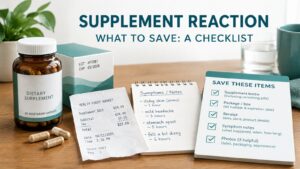
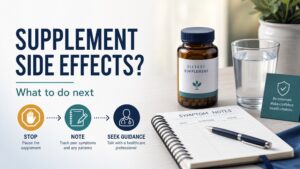
- Stop using the product immediately.
- If you have adverse symptoms (see next section), seek medical care and bring the product packaging or a photo of the label to your clinician.
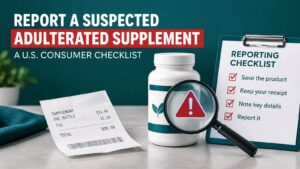
- Report the product to the FDA: the agency provides ways for consumers to report suspicious human drug products and supplements (FDA: Ways consumers contact FDA about human drugs). Include photos, purchase details, and any lot numbers if available.
- Check whether the product is listed in the FDA Health Fraud Product Database or in specific FDA alerts about tainted products (FDA: Health Fraud Product Database; tainted honey‑based products).
- If you suspect illegal advertising or deceptive claims, you can also report to the FTC. The FTC enforces truth in advertising for health products (FTC: Health claims and health products compliance guidance).
When to contact a clinician or emergency services
Seek prompt medical attention if you develop any new or severe symptoms after taking a weight‑loss supplement, especially:
– Rapid or irregular heartbeat, chest pain, shortness of breath.
– Severe headache, fainting, seizures, sudden vision changes.
– Confusion, severe agitation, or hallucinations.
– Sudden swelling, rash, difficulty breathing, or other signs of a severe allergic reaction.
Tell the clinician the exact product name, where and when you bought it, and bring the label or a photograph. That information may help identify an undeclared drug or contaminant and guide treatment.
Limitations and what the FDA and FTC can do
- The FDA does not pre‑approve dietary supplements. The agency inspects and takes enforcement actions when problems are identified, but products are often on the market before any agency review occurs (FDA: Dietary supplements; labeling guide).
- An FDA finding about a specific product or lot applies to that product or lot. Do not generalize a finding about one product to every product with a similar name or brand without checking the FDA database and notices.
- The FTC can pursue cases against false or deceptive advertising, but that process addresses marketing rather than direct product safety testing.
Practical shopping tips
- Prefer products with clear, complete Supplement Facts panels and a verifiable manufacturer address and contact.
- Avoid products that boast unrealistic results or ask you to keep the “formula” secret.
- Be cautious with supplements that are hard to find in reputable stores but widely promoted online or on social media.
- If you are taking prescription medications or have chronic health conditions, consult your clinician before starting any weight‑loss supplement. For common questions about supplements and drug interactions, see our resource (/supplements-medication-interactions-questions/).
Safety disclaimer
This article is educational and not a substitute for medical advice. It does not diagnose or recommend treatment. If you have concerns about a supplement you are taking or possible adverse effects, contact your healthcare provider promptly.
Safety disclaimer
This article provides general information and is not medical advice. It is not a substitute for professional medical evaluation. If you have health concerns, consult a licensed clinician.
Marketing red flags versus evidence
| Red flag | Safer interpretation |
|---|---|
| Miracle or rapid-result promise | Ask what product-specific evidence supports the claim. |
| Secret or proprietary formula | Check whether individual ingredients and amounts are disclosed. |
| No diet or activity needed | Be cautious about broad claims that remove context. |
Product-check pathway
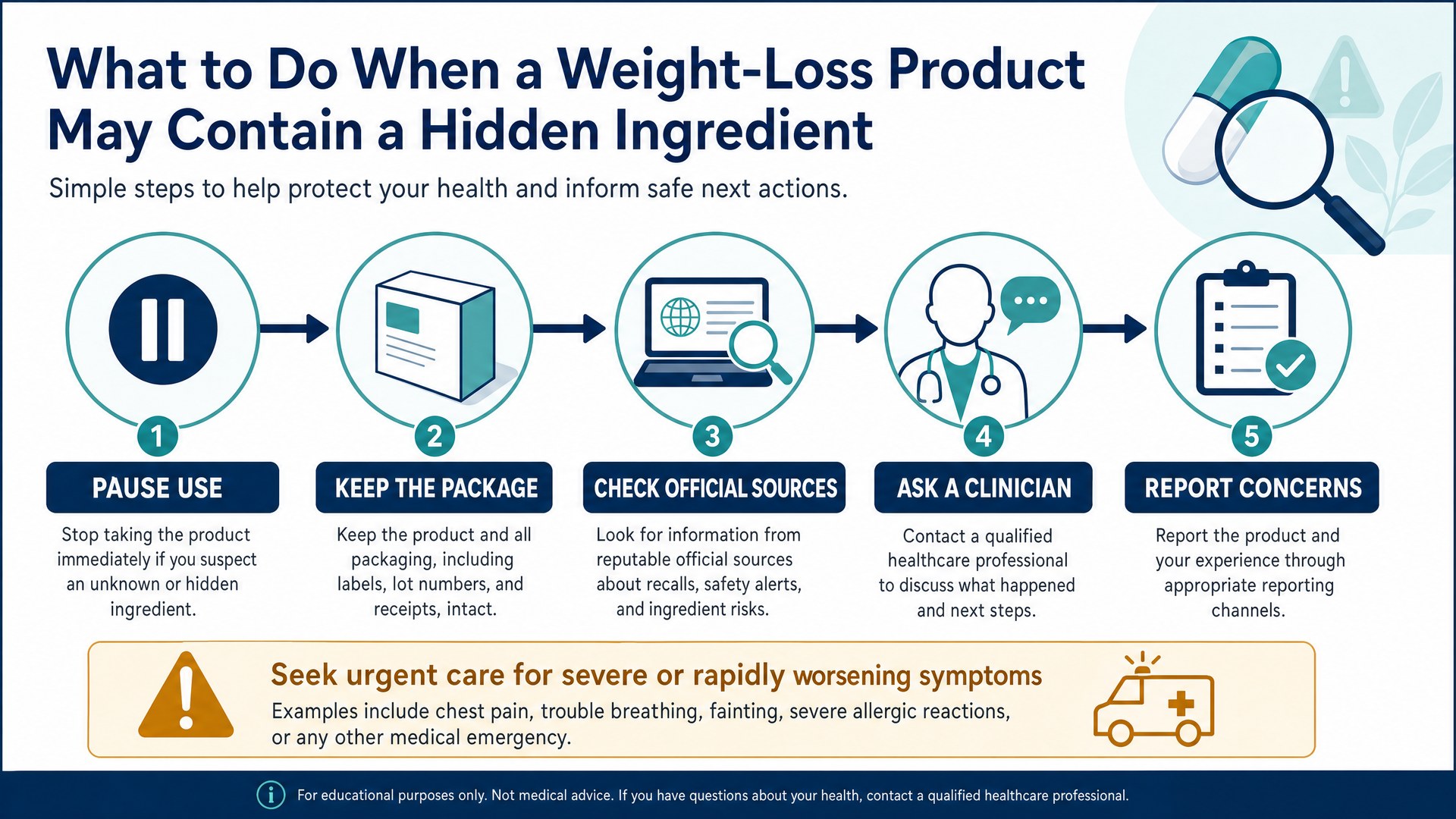
- Pause if the product or claim raises concern.
- Keep the package and label details.
- Check credible official sources.
- Ask a clinician or pharmacist about risks and interactions.
When symptoms need urgent attention
Seek urgent medical care for severe, rapidly worsening, or emergency symptoms. For less urgent concerns, record the product, timing, symptoms, and other medicines before contacting a healthcare professional.
References
https://www.fda.gov/drugs/medication-health-fraud/avoiding-products-contaminated-hidden-ingredients
https://www.fda.gov/consumers/health-fraud-scams/tainted-honey-based-products-hidden-active-drug-ingredients
https://www.fda.gov/consumers/health-fraud-scams/health-fraud-product-database
https://www.fda.gov/food/dietary-supplements
https://www.fda.gov/food/information-consumers-using-dietary-supplements/questions-and-answers-dietary-supplements
https://www.fda.gov/food/dietary-supplements-guidance-documents-regulatory-information/dietary-supplement-labeling-guide
https://www.fda.gov/drugs/medication-health-fraud-notifications/sexual-enhancement-and-energy-product-notifications
https://www.fda.gov/drugs/medication-health-fraud/medication-health-fraud-notifications
https://www.ftc.gov/news-events/topics/truth-advertising/health-claims
https://www.ftc.gov/business-guidance/resources/health-products-compliance-guidance
https://www.fda.gov/about-fda/cder-contact-information/ways-consumers-contact-fda-about-human-drugs
Last reviewed: August 2026
VitaEvidence Editorial Team