In this guide
- Muscle-Building Supplements: Steroids, Prohormones, and Label Gaps
- Key takeaways
- Why muscle-building supplements deserve extra caution
- What “hidden” steroids and prohormones mean
- Health risks of undisclosed steroid-like ingredients
- Common label and marketing red flags
- What labeling can—and cannot—tell you
- How regulators respond and what to watch for
- Practical steps to reduce risk
- When to contact a clinician or seek urgent care
- How to report suspicious products
- Limitations and realistic expectations
- Short safety disclaimer
- Safety disclaimer
- References
- Related VitaEvidence reading
Category: Weight-Loss and Bodybuilding Products
Muscle-Building Supplements: Steroids, Prohormones, and Label Gaps
Key takeaways
- Dietary supplements are regulated differently than prescription drugs; manufacturers are responsible for label accuracy, but products do not require FDA preapproval (FDA: dietary supplements).
- The FDA has repeatedly found supplements—across categories—to contain hidden prescription drugs or steroid-like compounds that are not declared on the label (FDA: avoiding products contaminated with hidden ingredients; FDA health fraud database).
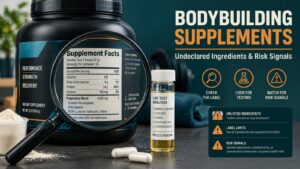
- Products marketed for muscle gain, “testosterone boosting,” or rapid results deserve extra scrutiny. The FDA has warned that some bodybuilding products have contained undisclosed anabolic steroids or steroid-like substances, which can have serious health effects.
- Consumers can reduce risk by reading Supplement Facts, watching for red flags on labels and marketing, choosing products with independent third-party testing, and reporting suspicious products to the FDA. Seek medical care for concerning symptoms.
Why muscle-building supplements deserve extra caution
Dietary supplements (vitamins, minerals, botanicals, amino acids, and other ingredients) are legally distinct from prescription drugs. While the FDA regulates supplements, the agency does not require companies to get FDA approval before marketing most dietary supplements (FDA: dietary supplements). That regulatory framework creates opportunities for products to be mislabeled or deliberately adulterated.
The FDA’s consumer guidance highlights that some supplements have been contaminated or intentionally spiked with hidden active drug ingredients, including anabolic steroid-like substances and other drugs. The agency maintains a health fraud product database and issues notifications when it identifies specific tainted products (FDA: avoiding products contaminated with hidden ingredients; FDA health fraud product database; FDA: medication health fraud notifications). Although not every muscle-building product is adulterated, the pattern of past findings means consumers should be cautious, especially when labels make dramatic promises.
What “hidden” steroids and prohormones mean
- Hidden steroid-like compounds: These are substances that act similarly to anabolic steroids but are not listed on the label. They can be synthetic steroids or designer compounds meant to mimic testosterone’s effects.
- Prohormones: Some products may include prohormones—compounds that the body can convert into active hormones. Depending on formulation and dose, prohormones can have effects and risks similar to anabolic steroids.
The FDA has found hidden active ingredients across many product types (including some marketed for sexual enhancement, weight loss, and muscle building), and it posts warnings and product listings when specific items are identified (FDA: sexual enhancement and energy product notifications; FDA: tainted honey-based products as an example of hidden active drugs). Note: findings about a specific brand or batch do not automatically apply to every product with a similar name.
Health risks of undisclosed steroid-like ingredients
Because hidden ingredients are not declared, consumers cannot judge dose, purity, or interactions. The FDA warns that undisclosed active drug ingredients can cause serious harm, including unexpected drug interactions, allergic reactions, liver injury, hormone disturbances, cardiovascular effects, and psychiatric effects (FDA: avoiding products contaminated with hidden ingredients). If a supplement contains steroid-like compounds or prohormones, potential effects may include hormonal changes (e.g., decreased natural testosterone production), liver strain, changes in lipids and blood pressure, and others. Because these are general risks, you should consult a clinician before starting any supplement—especially if you have preexisting conditions or take medications.
Common label and marketing red flags
The following table summarizes warning signs that a muscle-building product may carry additional risk. These are not definitive proof of adulteration, but they warrant extra caution.
| Label/marketing element | Why it’s concerning | What to do |
|---|---|---|
| “Rapid results,” “overnight gains,” or “miracle” claims | Exaggerated claims are common in products removed for false or unsafe advertising (FTC: health claims) | Be skeptical; find evidence-based alternatives and consult a clinician |
| “Testosterone booster,” “anabolic,” “prohormone,” or “steroid-free” with aggressive promises | Products that promise hormonal effects can be more likely to contain unlisted hormone-like substances | Review Supplement Facts; consider third-party testing |
| “Proprietary blend” without specific ingredient quantities | Makes it hard to assess dose and safety | Prefer labels with full ingredient names and amounts (see /how-to-read-supplement-facts-label/) |
| “All‑natural” or “herbal” claims paired with strong pharmacologic promises | “Natural” does not guarantee safety and can mask added drugs | Check the label and search FDA health-fraud notifications for the product name |
| Imported or obscure manufacturer, hard to find contact information | Hard to trace companies can be harder to regulate and recall | Avoid products without clear manufacturer contact info |
What labeling can—and cannot—tell you
- What labeling can tell you: Ingredient names and amounts when accurately listed; serving size; manufacturer contact info; any declared allergens. The FDA provides guidance on supplement labeling and how to read Supplement Facts (FDA: dietary supplement labeling guide; /how-to-read-supplement-facts-label/).
- What labeling cannot guarantee: Completeness or truthfulness in all cases—manufacturers are responsible for safety and labeling, but products are not pre‑approved by FDA before sale. The FDA acts after problems are reported or detected (FDA: dietary supplements; FDA health fraud database).
How regulators respond and what to watch for
The FDA and the FTC both take action when companies make false claims or when products are found to be adulterated. The FDA posts notifications and keeps a searchable health fraud product database with examples of products found to contain hidden active ingredients (FDA health fraud product database; FDA: medication health fraud notifications). The FTC enforces truth-in-advertising rules and provides guidance for health product claims (FTC: truth in advertising; FTC: health products compliance guidance). Consumers can check these sources for warnings about specific products or marketing claims.
Practical steps to reduce risk
- Read the label carefully. Look for an accurate-looking Supplement Facts panel and a verifiable manufacturer or distributor address and contact number (/how-to-read-supplement-facts-label/).
- Be wary of sensational claims. If a product promises extreme results with no effort, that is a red flag (FTC guidance).
- Prefer products with independent third‑party testing by recognized organizations (e.g., USP, NSF)—these tests assess contaminants and ingredient accuracy, though they do not guarantee safety in every case.
- Talk to a clinician if you have chronic health conditions, take prescription medications, are taking blood thinners, have hormone-sensitive conditions, or are planning fertility or pregnancy (see /supplements-medication-interactions-questions/).
- Keep a record (photos) of product labels and packaging in case you need to report problems.
When to contact a clinician or seek urgent care
Contact your healthcare provider if you experience new or worsening symptoms after using a muscle-building supplement, such as:
– Severe abdominal pain, yellowing of skin or eyes (possible liver injury)
– Chest pain, shortness of breath, fainting, or palpitations
– Severe mood swings, aggression, or suicidal thoughts
– Marked changes in libido, breast tissue enlargement (gynecomastia), or testicular shrinkage
– Unexplained acne, rapid hair loss, or significant changes in menstrual cycle
For urgent or severe symptoms, seek emergency care. Always tell clinicians about any supplements you’re taking so they can assess possible interactions or hidden ingredients.
How to report suspicious products
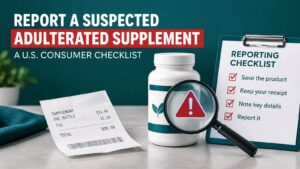
If you suspect a supplement is adulterated, mislabeled, or caused harm, report it to the FDA. The FDA provides ways for consumers to contact them about human drugs and suspicious products and maintains a health fraud database and notification pages that list products the agency has identified (FDA: ways consumers contact FDA; FDA health fraud product database). Reporting helps regulators identify patterns and issue warnings.
Limitations and realistic expectations
- Not every muscle-building supplement is adulterated. However, because the supplement market is large and regulatory action typically follows detection, consumers must remain vigilant.
- Third‑party testing can reduce—but does not eliminate—risk. Tests may not catch every batch or every substance.
- This information is educational and not a substitute for medical advice. Individual risks vary by health status, medications, and product use.
Short safety disclaimer
This article provides general, evidence-based information and consumer guidance. It does not diagnose medical conditions or substitute for individualized medical advice. If you have concerns about supplements, hidden ingredients, or symptoms you suspect are linked to product use, consult a licensed healthcare provider.
Safety disclaimer
This article provides general information and is not medical advice. It is not a substitute for professional medical evaluation. If you have health concerns, consult a licensed clinician.
References
- https://www.fda.gov/drugs/medication-health-fraud/avoiding-products-contaminated-hidden-ingredients
- https://www.fda.gov/consumers/health-fraud-scams/tainted-honey-based-products-hidden-active-drug-ingredients
- https://www.fda.gov/consumers/health-fraud-scams/health-fraud-product-database
- https://www.fda.gov/food/dietary-supplements
- https://www.fda.gov/food/information-consumers-using-dietary-supplements/questions-and-answers-dietary-supplements
- https://www.fda.gov/food/dietary-supplements-guidance-documents-regulatory-information/dietary-supplement-labeling-guide
- https://www.fda.gov/drugs/medication-health-fraud-notifications/sexual-enhancement-and-energy-product-notifications
- https://www.fda.gov/drugs/medication-health-fraud/medication-health-fraud-notifications
- https://www.ftc.gov/news-events/topics/truth-advertising/health-claims
- https://www.ftc.gov/business-guidance/resources/health-products-compliance-guidance
- https://www.fda.gov/about-fda/cder-contact-information/ways-consumers-contact-fda-about-human-drugs
Last reviewed: August 2026
VitaEvidence Editorial Team