In this guide
- Key takeaways
- Why labels can be vague or incomplete
- What to check on the label
- Ingredient list (outside or below the Supplement Facts)
- “Proprietary blend” or “complex”
- Claims and marketing language
- Warnings and directions
- Red flags that suggest missing, vague, or potentially dangerous ingredients
- 2. Read the full ingredient list
- 3. Look for botanical details
- 4. Scrutinize claims and the intended use
- 5. Search the FDA resources
- 6. Check for third‑party testing information
- 7. When in doubt, pause use and consult a clinician
- What the FDA has found and how that matters to you
- Reporting suspicious products and adverse events
- Limitations of labels and next steps
- When to contact a clinician
- Safety disclaimer
- Safety disclaimer
- References
- Related VitaEvidence reading
Category: Sleep, Pain, and Everyday Supplements
Many people use dietary supplements for sleep, pain, or general wellness. But supplement labels can sometimes be vague, incomplete, or even misleading. The U.S. Food and Drug Administration (FDA) has found products with hidden prescription drugs or other undeclared active ingredients, especially among sexual‑enhancement, weight‑loss, energy, and some honey‑based products. This article explains how to read a supplement label to spot missing or unclear information, what red flags to watch for, and practical steps you can take if a product seems suspicious.
Key takeaways
- The FDA does not approve dietary supplements before they are sold; manufacturers are primarily responsible for safety and labeling (FDA).
- Look first at the Supplement Facts panel, the ingredient list, and any “proprietary blend” language to understand what exactly is in a product.
- “Natural,” “proprietary,” or vague herbal names can mask unknown ingredient amounts or undeclared drugs; the FDA has found some supplements with hidden active drug ingredients (FDA).
- If you suspect a product contains hidden or dangerous ingredients, check the FDA’s health‑fraud product database and report concerns to FDA (see References).
Why labels can be vague or incomplete
- Regulatory framework: Dietary supplements are regulated differently from prescription drugs. Manufacturers must follow labeling rules and ensure safety, but supplements are generally not reviewed by the FDA before marketing (FDA: dietary supplements).
- Common industry practices: Terms like “proprietary blend” allow companies to list a group of ingredients without giving exact amounts for each component. “Other ingredients” often lists fillers, binders, and colorants that may be important to people with sensitivities.
What to check on the label
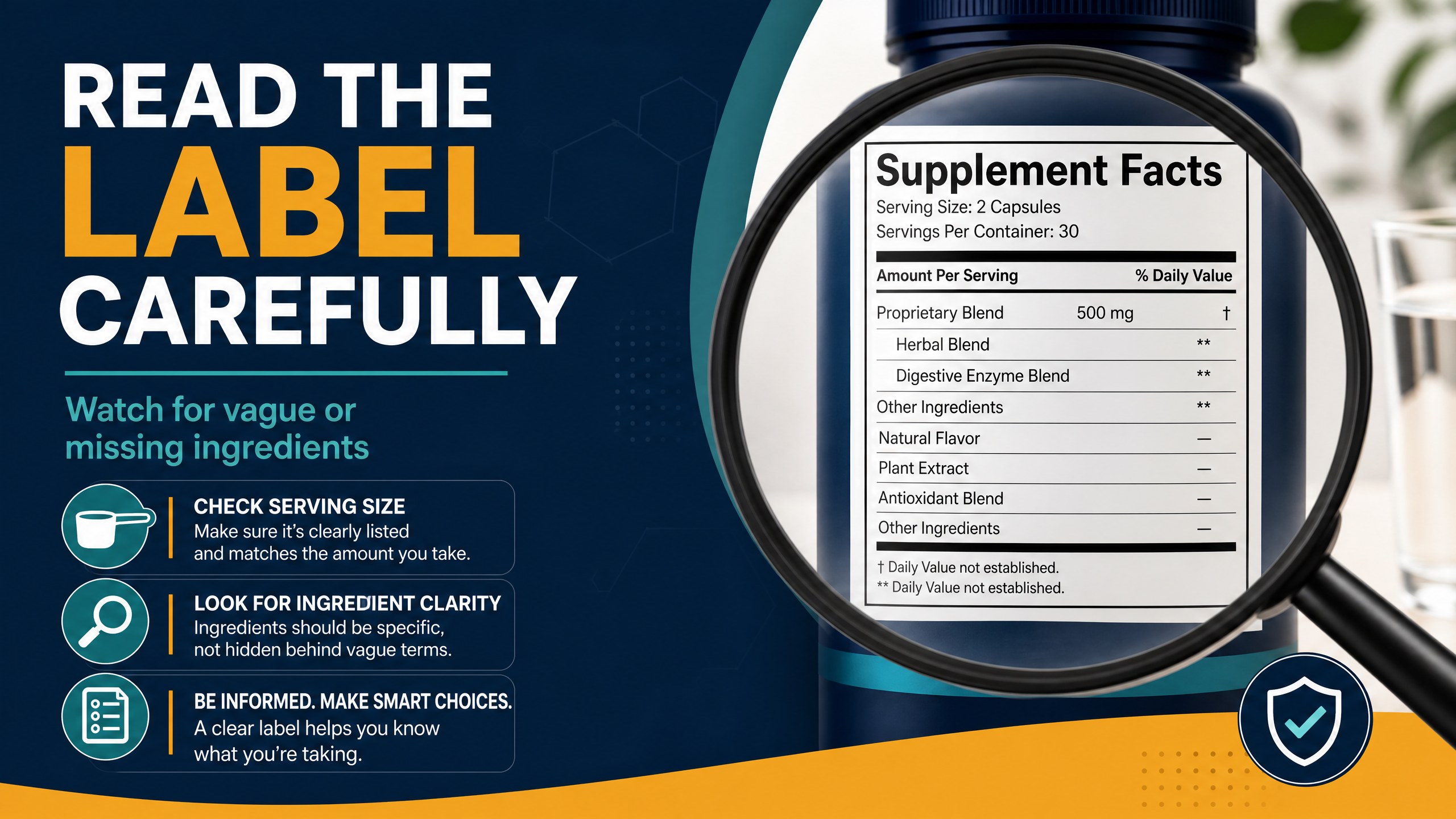
- Supplement Facts panel
– Serving size and servings per container.
– Amount per serving for each dietary ingredient and, when provided, the percent Daily Value.
– For minerals and vitamins, amounts should be clear. For botanicals, the form and part used (for example, “root extract”) may be listed but not always quantified.
Ingredient list (outside or below the Supplement Facts)
- Manufacturers must list all ingredients, including “other ingredients” such as fillers and coatings.
- If only a generic plant name is shown without a standardized botanical name, this increases uncertainty about what was used.
“Proprietary blend” or “complex”
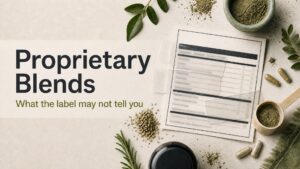
- A proprietary blend will list the ingredients in the blend but usually gives only the total weight of the blend, not the amount of each component. That makes it impossible to know how much of any one ingredient you are getting.
Claims and marketing language
- Words like “natural,” “clinically proven,” or “doctor recommended” do not guarantee safety or efficacy and may not be independently verified. The Federal Trade Commission (FTC) enforces rules against deceptive health claims (FTC).
Warnings and directions
- Look for warnings about use during pregnancy, breastfeeding, or when taking certain medications. Absence of appropriate warnings can be a signal to be cautious.
Red flags that suggest missing, vague, or potentially dangerous ingredients
- Labels that use many proprietary blends without amounts.
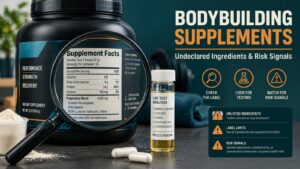
- Products marketed for sexual enhancement, rapid weight loss, or “energy” with no clear ingredient quantities — the FDA has repeatedly warned that some such products contain undisclosed prescription drugs or analogs (FDA: sexual‑enhancement and energy product notifications; medication health fraud notifications).
- Labels that list only vague botanical or common names rather than standardized Latin botanical names.
- Products sold with dramatic promises or “miracle” claims — these are often subjects of FDA or FTC action (FDA, FTC).
- Honey‑based or other food products marketed with therapeutic claims — the FDA has identified some honey‑based products with hidden active drug ingredients (FDA: tainted honey‑based products).
Practical step‑by‑step: How to read a label for missing or vague ingredients
1. Start with the Supplement Facts panel
– Confirm serving size and total amount per serving.
– Note which ingredients have amounts listed and which are grouped in a proprietary blend.
2. Read the full ingredient list
- Check “other ingredients” for additives that could matter if you have allergies or sensitivities.
3. Look for botanical details
- Prefer labels with full botanical names (e.g., “Withania somnifera [root extract]”) rather than only a common name. If the label is vague, that increases uncertainty.
4. Scrutinize claims and the intended use
- Be extra cautious with rapid‑effect claims (e.g., “instant,” “overnight,” “guaranteed”) and products aimed at sexual enhancement, weight‑loss, or energy.
5. Search the FDA resources
- Use the FDA’s health‑fraud product database to see if the product or similar ones have been flagged (FDA: health fraud product database).
- Review FDA medication health fraud and sexual‑enhancement notifications for examples of products found to contain hidden drugs (FDA: medication health fraud notifications; sexual‑enhancement and energy product notifications).
6. Check for third‑party testing information
- Some manufacturers voluntarily provide third‑party testing results or a certificate of analysis (COA). A COA from an independent lab can show what was actually measured in a batch. (Note: the presence of a COA does not guarantee safety, but lack of transparency is an additional caution.)
7. When in doubt, pause use and consult a clinician
- If you are pregnant, breastfeeding, taking prescription medications, have chronic health conditions, or are considering supplements for pain or sleep, consult your clinician before starting a supplement. For questions about interactions, see our guide: /supplements-medication-interactions-questions/.
- Stop using a product and seek medical attention if you have concerning symptoms after taking a supplement.
Table: Common vague label items and what to do
| Vague label item | What it may mean | What to check |
|—|—:|—|
| “Proprietary blend” with total weight only | Amounts of individual ingredients are not disclosed | Decide if you are comfortable with unknown dosages; look for products that list amounts |
| Just a common plant name (no Latin name) | Unclear which species or part was used | Look for full botanical names and extract standardization |
| “Natural” or “clinically proven” | Marketing terms without specific evidence | Look for citations, independent testing, or FDA/FTC actions |
| No warnings for pregnancy/medication use | Possible oversight or lack of regulatory rigor | Check product website and consult a clinician if you’re in a high‑risk group |
| Products for sexual enhancement, weight loss, energy | FDA has found some of these contain hidden prescription drugs | Check FDA notifications and the health‑fraud database (FDA) |
What the FDA has found and how that matters to you
The FDA has identified multiple marketed products that contained undeclared active pharmaceutical ingredients. These have often been supplements marketed for sexual enhancement, weight loss, or energy; the agency has also flagged some honey‑based products with hidden drugs. These findings mean that some labeled supplements may pose unexpected safety risks, especially if you are on other medications or have health conditions. Checking the FDA’s health‑fraud product database and medication health‑fraud notifications can identify known problem products (see References).
Reporting suspicious products and adverse events
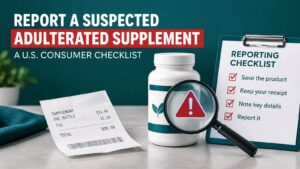
If you suspect a supplement contains hidden or misrepresented ingredients, or if you experience an adverse event, report it to the FDA. You can find ways to contact FDA about human drugs and suspicious products through their reporting page (FDA: ways consumers contact FDA about human drugs). You can also search the FDA health‑fraud product database to see if the product has already been flagged (see References).
Limitations of labels and next steps
- A complete, clear label reduces but does not eliminate risk. Labels can be accurate, incomplete, or intentionally deceptive. The FDA, FTC, and other agencies pursue unlawful claims and unsafe products, but enforcement may lag behind new products on the market.
- Independent testing and certificates of analysis can increase confidence but are not a substitute for clinical evidence or regulatory approval.
- For information about reading the Supplement Facts panel in general, see our primer: /how-to-read-supplement-facts-label/.
When to contact a clinician
- Before starting any new supplement if you are pregnant, breastfeeding, under age 18, taking prescription medications, or have chronic conditions (heart disease, diabetes, liver or kidney problems).
- If you develop new or severe symptoms after taking a supplement (allergic reactions, palpitations, severe headaches, fainting, jaundice, or other worrying signs).
- If you are unsure about interactions with your medicines; see /supplements-medication-interactions-questions/ for general guidance.
Safety disclaimer
This article provides general educational information and is not a substitute for medical advice, diagnosis, or treatment. If you have medical concerns about a supplement or experience an adverse event, contact your health care provider.
Safety disclaimer
This article provides general information and is not medical advice. It is not a substitute for professional medical evaluation. If you have health concerns, consult a licensed clinician.
References
- https://www.fda.gov/drugs/medication-health-fraud/avoiding-products-contaminated-hidden-ingredients
- https://www.fda.gov/consumers/health-fraud-scams/tainted-honey-based-products-hidden-active-drug-ingredients
- https://www.fda.gov/consumers/health-fraud-scams/health-fraud-product-database
- https://www.fda.gov/food/dietary-supplements
- https://www.fda.gov/food/information-consumers-using-dietary-supplements/questions-and-answers-dietary-supplements
- https://www.fda.gov/food/dietary-supplements-guidance-documents-regulatory-information/dietary-supplement-labeling-guide
- https://www.fda.gov/drugs/medication-health-fraud-notifications/sexual-enhancement-and-energy-product-notifications
- https://www.fda.gov/drugs/medication-health-fraud/medication-health-fraud-notifications
- https://www.ftc.gov/news-events/topics/truth-advertising/health-claims
- https://www.ftc.gov/business-guidance/resources/health-products-compliance-guidance
- https://www.fda.gov/about-fda/cder-contact-information/ways-consumers-contact-fda-about-human-drugs
Last reviewed: August 2026
VitaEvidence Editorial Team