In this guide
- Why “natural Viagra” is a problematic phrase
- What the FDA has found
- Why hidden ingredients are dangerous
- Red flags when you’re evaluating a product
- Table: Quick checklist for spotting risky sexual-enhancement products
- Practical steps to reduce risk
- When to contact a clinician or seek emergency care
- Regulation and enforcement — what the FDA and FTC can and can’t do
- Limitations and what to expect from regulators
- Key takeaways
- Safety disclaimer
- Safety disclaimer
- References
- Related VitaEvidence reading
Category: Sexual Enhancement and Energy Products
Natural Viagra Claims: What Consumers Should Know
Many products marketed online and in stores use phrases like “natural Viagra,” “herbal Viagra,” or “male enhancement” to suggest they can improve erectile function. These labels can be appealing, but they don’t guarantee safety or effectiveness. U.S. regulators have repeatedly found that some of these products contain hidden prescription drugs or chemical analogs not listed on the label — a serious health risk. This article explains the issues, how to spot risky products, and practical steps you can take to protect your health.
Why “natural Viagra” is a problematic phrase
“Natural Viagra” is a marketing term, not a medical one. It implies results similar to prescription drugs such as sildenafil (Viagra) or tadalafil (Cialis) while suggesting the product is purely herbal or safe. The key problems are:
- Many dietary supplements are not evaluated by the U.S. Food and Drug Administration (FDA) for safety or effectiveness before sale. The FDA regulates dietary supplements differently than prescription drugs (FDA dietary supplements overview).
- The Federal Trade Commission (FTC) requires that health claims be truthful and supported by evidence; deceptive advertising can be reported to the FTC (FTC health products compliance guidance).
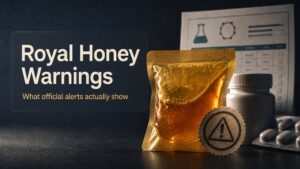
- The FDA has found sexual-enhancement and energy products that were adulterated — containing hidden active drug ingredients (FDA sexual-enhancement and energy notifications). Some products marketed as “natural” or even as honey-based were found to contain prescription drugs or their chemical analogs (FDA tainted honey-based products; FDA Health Fraud Product Database).
What the FDA has found
The FDA has repeatedly issued warnings and taken action against products marketed for sexual enhancement that were found to contain undeclared drug ingredients. These include prescription erectile dysfunction medications (like sildenafil and tadalafil) and chemical analogs created to mimic their effects. The agency has specifically highlighted:
- Products labeled as “natural,” “herbal,” or “honey-based” that contained hidden active drug ingredients (see FDA’s tainted honey-based products and medication health fraud notifications).
- The risks the hidden ingredients pose, especially when consumers take other medicines (for example, nitrates for chest pain), or have underlying heart or blood pressure conditions.
Because doses and purity are unknown in adulterated products, the risk of overdose, dangerous interactions, or unexpected side effects is real.
Why hidden ingredients are dangerous
- Unlabeled prescription drugs can interact with other medications. For example, PDE5 inhibitors (sildenafil, tadalafil) can cause severe, sometimes life-threatening, drops in blood pressure if taken with nitrates used for angina.
- Chemical analogs of prescription drugs may not have been studied for safety in people, and their effects, side effects, and interactions are often unknown.
- Dosage and quality control are unpredictable in adulterated or mislabeled products.
- Consumers with heart disease, low or high blood pressure, liver or kidney disease, or those taking many medications are at increased risk.
Red flags when you’re evaluating a product
Watch for these warning signs that a product may be risky or misleading:
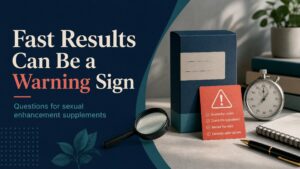
- Claims of quick, dramatic results (“works like Viagra overnight”).
- Promises to “cure” erectile dysfunction or sexual problems.
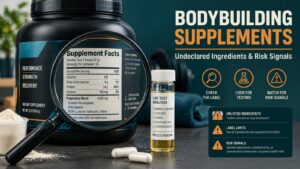
- Vague ingredient lists (no full Supplement Facts panel) or proprietary blends without amounts.
- Advertising that stresses “natural,” “secret,” or “patent-pending” formulas.
- Products sold on low-quality sites, through unsolicited emails, or in ads that push urgency or bulk sales.
Table: Quick checklist for spotting risky sexual-enhancement products
| What to check | Why it matters |
|---|---|
| Supplement Facts panel present and complete | Shows active ingredients and amounts; absence is a red flag (see FDA supplement labeling guide). |
| Claims of “natural” + “works like prescription” | Often used in marketing for adulterated products. |
| FDA warnings or recalls listed for the product | Check the FDA health fraud database and medication health fraud notifications. |
| Seller transparency (company, contact info, ingredient sourcing) | Lack of transparency makes it harder to verify product safety. |
| Clinical claims (diagnose, treat, cure ED) | Disease-treatment claims are not allowed for supplements and may indicate fraudulent marketing (FTC truth-in-advertising). |
Practical steps to reduce risk
- Check FDA resources. Search the FDA’s health fraud product database and medication health fraud notifications for products with reported hidden ingredients (FDA Health Fraud Product Database; FDA medication health fraud notifications).
- Look for a complete Supplement Facts label. The FDA’s dietary supplement labeling guide explains what a lawful label should include (FDA dietary supplement labeling guidance). If a product lacks clear labeling, avoid it.
- Avoid products that promise prescription-level effects without a prescription. If something claims to act like Viagra or Cialis, it may contain undeclared drugs.
- Buy from reputable sources. Products sold by established pharmacies or retailers are more likely to follow legal labeling and quality practices than unknown online vendors.
- Ask a clinician or pharmacist before using supplements if you take prescription medications, especially nitrates, alpha-blockers, blood thinners, or drugs for blood pressure or heart disease. See our internal resource for interactions: /supplements-medication-interactions-questions/.
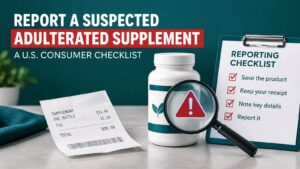
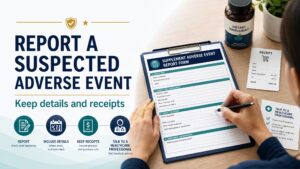
- Report suspicious products. If you suspect a product is adulterated or you experience serious adverse effects, report it to the FDA using the contact options for consumers (Ways consumers can report a problem to FDA).
When to contact a clinician or seek emergency care
Seek immediate medical attention if you experience any of these after taking a sexual-enhancement product:
- Chest pain, pressure, or severe shortness of breath.
- Fainting, severe dizziness, or near-fainting.
- Signs of a serious allergic reaction (hives, swelling of the face or throat, difficulty breathing).
- Priapism — an erection lasting longer than 4 hours. This is a medical emergency that can cause permanent damage.
You should also talk with your primary care clinician or a pharmacist before using any sexual-enhancement supplement if you have cardiovascular disease, take nitrates or multiple prescription medications, or have significant health conditions.
Regulation and enforcement — what the FDA and FTC can and can’t do
- The FDA does not approve dietary supplements for safety or efficacy before they are sold. However, it can take enforcement actions against products that are adulterated, misbranded, or otherwise unsafe (FDA dietary supplements overview; FDA guidance on hidden ingredients).
- The FDA publishes warnings, product alerts, and maintains a database of health fraud products to help consumers identify unsafe items (FDA health fraud database; medication health fraud notifications).
- The FTC enforces truth-in-advertising laws and can take action against deceptive health claims (FTC health products compliance guidance).
Limitations and what to expect from regulators
Regulators monitor and act on problematic products, but they may not find every unsafe product before it reaches consumers. New adulterated products may appear quickly, and enforcement often occurs after reports of harm or lab testing. That’s why consumer vigilance — checking labels, avoiding products with grandiose claims, and consulting health professionals — is important.
Key takeaways
- “Natural Viagra” is a marketing term, not a medical designation. Products labeled this way may be ineffective, unsafe, or adulterated.
- The FDA has found sexual-enhancement products, including some marketed as “natural” or honey-based, that contained hidden prescription drugs or chemical analogs.
- Hidden ingredients can cause dangerous interactions or side effects, especially with nitrates and in people with heart conditions.
- Check product labels, search FDA resources, consult a clinician or pharmacist about interactions, and report suspicious products to the FDA.
- Seek immediate medical care for chest pain, fainting, severe reactions, or an erection lasting more than 4 hours.
Safety disclaimer
This article is educational and not a substitute for medical advice. It does not diagnose conditions or recommend specific treatments. Talk with a health professional before starting or stopping any medication or supplement.
Safety disclaimer
This article provides general information and is not medical advice. It is not a substitute for professional medical evaluation. If you have health concerns, consult a licensed clinician.
References
- https://www.fda.gov/drugs/medication-health-fraud/avoiding-products-contaminated-hidden-ingredients
- https://www.fda.gov/consumers/health-fraud-scams/tainted-honey-based-products-hidden-active-drug-ingredients
- https://www.fda.gov/consumers/health-fraud-scams/health-fraud-product-database
- https://www.fda.gov/food/dietary-supplements
- https://www.fda.gov/food/information-consumers-using-dietary-supplements/questions-and-answers-dietary-supplements
- https://www.fda.gov/food/dietary-supplements-guidance-documents-regulatory-information/dietary-supplement-labeling-guide
- https://www.fda.gov/drugs/medication-health-fraud-notifications/sexual-enhancement-and-energy-product-notifications
- https://www.fda.gov/drugs/medication-health-fraud/medication-health-fraud-notifications
- https://www.ftc.gov/news-events/topics/truth-advertising/health-claims
- https://www.ftc.gov/business-guidance/resources/health-products-compliance-guidance
- https://www.fda.gov/about-fda/cder-contact-information/ways-consumers-contact-fda-about-human-drugs
Last reviewed: August 2026
VitaEvidence Editorial Team