In this guide
- What ferritin measures
- What hemoglobin measures
- How the two tests are used together
- Common causes of abnormal results (what these tests can reveal)
- Limitations — what these tests cannot reliably show by themselves
- Practical steps and clinical follow-up
- When to seek care
- Practical notes about supplements and testing
- References
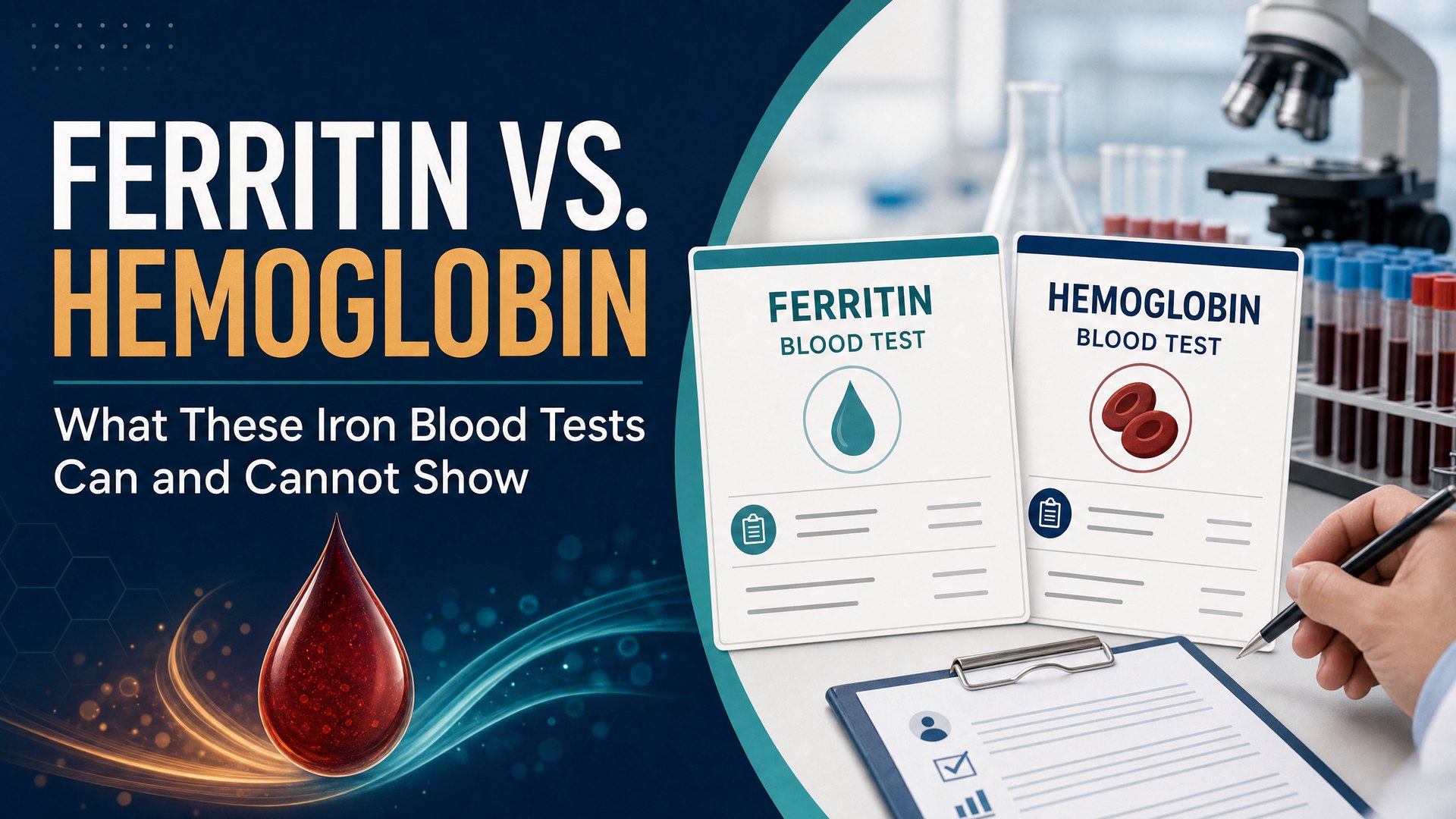
This article explains two commonly ordered blood tests that are often used when people or clinicians are evaluating iron status: ferritin and hemoglobin (a component of complete blood counts). Both play roles in detecting iron problems, but they measure different things and have different limitations. Understanding what each test can — and cannot — show helps set expectations for diagnosis and follow-up.
What ferritin measures
Ferritin is a protein that stores iron inside cells. A blood test for serum ferritin is used as an indirect measure of the body’s iron stores. In many situations, a low ferritin level is the earliest laboratory sign that iron stores are depleted and suggests iron deficiency.
However, ferritin is also what’s called an “acute-phase” protein. That means ferritin levels can rise with inflammation, infection, liver disease, or other acute or chronic illnesses. When inflammation is present, ferritin may be normal or high even when iron stores are low, so results must be interpreted in the context of the person’s overall health and other lab tests.
What hemoglobin measures
Hemoglobin is the oxygen‑carrying protein in red blood cells. Hemoglobin concentration is reported as part of a complete blood count (CBC). A lower-than‑expected hemoglobin indicates anemia — that is, fewer or smaller red blood cells or red blood cells that carry less hemoglobin.
While low hemoglobin shows that anemia exists, it does not by itself identify the cause. Iron deficiency is a common cause of anemia, especially among people who lose blood regularly (for example, with heavy menstrual bleeding), pregnant people, or those with limited dietary iron. But anemia can also result from other nutrient deficiencies, chronic disease, genetic conditions, or bone marrow problems. Additional tests (including ferritin and others) are usually needed to determine whether anemia is due to iron deficiency.
How the two tests are used together
Clinicians commonly use ferritin and hemoglobin together when evaluating suspected iron deficiency or anemia:
- If ferritin is low, this usually indicates depleted iron stores and suggests iron deficiency, often before hemoglobin falls enough to cause anemia.
- If hemoglobin is low, a ferritin test (and sometimes other iron-related tests) can help determine whether iron deficiency is the cause.
- If ferritin is normal or high but anemia is present, iron deficiency becomes less likely unless there is also inflammation or another factor that raises ferritin.
Because each test provides different information — storage iron (ferritin) versus functional oxygen‑carrying capacity (hemoglobin) — they are complementary rather than redundant.
Common causes of abnormal results (what these tests can reveal)
- Low ferritin: commonly seen with iron deficiency from inadequate dietary iron, increased needs (for example, pregnancy), or chronic blood loss (for example, heavy menstrual bleeding).
- Low hemoglobin (anemia): may result from iron deficiency, other nutrient deficiencies, chronic disease, or blood loss. Hemoglobin alone cannot confirm that iron deficiency is the cause.
- Normal/high ferritin with anemia: may occur when inflammation or liver disease is present; in those cases ferritin may be elevated even if iron stores are low.
Resources for women’s health note that menstrual factors (such as heavy or prolonged bleeding) are a common and important cause of iron loss among people of reproductive age. Evaluating the menstrual cycle, bleeding patterns, and conditions that affect bleeding is often part of assessing iron status.
Limitations — what these tests cannot reliably show by themselves
- Ferritin alone cannot always tell you if someone has iron deficiency when inflammation or liver disease is present, because ferritin can be falsely normal or high in those situations.
- Hemoglobin alone cannot identify the cause of anemia. It shows that anemia exists but not whether it’s due to iron deficiency, vitamin deficiency, chronic disease, or another cause.
- Neither test measures dietary intake directly or shows how well a person will respond to iron treatment; clinical context and sometimes additional tests are needed.
Practical steps and clinical follow-up
- If your clinician suspects iron deficiency, they will usually consider symptoms (fatigue, breathlessness with exertion, paleness), medical history (bleeding, pregnancy, diet), and both ferritin and hemoglobin results together when deciding next steps.
- When inflammation or another condition could affect ferritin, clinicians may order additional tests or repeat measurements after the inflammatory process resolves.
- Because dietary iron intake and blood loss (including heavy menstrual bleeding) are common contributors to iron deficiency, clinicians often discuss nutrition, menstrual history, and whether further evaluation for bleeding is needed.
When to seek care
- See a clinician if you have persistent or worsening fatigue, shortness of breath, lightheadedness, rapid heartbeat, or unusual pallor.
- If you have heavy or very irregular menstrual bleeding, see a clinician — heavy bleeding is a common reason for iron loss and may need evaluation and treatment.
- If you have a chronic illness or signs of infection and your ferritin or hemoglobin results are abnormal, follow up with your clinician so they can interpret tests in the full clinical context.
Laboratory tests are tools to guide diagnosis and care. Interpreting ferritin and hemoglobin together with symptoms, medical history, and, when appropriate, other laboratory or imaging tests gives the clearest picture of iron status and any underlying causes.
Practical notes about supplements and testing
When iron deficiency is confirmed, clinicians may recommend changes in diet or iron supplementation. The U.S. Office of Dietary Supplements provides information about iron and factors that affect iron status. If considering an over-the-counter iron supplement, remember that dietary supplements are regulated differently from prescription drugs; product quality and labeling can vary. Discuss supplementation with your clinician before starting it, especially if you have other health conditions or take other medications.
Bottom line: Ferritin measures stored iron and often falls early in iron deficiency; hemoglobin measures whether anemia is present. Each test has limits, and interpreting them together with clinical context is essential to determine whether iron deficiency or another condition is the cause of abnormal results.