In this guide
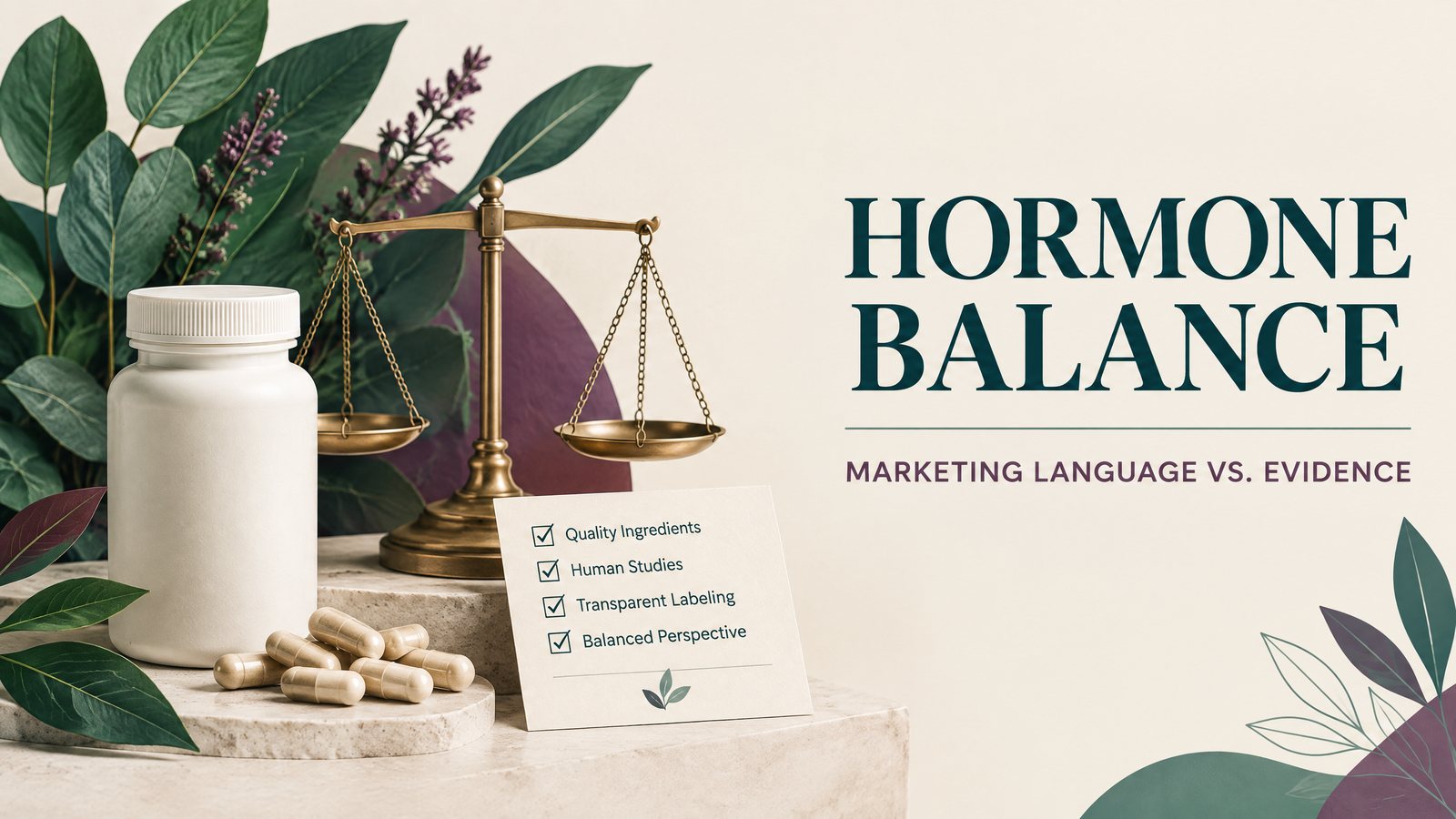
Products labeled to “balance hormones,” “support endocrine health,” or “restore hormonal harmony” are common in supplement marketing. Those phrases can sound reassuring, but they do not describe a regulated medical claim and often obscure what a product actually contains or what it can realistically do.
What marketing language usually means
“Hormone balance” is a marketing term, not a clinical diagnosis. Manufacturers may use it to suggest relief from symptoms such as irregular periods, hot flashes, mood changes, low libido, or fatigue. The ingredients behind those claims vary widely: some products are combinations of vitamins and minerals, others include herbs or mixtures of botanical extracts, and some contain isolated nutrients sold at different strengths.
How supplements are regulated — what to keep in mind
In the United States, dietary supplements are regulated under a different system than prescription drugs. The U.S. Food and Drug Administration (FDA) does not review or approve dietary supplements for safety and effectiveness before they are marketed. Manufacturers are responsible for ensuring products are safe and labels are truthful, and the FDA may take action only after problems are reported.
This means a label phrase such as “balances hormones” is not the same as a medical approval. Claims that a supplement treats, prevents, or cures a specific disease or condition would make the product a drug and are not allowed unless the claim is supported and approved.
Which ingredients have clearer roles in women’s health?
Some nutrients included in “hormone balance” products have established biological roles related to reproductive or overall health. Rather than claiming they “balance hormones,” it’s more accurate to describe how these nutrients support specific functions:
- Iron — Iron is essential for making hemoglobin. Heavy menstrual bleeding can cause or worsen iron deficiency. If iron deficiency is suspected, testing and treatment guidance from a health professional are appropriate (NIH ODS: Iron).
- Folate — Folate is important before and during early pregnancy because supplementation reduces the risk of neural tube defects in the developing fetus. This is a specific, evidence-based use of folate (NIH ODS: Folate).
- Calcium and vitamin D — These nutrients play key roles in bone health. Their relevance increases during and after the menopause transition when bone loss risk rises (NIH ODS: Calcium, NIH ODS: Vitamin D).
- Iodine and choline — Iodine is needed for thyroid hormone production and is especially important in pregnancy. Choline supports fetal brain development. Both are nutrients with meaningful roles during pregnancy and reproduction (NIH ODS: Iodine, NIH ODS: Choline).
- Omega-3 fatty acids — Long-chain omega-3s have recognized roles in overall health; they are often included in prenatal and general health formulations (NIH ODS: Omega-3).
None of these nutrients should be portrayed as a universal “hormone balancing” cure. Their benefits are specific and often conditional on individual needs, life stage (for example, pregnancy or menopause), and whether someone has a documented deficiency.
What the evidence does not support
Broad, unqualified statements that a product will “restore hormonal balance,” “fix your thyroid,” or “cure PCOS” are not supported by the regulatory framework or by the fact that supplements are not evaluated like drugs. For many botanical ingredients marketed for menstrual or menopausal symptoms, evidence is mixed or limited. When claims extend into diagnosing or treating a medical condition, a clinician’s evaluation and evidence-based treatments are the appropriate path.
Practical steps for evaluating a product
- Read the label carefully: identify active ingredients, forms, and amounts. If the label is unclear, treat the claim with caution.
- Look for independent testing seals (third-party verification) that check for ingredient accuracy and contaminants. These seals are not a guarantee of effectiveness, but they do provide some quality oversight.
- Prefer food-first approaches where possible. A balanced diet tailored to life stage can provide many necessary nutrients; see guidance on healthy eating for women (WomensHealth.gov: Healthy Eating and Women).
- Talk with a clinician before starting any supplement if you are pregnant, breastfeeding, trying to conceive, taking prescription medicines, have a chronic condition (for example, thyroid disease, liver disease, or a bleeding disorder), or are planning surgery. Interactions and safety issues are possible.
- Be especially cautious with products making strong disease-treatment claims. The FDA can remove dangerous products after problems appear, but it does not preapprove most supplements.
When to seek care
Consult a health professional if you experience:
- Heavy, very irregular, or prolonged menstrual bleeding — these can be signs of conditions that need evaluation (ACOG: Abnormal Uterine Bleeding).
- Severe mood changes, suicidal thoughts, or symptoms that interfere with daily life — seek prompt medical or mental-health care.
- Symptoms of menopause that significantly affect quality of life and for which you’re considering treatment — discuss evidence-based options with a clinician (ACOG: Menopause).
- Concerns about fertility, suspected pregnancy, or planning pregnancy — nutrient needs and safe treatments differ during these times; folate and iodine are examples of nutrients with specific recommendations for pregnancy (NIH ODS: Folate, NIH ODS: Iodine).
Bottom line: “Hormone balance” on a label is marketing shorthand. Some supplements contain nutrients with clear, specific roles in women’s health, but products are not preapproved as treatments. Discuss symptoms and supplement use with a clinician, prioritize diet and proven interventions, and be cautious of broad treatment claims.