In this guide
- Why folic acid is emphasized
- Iron: why it matters and what to watch for
- Iodine: an important but sometimes overlooked nutrient
- Other nutrients often discussed with prenatal care
- What to know about supplement safety and regulation
- Questions to bring to your clinician
- When to seek care
- Practical takeaways
- References
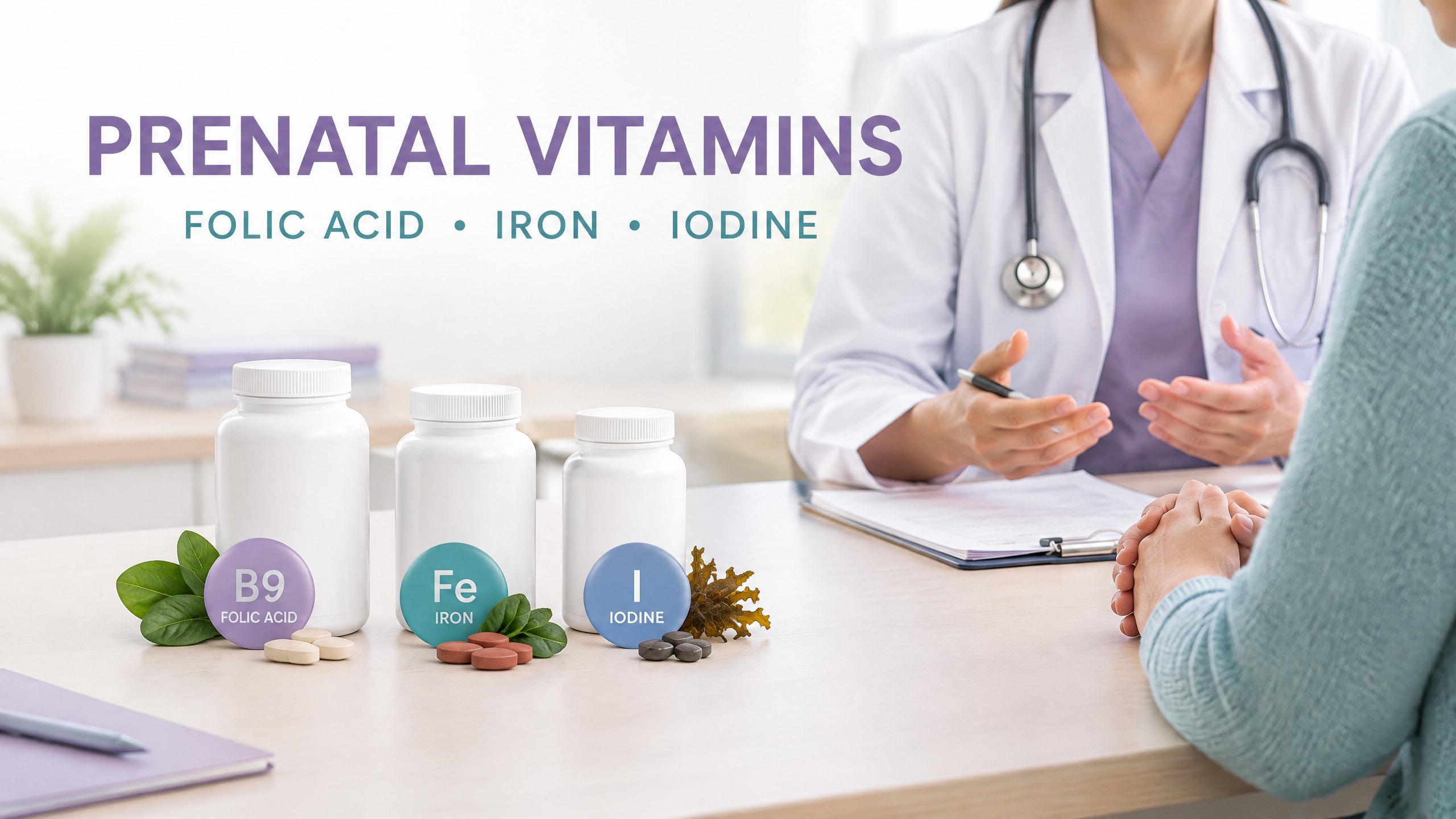
Many people take a prenatal vitamin when planning pregnancy or during pregnancy to help meet increased nutrient needs. This article explains why folic acid, iron, and iodine are often highlighted, what the scientific guidance says about them, how supplements are regulated, and practical questions to take to your clinician. This is general information for planning conversations with a clinician and is not individualized medical advice.
Why folic acid is emphasized
Folate (the natural form) and folic acid (the synthetic form used in supplements and fortified foods) are B vitamins that support normal cell division. Public health guidance emphasizes folic acid because adequate intake before conception and during early pregnancy is associated with a lower risk of neural tube defects in the developing fetus.
The Office of Dietary Supplements (ODS) provides recommended intakes for folate for adults and notes higher needs during pregnancy. Many clinicians recommend that people who can become pregnant take a folic acid supplement as part of preconception care; your clinician can advise on an appropriate product and dose for your situation.
Iron: why it matters and what to watch for
Iron helps form hemoglobin, the oxygen-carrying component of red blood cells. Pregnancy increases iron needs because of expansion of maternal blood volume and for fetal development. The ODS fact sheet summarizes recommended intakes and explains that iron deficiency is a common cause of anemia worldwide.
Clinicians often check iron status (for example, hemoglobin and ferritin levels) before or during pregnancy and will recommend supplements if tests suggest deficiency or if intake from food is insufficient. Iron supplements can cause side effects for some people, such as constipation or stomach upset; your clinician can suggest ways to manage side effects or alternative formulations.
Iodine: an important but sometimes overlooked nutrient
Iodine is required for thyroid hormone production, which supports fetal and infant brain development. Recommended intakes are higher during pregnancy compared with nonpregnant adults. Many health organizations note the importance of ensuring adequate iodine intake during pregnancy and lactation.
Not all multivitamins or prenatal products contain iodine, and amounts can vary among brands. If you are pregnant or planning pregnancy, ask your clinician whether you need an iodine-containing prenatal supplement or dietary adjustments to meet your needs.
Other nutrients often discussed with prenatal care
- Choline: Important for fetal brain development; recommended intakes are higher during pregnancy. Some prenatal supplements include choline, but amounts vary.
- Omega-3 fatty acids (DHA): Long-chain omega-3s are sometimes recommended as part of prenatal nutrition discussions; some prenatal products include DHA.
- Vitamin D and calcium: These support bone health for you and the developing fetus; clinicians will assess dietary intake and may recommend supplements if needed.
The ODS fact sheets for choline, omega-3s, vitamin D, and calcium provide details on recommended intakes and food sources. Your clinician can help you prioritize which nutrients are most important based on your diet, health history, and lab tests.
What to know about supplement safety and regulation
In the United States, dietary supplements (including prenatal vitamins) are regulated differently from prescription drugs. The U.S. Food and Drug Administration (FDA) does not approve dietary supplements for safety and effectiveness before they are marketed. Manufacturers are responsible for product safety and accurate labeling, and the FDA can take action if a product is found unsafe after it is on the market.
Because product content and quality can vary, it can help to:
- Check supplement labels for ingredient lists and amounts.
- Choose products from reputable manufacturers and, when available, look for independent quality testing or third-party verification statements on the label or company website.
- Bring the supplement bottle or label to your clinician so they can see exact ingredients and amounts.
Questions to bring to your clinician
Before you start or change a prenatal supplement, consider asking your clinician some of the following:
- Do I need a prenatal vitamin based on my current diet and health status?
- Does the product I’m considering contain folic acid, iron, and iodine, and are the amounts appropriate for me?
- Should we check lab tests now (such as hemoglobin or ferritin) to assess iron status?
- Am I taking any medications or herbs that might interact with a supplement?
- What side effects should I expect, and how should I manage them?
- Are there food-based ways I can improve intake of these nutrients?
When to seek care
Contact your clinician if you are pregnant or planning pregnancy and want personalized advice about supplements. Also seek care if you experience:
- New or severe side effects after starting a supplement (for example, allergic reactions, severe stomach pain, or persistent vomiting).
- Symptoms suggestive of iron deficiency (unexplained fatigue, pallor, shortness of breath) or other concerning symptoms—your clinician may recommend blood tests.
- Concerns about possible supplement interactions with prescription medications.
Practical takeaways
- Folic acid, iron, and iodine are commonly recommended nutrients to consider before and during pregnancy because of their roles in fetal development and maternal health.
- Recommended intakes and individual needs vary by person and by life stage; testing and clinical evaluation can guide whether supplements are needed and which formulations to use.
- Dietary supplements are not regulated like prescription drugs; check labels, discuss choices with your clinician, and report any adverse effects.
This article summarizes guidance from government and clinical sources about nutrients commonly included in prenatal vitamins. Discuss decisions about supplements, testing, and doses with your clinician.