In this guide
Greens powders are dietary supplements that combine dried or concentrated plant ingredients with vitamins, minerals, fiber, probiotics, herbs, sweeteners, and other additives. Manufacturers promote them for convenience and nutrient boosts, but formulations and quality vary widely. This article explains how to compare ingredients, what testing and public databases can tell you, and how to spot safety issues.
What the evidence says — established facts and uncertainty
Established facts:
- The U.S. Food and Drug Administration (FDA) does not approve dietary supplements for safety or effectiveness before they are marketed; manufacturers are responsible for ensuring product safety and label accuracy under current regulations. FDA: Dietary supplements
- Ingredient content, labeling, and claims for supplements can be checked against public federal resources such as the NIH Dietary Supplement Label Database (DSLD) and the Dietary Supplement Ingredient Database (DSID), which provide label information and measured nutrient data for some products and ingredients. DSLD DSID
Areas of uncertainty:
- Clinical evidence that greens powders provide the same health benefits as eating a variety of whole vegetables and fruits is limited and product-specific. Effects depend on the exact ingredients and amounts in each formula.
- Because formulations differ, you cannot assume all greens powders deliver the same nutrients or safety profile.
Ingredients to compare on labels
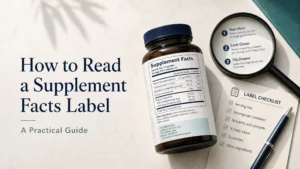
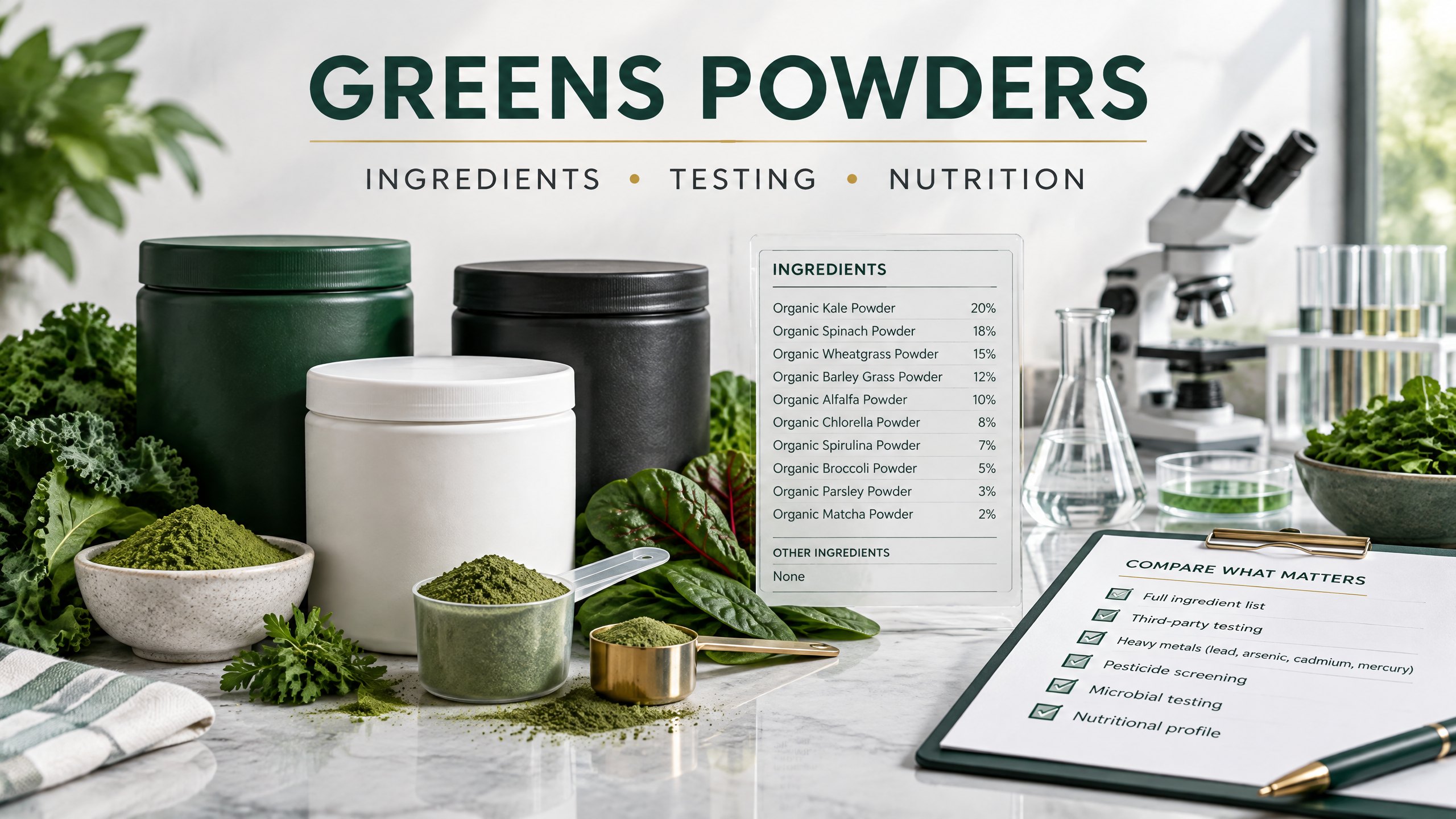
When comparing products, look at the Supplement Facts and the ingredient list. Common components and what to consider for each:
- Vitamins and minerals: Check which micronutrients are listed and the amounts per serving. Some greens powders aim to provide significant micronutrients while others provide only small amounts.
- Greens and plant concentrates: Names like wheatgrass, spirulina, chlorella, or leaf powders may appear. Amounts may be combined under a blend listing, which can hide individual amounts.
- Fiber: Some formulas add soluble or insoluble fiber. If you rely on the product for fiber, compare the grams per serving. (See the NIH fiber factsheet for general fiber information.) ODS: Fiber
- Probiotics: Some products include probiotic strains. If present, the label should list strains and colony-forming units (CFUs) at the time of manufacture; these counts can decline over time. See the NIH probiotics factsheet for issues to consider. ODS: Probiotics
- Herbal extracts and botanical blends: Herbs may have active components and potential interactions. Labels may use proprietary blend language that does not disclose exact amounts of each botanical.
- Additives, sweeteners, and flavorings: These affect tolerability and carbohydrate content; they may also cause sensitivities in some people.
Contamination, testing, and what public databases can show
Because the FDA does not perform premarket approval for most dietary supplements, concerns about contamination, mislabeling, or variable ingredient amounts arise. The federal agencies and databases can help you compare products:
- Dietary Supplement Label Database (DSLD): Provides label images and ingredient lists submitted for many marketed supplements, which you can use to compare declared ingredients and serving sizes. DSLD
- Dietary Supplement Ingredient Database (DSID): Contains laboratory-measured values for selected nutrients and ingredients in certain supplement types; it can show differences between label claims and measured amounts for some products or ingredient categories. DSID
- FDA oversight: The FDA inspects manufacturing facilities for compliance with current Good Manufacturing Practices (cGMPs) and can take action if products are adulterated or misbranded. However, presence on the market does not imply FDA testing or approval of the product. FDA: Dietary supplements
Note: Some manufacturers publish Certificates of Analysis or third-party test results. That information can be useful but varies by company; the government databases above are independent resources you can consult.
Marketing claims vs. evidence
Manufacturers commonly make claims about energy, detox, immunity, or digestive health. Keep these points in mind:
- The FDA regulates supplement labeling and claims; structure/function claims are allowed but must be truthful and not misleading, and they cannot claim to diagnose, treat, cure, or prevent disease.
- Claims on the package or website are not the same as evidence from rigorously controlled clinical trials. Consider the specific ingredients and look for clinical research on those ingredients rather than relying on broad product claims.
Practical label-reading checklist
- Find the serving size and servings per container.
- Read the Supplement Facts panel for listed vitamins, minerals, and their amounts.
- Look for individual amounts of plant ingredients; beware of “proprietary blends” that hide quantities.
- Check for probiotic strain IDs and CFU counts if probiotics are included.
- Compare labels using the NIH Dietary Supplement Label Database (DSLD) to confirm manufacturer information. DSLD
- Search DSID to see whether laboratory data exist for similar products or ingredient categories. DSID
Interactions and contraindications
Greens powders can contain concentrated vitamins, minerals, herbs, fiber, and probiotics. That means:
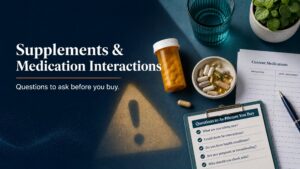
- Some ingredients may interact with prescription or over-the-counter medications or affect fiber-sensitive drug absorption — discuss with your clinician or pharmacist if you take regular medications.
- Probiotics and some botanicals may not be appropriate for people who are immunocompromised, pregnant, or breastfeeding; check ingredient-specific guidance. ODS: Probiotics
- People with severe allergies should review the full ingredient list, including nonactive components and potential cross-contaminants.
When to seek care
- If you have suspected adverse effects after taking a greens powder (severe gastrointestinal symptoms, allergic reactions, fainting, or other worrying signs), stop the product and seek medical care promptly.
- Contact your healthcare provider before starting a greens powder if you are pregnant, breastfeeding, immunocompromised, on prescription medications (including blood thinners), or have chronic medical conditions.
Bottom line
Greens powders vary greatly in composition and quality. Use federal resources such as the DSLD and DSID to compare labels and available laboratory data, review ingredient lists carefully, and consult your healthcare provider about interactions or specific health conditions. Remember that supplements are not FDA-approved treatments and are not a direct substitute for a balanced diet of whole fruits and vegetables.