In this guide
This article explains how mushroom supplements are made and labeled, what beta‑glucans are, and what evidence and regulatory guidance U.S. agencies provide. It is a general information article, not medical advice. If you have health conditions or take medicines, talk with your clinician before using supplements.
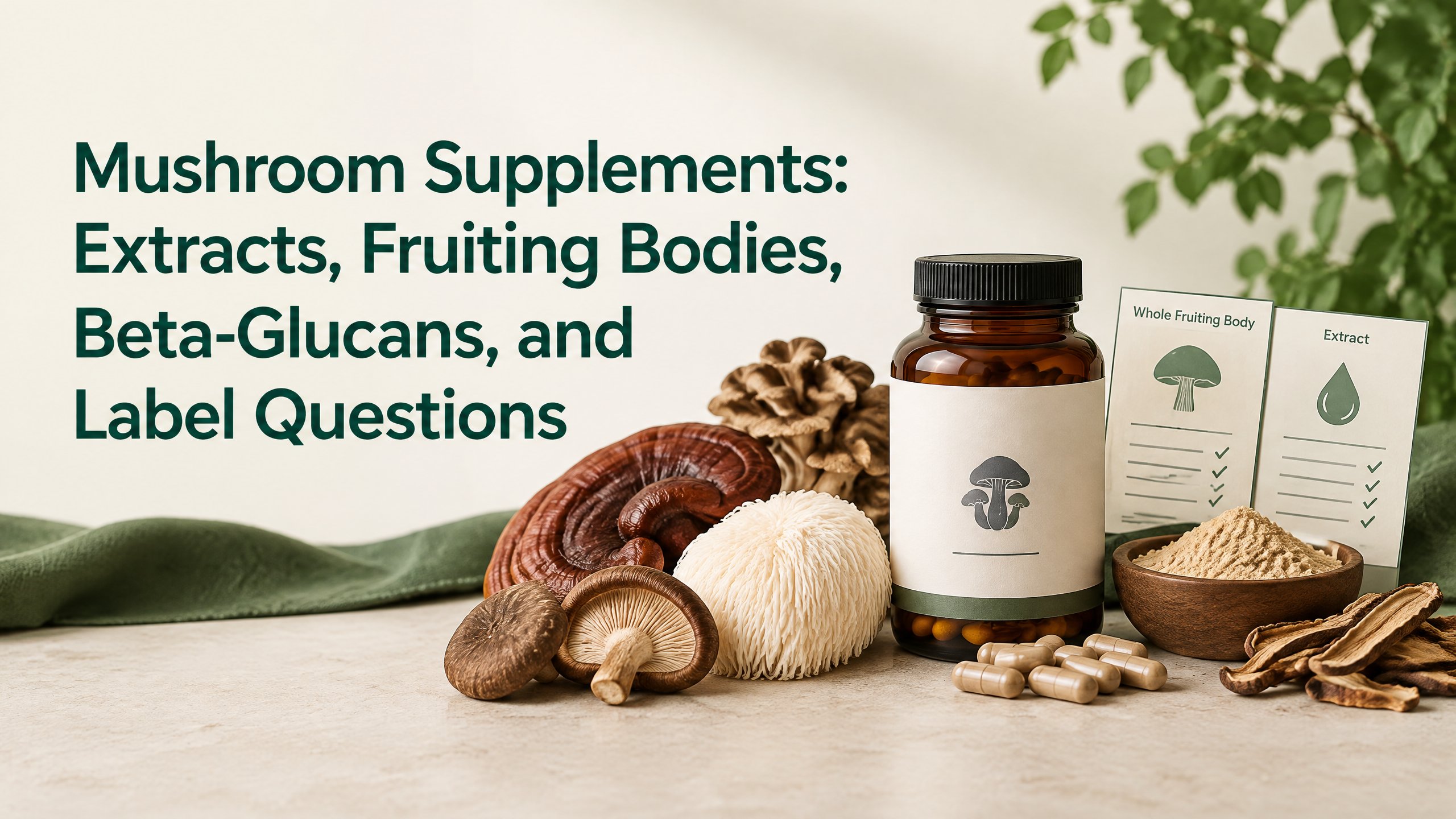
Types of mushroom products: extracts vs fruiting bodies
“Mushroom supplements” on the market typically come in two main forms:
- Fruiting body powders — dried and ground mushroom caps/stems (the part you would see growing above ground).
- Extracts — concentrated preparations made by processing mushroom material with water, alcohol, or both. Extracts may be described as “hot water extract,” “alcohol extract,” or “dual extract.”
Labels may not always make clear which part of the fungus was used (fruiting body vs mycelium grown on grain) or the solvent used for extraction. The source material and extraction method can affect which compounds are present and in what amounts.
What are beta‑glucans?
Beta‑glucans are a group of complex carbohydrates (polysaccharides) found in many fungi, oats, barley, and yeast. In mushroom products, certain beta‑glucans are often highlighted as active components. Because beta‑glucans are a type of fiber, federal resources that summarize fiber and related compounds are useful context when evaluating claims about them.
However, the amount and specific structure of beta‑glucans can vary across species and processing methods. That variability matters because biological effects seen in studies often depend on the specific mushroom species, the beta‑glucan type, and the preparation used.
What the evidence says — established vs preliminary
Public health agencies emphasize that evidence for many dietary supplement ingredients is limited. The National Center for Complementary and Integrative Health (NCCIH) and the Office of Dietary Supplements (ODS) maintain summaries showing that scientific support for benefits varies by ingredient and condition.
For most mushroom supplements, clinical evidence is preliminary or inconsistent. Some laboratory and small human studies have evaluated specific mushroom species or extracts, but findings are not uniform and often don’t translate directly to commercial supplements. When evaluating claims, look for whether research tested the same species, part (fruiting body vs mycelium), and preparation that appears on the product label.
Key point: Supplement labels and marketing may imply benefits that haven’t been confirmed in well‑designed clinical trials. Federal resources recommend caution and consulting reliable summaries before assuming efficacy.
How supplements are regulated in the U.S.
Dietary supplements are regulated differently from prescription drugs. Unlike drugs, supplements do not require FDA pre‑market approval for safety or effectiveness. Manufacturers are responsible for ensuring product safety and truthful labeling, and the FDA can take action against unsafe or mislabeled products after they reach the market. The FDA provides consumer guidance on what “dietary supplement” means and what the agency does and does not approve.
Practical label‑reading checklist
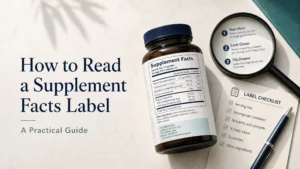
When evaluating a mushroom supplement label, consider these practical items:
- Species name: Look for the scientific name (for example, Ganoderma lucidum) rather than only common names.
- Part used: Is it fruiting body, mycelium, or whole mushroom? Labels should state the source material.
- Form and extraction: Does the label say “water extract,” “alcohol extract,” or “dual extract”?
- Amount per serving: Check the amount of mushroom material or extract per serving. Some labels list a raw ingredient weight and an extract ratio; others list a standardized component amount.
- Standardization and markers: If a product claims standardized beta‑glucan or other component amounts, the label should specify the quantity per serving.
- Other ingredients and allergens: Review fillers, carriers (for example, rice or grain mycelium), and common allergens.
- Manufacturer details: Look for a company name, contact information, lot number, and expiration or “best by” date.
- Third‑party testing claims: Certifications from independent testing organizations can be useful, but follow up by contacting the certifier if you need confirmation.
For additional label checks and to compare ingredients across products, federal databases may help: the Dietary Supplement Label Database (DSLD) provides label information, and the Dietary Supplement Ingredient Database (DSID) contains analytical data for some ingredients.
Interactions, contraindications, and safety considerations
Official sources recommend caution because data on interactions and long‑term safety for many mushroom supplements are limited. General considerations include:
- Pregnancy, breastfeeding, or children: Safety data are often lacking; avoid use or consult a clinician before use.
- Immune conditions and immunomodulating drugs: Because some mushroom compounds may affect immune activity, people with immune disorders or those taking immunosuppressive medications should consult their clinician.
- Blood thinning and surgery: If you take anticoagulant or antiplatelet medications or have planned surgery, discuss supplements with your clinician because of potential bleeding risks or interactions.
- Allergies: People with mushroom allergies may react to supplements that contain mushroom material.
If you take prescription medications or have chronic health conditions, discuss any supplement with your health care team. Federal guidance emphasizes that manufacturers, not the FDA, are responsible for ensuring dietary supplement safety and label accuracy.
When to seek care
- Stop the supplement and seek care if you develop signs of an allergic reaction (hives, swelling, difficulty breathing) or severe gastrointestinal symptoms.
- Contact your clinician if you notice unexpected bleeding, bruising, or if you suspect an interaction with a prescription medicine.
- Report serious adverse events to the FDA via the MedWatch reporting system and contact the supplement manufacturer if possible.
In summary, mushroom supplements vary widely in source material and composition. Official U.S. sources advise careful label review, skepticism about unproven claims, and consultation with a clinician when you have health concerns or take medicines.
Bottom line
An evidence‑focused guide to mushroom supplement forms, what beta‑glucans are, how to interpret labels, and safety/regulatory considerations using official NIH and FDA sources.
References
- Office of Dietary Supplements — What You Need To Know (consumer page)
- U.S. Food and Drug Administration — Dietary Supplements
- Dietary Supplement Label Database (DSLD)
- Dietary Supplement Ingredient Database (DSID)
- FDA consumer update: “It’s really NOT FDA‑approved”
- National Center for Complementary and Integrative Health — A to Z list