In this guide
This article compares frozen and fresh vegetables on nutrition, cost, convenience, and safety, using official U.S. guidance. It is a general overview for healthy eating decisions, not individualized medical or dietetic advice.
Are frozen and fresh vegetables equally nutritious?
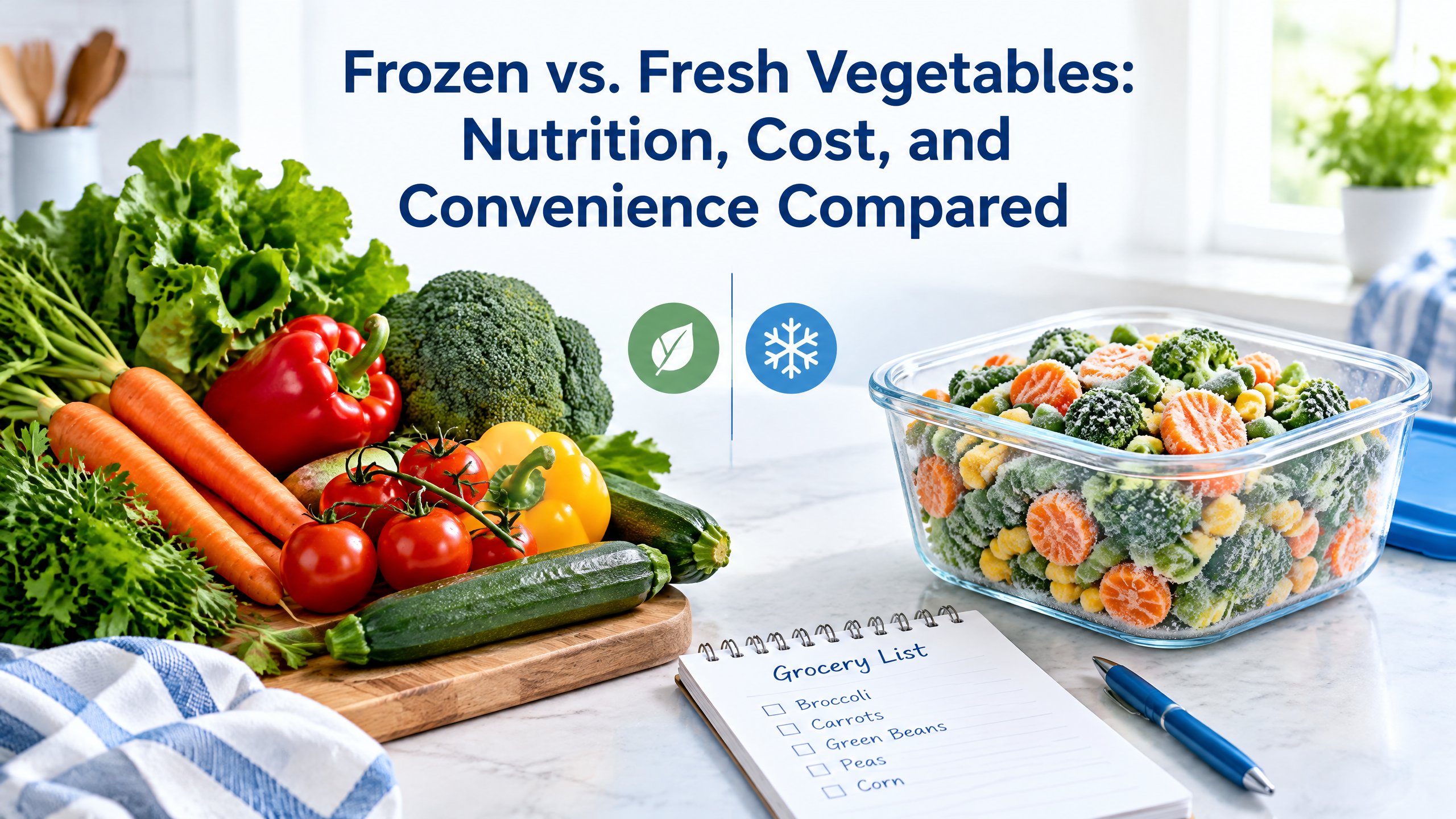
Federal dietary guidance counts vegetables toward the same food-group recommendations whether they are fresh, frozen, or canned (when prepared without excess salt or sugar). Freezing is usually done soon after harvest, and that process can help preserve vitamins and minerals that might be lost during long storage or transport for fresh produce. Whether a vegetable is “better” depends on how it was handled, stored, and prepared.
Practical points:
- Frozen vegetables often come from product that was blanched and frozen shortly after harvest, which preserves many nutrients.
- Fresh vegetables can be excellent when they are ripe and eaten soon after purchase, but nutrients decline over time in storage and during transport.
- Cooking methods matter: steaming or microwaving with little water tends to preserve more water‑soluble vitamins than boiling in a large volume of water.
Cost and convenience
Frozen vegetables are widely available year-round, often at lower cost per serving than out-of-season fresh produce. They can reduce food waste because they keep longer in the freezer and can be used in variable portion sizes. Fresh vegetables are ideal when you want raw texture or flavor (for salads, crudités, or quick roasting) and when high-quality produce is in season and affordable.
Practical examples:
- Keep a bag of plain frozen mixed vegetables for quick stir-fries, soups, or as an easy side dish.
- Use fresh tomatoes and greens when you want raw crunch and flavor for salads, and use frozen tomatoes in cooked sauces.
Reading labels and choosing products
Not all frozen vegetable packages are the same. Read the ingredient list and Nutrition Facts panel to compare options:
- Ingredient list: Prefer plain vegetables with no added sauces, cream, or breading if you want minimal added ingredients.
- Nutrition Facts: Check serving size and sodium. Some frozen vegetables are packaged with sauces or added salt that raise sodium and calories.
- Preparation instructions: Follow the package directions for best texture and safety. Many frozen vegetables are precooked (blanched) and only need reheating; others may be intended for further cooking.
Preparing and storing safely
Follow safe food handling and storage guidance from federal agencies. For frozen vegetables that are meant to be stored frozen, follow package and retailer instructions for keeping them frozen until use. For fresh vegetables, follow good food-safety practices for washing, storing, and separating produce from raw meats.
Practical tips:
- Keep frozen vegetables frozen until you’re ready to cook them and use any recommended cooking method on the package.
- Wash fresh produce according to official guidance before eating raw. For packaged fresh-cut vegetables, follow the ‘‘use by’’ dates on the label.
- If a frozen package contains added ingredients (sauce, seasoning), store and handle like a prepared food and follow any additional instructions on the package.
Special considerations
- Children, older adults, pregnant people, and people with weakened immune systems may want extra caution with raw produce; check official guidance or speak with a healthcare professional about individual concerns.
- People with food allergies should read labels carefully—some frozen vegetable products may contain added ingredients or be processed in facilities that handle allergens.
When to seek care
Seek medical attention if you or someone in your care has severe or persistent symptoms after eating, such as high fever, repeated vomiting, bloody diarrhea, or signs of dehydration (dizziness, very low urine output, confusion). People in higher-risk groups (pregnant people, older adults, infants, and people with weakened immune systems) should contact their healthcare provider early if they have concerns after eating questionable food.
Bottom line
Both frozen and fresh vegetables can be healthy choices. Frozen vegetables are convenient, often cost-effective, and nutritionally comparable to fresh when plain and minimally processed. Fresh vegetables are excellent when in season and consumed soon after purchase. Read labels to avoid added sauces, salt, or sugar, follow storage and cooking instructions from the product label and official guidance, and choose a mix that helps you meet vegetable recommendations from the Dietary Guidelines and MyPlate.