In this guide
This article helps women identify iron-rich foods, explains the difference between heme and nonheme iron, and offers practical tips to improve absorption. It also outlines situations when you should consider testing or medical care for possible low iron.
Why iron matters for women
Iron is a mineral your body needs to make hemoglobin, the protein in red blood cells that carries oxygen. Because menstrual bleeding, pregnancy, and some gynecologic conditions can increase iron loss, many women have higher iron needs at certain life stages. Ensuring enough iron through diet (and, where appropriate, medical treatment) supports energy, normal activity, and overall health.
Heme versus nonheme iron
Dietary iron comes in two forms:
- Heme iron: Found only in animal foods such as beef, pork, poultry, and seafood. Heme iron is generally more readily absorbed by the body.
- Nonheme (plant) iron: Found in plant-based foods like beans, lentils, tofu, spinach, and iron-fortified cereals. Nonheme iron is less readily absorbed but is an important source—especially for people who eat little or no meat.
Both types contribute to total iron intake. Because absorption differs, combining dietary strategies (below) can help maximize the iron you get from meals.
Food sources of iron
Include a variety of foods to meet iron needs. Examples include:
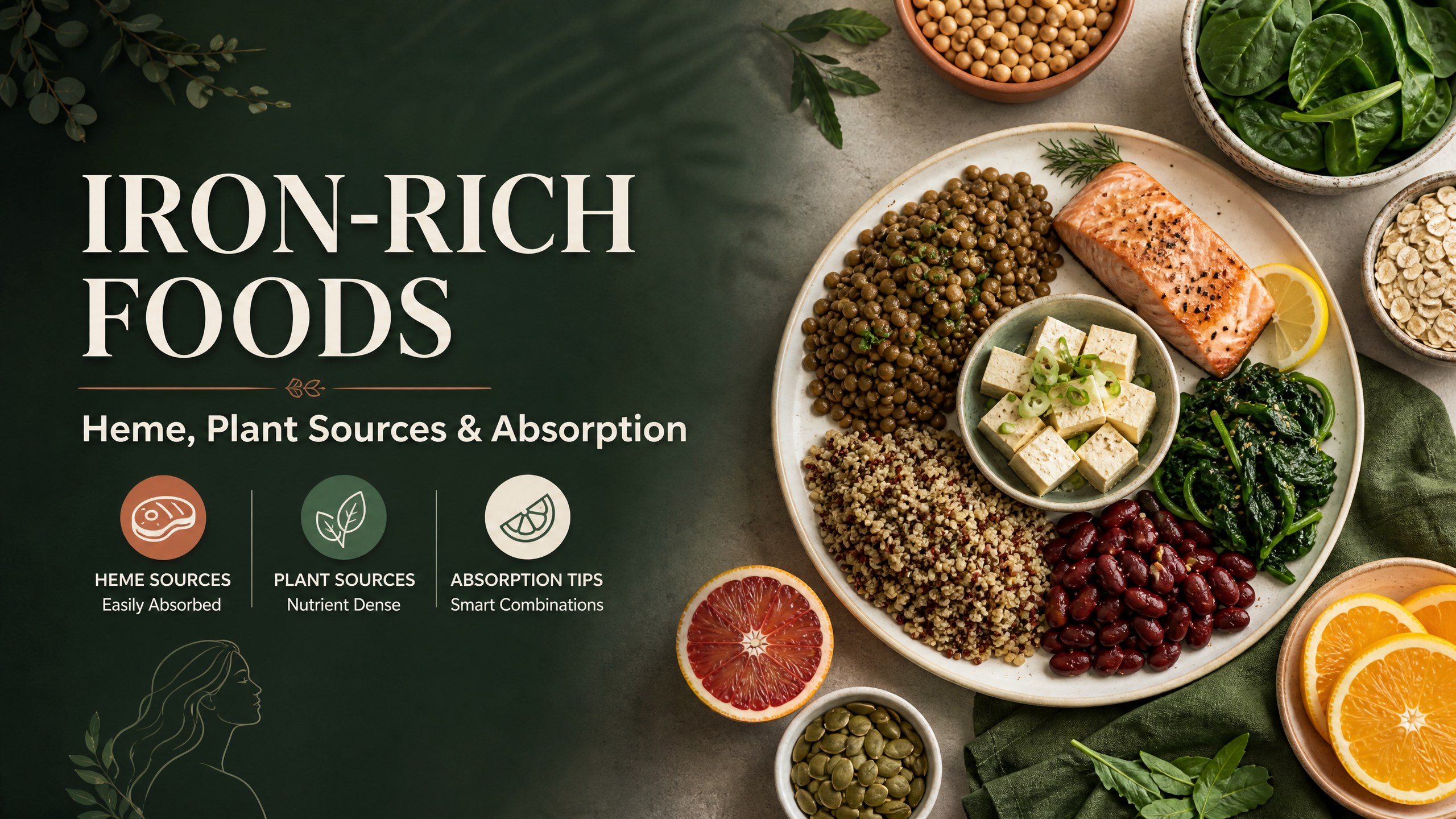
- Heme sources: Lean red meats, poultry (especially dark meat), fish and shellfish. These foods provide iron in a form your body absorbs relatively well.
- Plant (nonheme) sources: Legumes (lentils, beans, chickpeas), tofu and other soy products, dark leafy greens (spinach, Swiss chard), nuts and seeds, and iron-fortified breads and cereals.
- Fortified foods: Many breakfast cereals and some grain products are fortified with iron and can be convenient sources—check nutrition labels.
Simple meal strategies to improve iron absorption
Because nonheme iron is more influenced by other foods in the meal, small changes can make a meaningful difference:
- Pair iron-rich plant foods with vitamin C: Foods high in vitamin C (citrus, bell peppers, strawberries, tomatoes) can enhance nonheme iron absorption. Add fruit to cereal, squeeze lemon on spinach, or include bell pepper with a bean dish.
- Include some heme iron when possible: Adding even a small portion of meat, fish, or poultry to a meal increases iron absorption from plant foods eaten at the same time.
- Be mindful of inhibitors: Compounds in tea and coffee (tannins) and high amounts of calcium can reduce iron absorption when consumed with iron-rich meals. Spacing these beverages or calcium supplements away from iron-rich meals may help.
- Use fortified foods strategically: An iron-fortified cereal with fruit can be a supportive breakfast for people who do not eat meat.
Practical meal ideas
- Breakfast: Iron-fortified whole-grain cereal topped with sliced orange or strawberries.
- Lunch: Lentil or chickpea salad with chopped red pepper and a lemon vinaigrette.
- Dinner: Grilled salmon or chicken with a side of sautéed spinach and bell peppers; or a tofu and vegetable stir-fry with a citrus-based sauce.
Special considerations for women
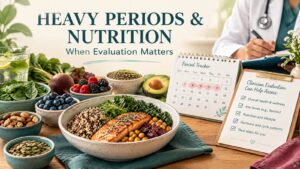
Certain life stages and gynecologic conditions can affect iron needs or losses. Heavy or prolonged menstrual bleeding is a common cause of increased iron loss; pregnancy also raises iron requirements. If you have known conditions that alter bleeding patterns (for example, some causes of abnormal uterine bleeding), discuss iron needs with your clinician. Your clinician can advise on dietary changes, testing, and treatment if needed.
Supplements and safety
Some people need iron supplements to correct low iron or iron-deficiency anemia, but supplements are not always appropriate and can cause side effects. The U.S. Food and Drug Administration regulates dietary supplements differently than medicines; if you are considering an iron supplement, talk with a health professional first. Avoid starting supplements without medical guidance—excess iron can be harmful, and some forms are more likely to cause gastrointestinal symptoms.
When to seek care
- If you have persistent fatigue, shortness of breath with ordinary activity, dizziness, or unusually pale skin, consider discussing these symptoms with your clinician—these can be signs of low iron or anemia.
- If you experience heavy or prolonged menstrual bleeding, recurrent heavy bleeding, or sudden changes in your bleeding pattern, contact a clinician to evaluate the cause and discuss iron status and treatment options.
- If you are pregnant, planning pregnancy, or breastfeeding, review iron needs with your prenatal or primary care provider—iron requirements often change during these times.
This article provides general information and is not a substitute for professional medical advice, diagnosis, or treatment. If you have concerns about your iron status or symptoms, seek care from a qualified health professional.