In this guide
- What this guide covers
- Key points at a glance
- Who may need iron supplements
- Why testing matters: which tests and how to interpret them
- When to take iron and how much
- Common forms, side effects, and safety
- Practical decision framework: start, test, or wait?
- When to ask a clinician (limitations and special situations)
- How to compare products later
- Bottom line
- Editorial note
- References
- Related VitaEvidence reading
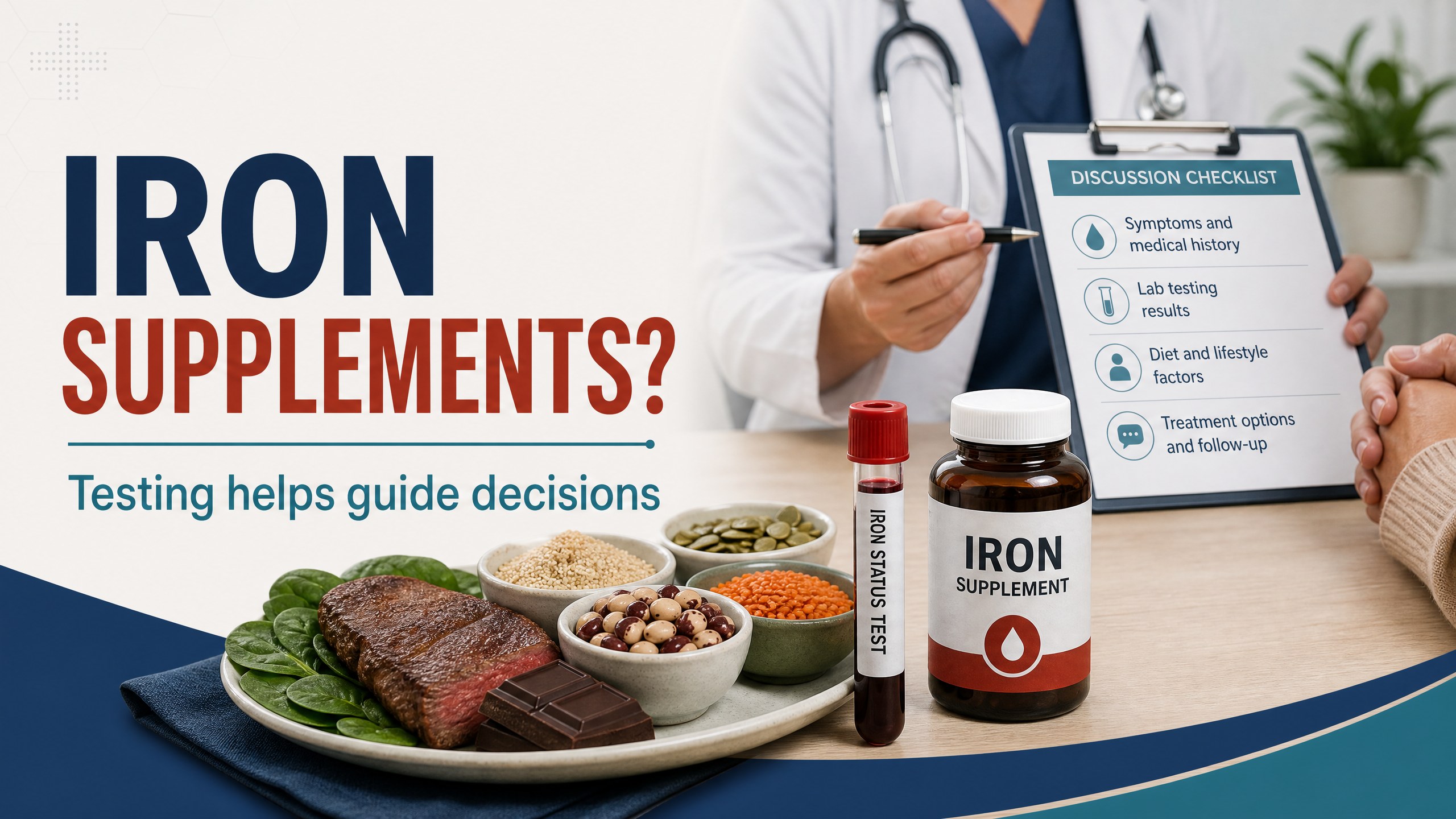
Iron supplements are commonly used to treat or prevent iron-deficiency and iron-deficiency anemia, but not everyone benefits from routine supplementation. Testing iron status before starting supplements helps target treatment, avoid unnecessary side effects, and reduce the risk of harm from excess iron.
What this guide covers
- Who commonly needs iron supplements and who may not
- Which laboratory tests clinicians use and what they mean
- Practical advice on when and how to take supplements, common side effects, and safety issues
- A comparison framework to use when evaluating iron products and a clear list of when to ask a clinician
Key points at a glance
- Iron supplements are generally considered when deficiency or increased need has been assessed; ferritin and hemoglobin are among the tests that may help guide care, but results require clinical context. [1]
- Recommended intake differs by age, sex, pregnancy status and dietary pattern—pregnancy typically requires higher intake and clinician supervision. [1]
- Iron supplements can cause gastrointestinal side effects and interact with several medicines; timing and form influence absorption and tolerability. [1][2]
- Do not give iron tablets or liquid supplements to young children unsupervised—accidental overdose can be life-threatening. [2]
Who may need iron supplements
- Pregnant people: Pregnancy raises iron needs; many clinicians screen for low iron and may recommend supplementation or a prenatal vitamin with iron. Recommended daily iron during pregnancy is higher than for nonpregnant adults and should be managed with clinical input. [1]
- People with diagnosed iron-deficiency anemia: Documented low hemoglobin plus low iron stores (for example, low ferritin) is the most common reason to start replacement. [1]
- Women with heavy menstrual bleeding: Chronic menstrual blood loss is a frequent cause of low iron and warrants testing and treatment if stores are low. [1]
- Infants, young children, and adolescents at risk: Rapid growth, limited dietary intake (especially in breastfed infants without iron-rich complementary foods), or restrictive diets may cause deficiency—testing and clinician-directed dosing are important. [1]
- Long-term blood donors, bariatric surgery patients, and some chronic disease groups: These populations can lose or poorly absorb iron and often need monitoring and tailored supplementation. [1][2]
- Vegetarian and vegan eaters with low intake of bioavailable iron: Plant-based diets supply nonheme iron, which is less well absorbed; clinicians may recommend higher intake or supplements for people with low ferritin. [1]
Practical examples
– A 28-year-old woman with heavy periods and fatigue: test ferritin + CBC; if testing supports deficiency, a clinician may recommend oral iron; no single ferritin cutoff applies to every situation and address bleeding. [1]
– A pregnant person at first prenatal visit: routine screening and prenatal supplement with iron may be recommended—dose and monitoring set by clinician. [1]
– A athlete with declining performance and suspected low iron: clinician assessment should guide testing, dietary changes, and any supplementation. [1][3]
Why testing matters: which tests and how to interpret them
- Common tests clinicians order:
- Complete blood count (CBC): shows hemoglobin and red blood cell indices; useful to detect anemia. [1]
- Serum ferritin: the best routine marker of iron stores; low ferritin indicates depleted stores. Note: ferritin is an acute-phase reactant and can be elevated during inflammation or infection, masking deficiency. [1]
- Transferrin saturation (iron/TIBC): helps assess iron readily available for use. [1]
- How results guide decisions:
- Low hemoglobin + low ferritin: usually prompts iron replacement. [1]
- Normal hemoglobin + low ferritin: may indicate early deficiency—clinicians often treat or monitor depending on symptoms and risk. [1]
- Elevated ferritin with anemia: investigate inflammation, liver disease, or other causes rather than assuming iron overload. [1]
Limitations of testing
– Single ferritin values can be misleading during acute illness; clinicians may repeat tests or check inflammatory markers. Testing and interpretation are clinical decisions—do not self-diagnose based on one lab value.
When to take iron and how much
- Timing for absorption and tolerability:
- Iron absorbs best on an empty stomach, but this often increases nausea; taking it with a small amount of food can reduce side effects. Vitamin C (ascorbic acid) alongside iron enhances nonheme iron absorption. Avoid taking iron within 1–2 hours of calcium-rich foods or calcium supplements, coffee, tea, or some antacids. [1]
- Dosing benchmarks and safety limits:
- Dietary Reference Intakes (RDIs) vary by age/sex: for most adult men and for people over 50 the RDA is 8 mg/day; for menstruating adult women it is 18 mg/day; during pregnancy the recommended intake is higher (commonly 27 mg/day in prenatal guidance). The tolerable upper intake level (UL) for adults is 45 mg/day—exceeding this can increase risk of side effects and toxicity. Use clinician guidance for therapeutic doses in deficiency. [1]
- Practical note: “Elemental iron” matters: supplement labels list either elemental iron (the actual amount absorbed) or the salt (ferrous sulfate, gluconate, fumarate). Match dose recommendations to elemental iron amounts per clinician instruction. [1]
Common forms, side effects, and safety
- Common oral forms: ferrous sulfate (widely used), ferrous gluconate, ferrous fumarate, and some chelated forms (e.g., iron bisglycinate). Each provides different amounts of elemental iron per tablet and may differ in tolerance. [1]
- Side effects: nausea, abdominal pain, constipation or diarrhea, and dark stools are common. Starting with a lower dose or taking with food can reduce GI symptoms. If side effects are severe, discuss an alternative form or dosing schedule with your clinician. [1]
- Serious safety notes:
- Accidental overdose: iron supplements are a leading cause of poisoning in children. Store them safely and seek immediate care for suspected ingestion. [2]
- Iron overload: unnecessary supplementation can cause harm in people with hereditary hemochromatosis or some chronic liver diseases—testing avoids this risk. [1]
Practical decision framework: start, test, or wait?
- If you have symptoms of anemia (fatigue, breathlessness on exertion, paleness) or are in a high‑risk group (pregnancy, heavy periods, frequent blood donation), ask your clinician for testing before starting long-term supplements. [1]
- In many pregnancy care pathways, screening and provider-prescribed prenatal iron are routine—follow prenatal clinician advice. [1]
- If intake is low and you are not in a high-risk group, try dietary approaches first (see comparison below) and test if symptoms develop or persist. [3][5]
- Reassess after 8–12 weeks of replacement therapy with repeat labs to confirm response and guide duration of treatment—do not continue high-dose iron indefinitely without follow-up. [1]
When to ask a clinician (limitations and special situations)
Consult a clinician before starting iron supplements if you are:
– Pregnant or breastfeeding (prenatal care alters recommendations). [1]
– A child or adolescent (dosing and formulations differ). [1]
– On prescription medicines such as levothyroxine, certain antibiotics, or bisphosphonates (iron can interfere with absorption). [1][2]
– Living with chronic kidney or liver disease, inflammatory conditions, or known genetic iron overload—iron therapy may be harmful. [1]
– Experiencing severe GI side effects, allergic reactions, or if you suspect an overdose. [2]
– Managing an eating disorder—work with your clinical care team to address both nutrition and lab monitoring.
How to compare products later
When you compare iron supplements, look for these label attributes:
– Elemental iron per serving (milligrams) and the form (ferrous sulfate, ferrous fumarate, iron bisglycinate, etc.).
– Number of doses per bottle and dose frequency to calculate daily elemental iron.
– Presence of vitamin C or formulations advertised as “gentle”/slow-release (note: slow-release may reduce absorption).
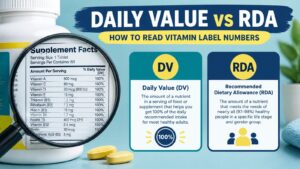
– % Daily Value and whether the product exceeds the tolerable upper intake level when combined with diet or other supplements.
– Third-party testing or quality seals, clear ingredient list, and allergen information (e.g., gluten, soy).
– Dosage instructions and warnings for children.
[Affiliate product comparison block—add verified iHerb links after approval]
Bottom line
Iron supplements have an important role for people with confirmed iron-deficiency or iron-deficiency anemia, pregnant people under clinician care, and certain high-risk groups. Because iron is both essential and potentially harmful in excess, testing (especially ferritin and hemoglobin) and clinician-guided dosing are central to safe and effective use. If you’re unsure whether you need iron, or if you have special health circumstances or take prescription medicines, consult your healthcare team before starting supplements.
Editorial note
VitaEvidence Editorial Team. Last reviewed: August 2026. For general education, not personal medical advice. Read our Editorial Policy.
References
[1] National Institutes of Health, Office of Dietary Supplements — Iron. https://ods.od.nih.gov/factsheets/Iron-Consumer/
[2] U.S. Food and Drug Administration — Dietary Supplements. https://www.fda.gov/food/dietary-supplements
[3] U.S. Department of Agriculture — MyPlate. https://www.myplate.gov/
[4] U.S. Department of Health and Human Services and U.S. Department of Agriculture — Dietary Guidelines for Americans 2020–2025. https://www.dietaryguidelines.gov/
[5] National Institutes of Health, Office of Dietary Supplements — Exercise and Athletic Performance (Health Professional Fact Sheet). https://ods.od.nih.gov/factsheets/ExerciseAndAthleticPerformance-HealthProfessional/