In this guide
- What is ashwagandha?
- Why people take it
- What the evidence says — limits and uncertainties
- Marketing claims vs. evidence
- Label‑reading: practical steps
- Interactions, contraindications, and who should be cautious
- Safety and quality concerns
- When to stop the supplement and seek medical care
- Bottom line
- References
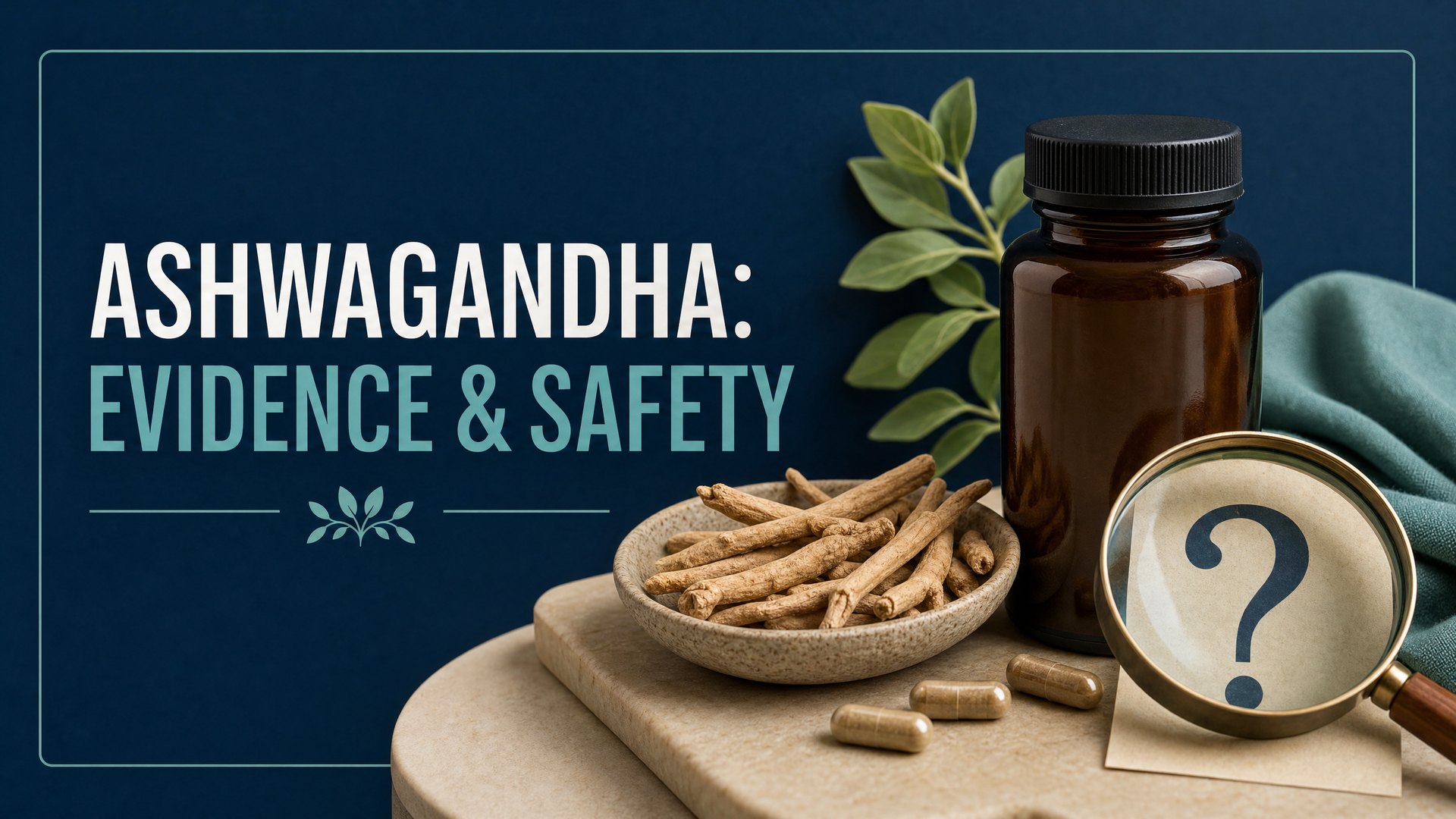
This article summarizes current information from U.S. government health agencies about ashwagandha (Withania somnifera) used as a dietary supplement. It is a draft for editorial review and not personal medical advice. Below we separate established facts, preliminary findings, marketing claims, and important safety considerations.
What is ashwagandha?
Ashwagandha is a medicinal herb used in traditional systems such as Ayurveda. In many Western markets it is sold as a dietary supplement in capsules, powders, tinctures, and combined products. Dietary supplements are regulated differently than prescription drugs in the U.S.; manufacturers are responsible for product safety and labeling, and the U.S. Food and Drug Administration (FDA) does not approve dietary supplements for safety or effectiveness before they are sold.
Why people take it
Supplements and product marketing commonly promote ashwagandha for stress relief, sleep support, improving energy or stamina, and overall well‑being. These are marketing claims; consumers should check the evidence and talk with a health care professional before starting any supplement.
What the evidence says — limits and uncertainties
Official health agencies note that research on many herbal supplements, including ashwagandha, is limited. Some small clinical studies and preliminary trials have reported possible benefits for perceived stress, sleep, or similar outcomes. However, evidence is generally:
- Limited in size and duration (small studies, short follow‑up).
- Variable in quality — differences in how outcomes are measured and in the specific product or extract used.
- Not definitive for treating medical conditions; more rigorous, larger trials are needed.
Because many studies use different preparations and doses, it is not possible to generalize results across all ashwagandha products. Official U.S. agencies recommend caution when interpreting preliminary study results and emphasize that dietary supplements should not replace medical care.
Marketing claims vs. evidence
Manufacturers may label products with statements about supporting stress relief or sleep. Under U.S. law, such structure/function claims can be used without prior FDA approval, but they must include a disclaimer that the claim has not been evaluated by the FDA. The FDA does not approve dietary supplements for safety or efficacy before they are marketed.
Label‑reading: practical steps
Because product ingredients and amounts can vary, check labels carefully before you buy:
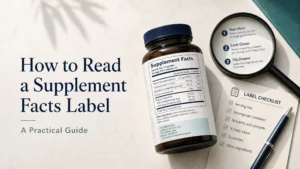
- Look for the product name and “Supplement Facts” panel. This lists the form of the ingredient and the amount per serving.
- Note the botanical name (Withania somnifera) and the extract standardization if provided (for example, a percentage of a named constituent). Standardization varies by product.
- Check other ingredients and fillers, especially if you have allergies or follow dietary restrictions.
- Find the manufacturer’s name, contact information, and lot number — useful if there’s a recall or question.
- Search the Dietary Supplement Label Database (DSLD) or the Dietary Supplement Ingredient Database (DSID) to see examples of labels and reported ingredient amounts for products on the U.S. market.
See the FDA pages on dietary supplement labeling and the DSLD/DSID databases for more detail on what to look for.
Interactions, contraindications, and who should be cautious
Herbal products can interact with prescription drugs or other supplements. Official sources advise talking with a health care provider or pharmacist before using ashwagandha if you:
- Are pregnant or breastfeeding — safety has not been established for these groups.
- Take prescription medications, especially those for conditions such as high blood pressure, diabetes, thyroid disease, or immune system disorders — herbs may affect how medicines work.
- Have a chronic health condition or a history of allergies to plants in the nightshade family (Solanaceae), which includes ashwagandha.
If you are taking multiple supplements or medications, a clinician or pharmacist can help assess potential interactions. Because manufacturing practices and ingredient amounts vary, it is harder to predict effects from one product to another.
Safety and quality concerns
Key safety points from federal agencies:
- The FDA oversees dietary supplements under a different set of regulations than drugs. Manufacturers are responsible for ensuring safety and truthful labeling, and the FDA can take action against unsafe products after they reach the market.
- Product contamination and variability in active ingredient amounts have been reported for some dietary supplements. Databases like DSID and DSLD can show label content and reported laboratory analyses for some products.
- Do not assume “natural” equals “safe.”
When to stop the supplement and seek medical care
- Stop taking the product and seek urgent care for signs of a severe allergic reaction (difficulty breathing, hives, swelling of face or throat).
- Contact your health care provider promptly if you develop new or worsening symptoms after starting a supplement — for example, jaundice (yellowing of skin/eyes), severe abdominal pain, unexplained bleeding, or changes in mood or thinking.
- If you are starting prescription medicines, pregnant, nursing, or managing a chronic condition, discuss supplements with your clinician before starting.
Bottom line
Ashwagandha is widely marketed for stress, sleep, and well‑being. Some preliminary studies suggest possible benefits, but evidence is limited and product formulations vary. Talk with a knowledgeable clinician or pharmacist before starting ashwagandha, especially if you are pregnant, breastfeeding, have chronic medical conditions, or take prescription drugs.