In this guide
- What this guide covers
- Key points at a glance
- Basics: What a balanced plate looks like
- Protein: How much and which kinds
- Why protein matters
- Choosing protein sources
- Practical guidance
- Carbohydrates and fiber: Quality over quantity
- Carbohydrate types
- Fiber goals and benefits
- Meal tactics to boost fiber
- Fats: Which to include and which to limit
- Putting it together: Balanced meal examples
- Practical swaps and portion tips
- When to adjust and when to ask a clinician
- How to compare products later
- How to compare meals (quick framework)
- Bottom line
- Editorial note
- References
- Related VitaEvidence reading
A balanced plate helps you meet nutrient needs, manage hunger, and support activity and long‑term health by combining protein, carbohydrates, fats, and fiber in sensible portions. This guide shows evidence‑based building blocks, practical meal examples, and a simple comparison framework to help plan meals using the healthy plate method.
What this guide covers
- Core roles of protein, carbohydrates (including fiber), and fats in a balanced plate.
- Portioning guidance and sample balanced meal ideas for different preferences.
- Practical swaps, label‑reading tips, and when to ask a clinician.
Key points at a glance
- Aim for a plate with plenty of vegetables and whole grains, a moderate portion of protein, and small amounts of healthy fats — this aligns with USDA MyPlate and the Dietary Guidelines for Americans [1][2].
- Choose fiber‑rich carbohydrates (vegetables, whole fruits, legumes, whole grains) for fullness and longer blood‑sugar control [1][3].
- Favor unsaturated fats (from fish, nuts, seeds, vegetable oils) and limit saturated fat and added sugars per federal guidance [1].
- Protein needs vary by age, sex, activity and health status — the adult RDA is about 0.8 g/kg body weight for most healthy adults, but higher needs apply for older adults and some athletes [3].
- Review meals for allergies, pregnancy, chronic disease, kidney or liver conditions, and medications — ask a clinician when in doubt.
Basics: What a balanced plate looks like
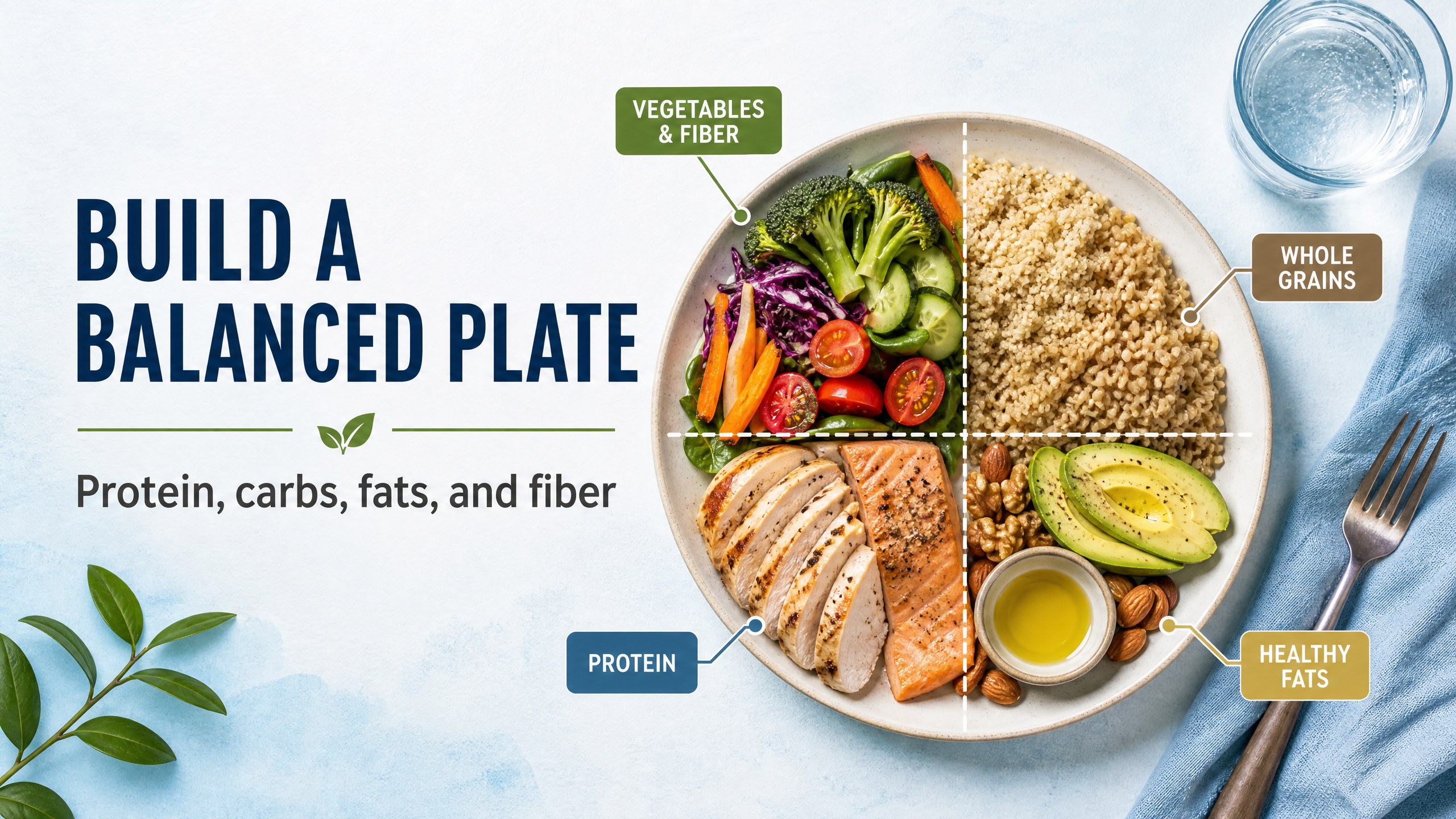
Use the healthy plate method as a quick visual:
– Approximately half the plate: non‑starchy vegetables and fruit.
– About one quarter: lean or plant protein.
– About one quarter: whole grains or other nutrient‑dense carbohydrates.
– Add a small serving of healthy fat (oil, nuts, seeds, avocado) and water or low‑calorie beverage.
This visual mirrors USDA MyPlate and the Dietary Guidelines, and can be modified for cultural preferences, vegetarian diets, and calorie needs [1][2].
Protein: How much and which kinds
Why protein matters
Protein supports muscle, immune function, enzymes and hormones. Sufficient protein at meals also increases satiety and can help preserve muscle with aging [3].
Choosing protein sources
- Animal: lean poultry, fish, eggs, low‑fat dairy.
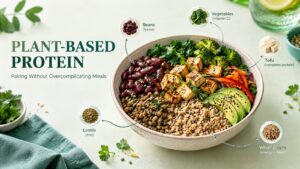
- Plant: beans, lentils, tofu, tempeh, edamame, seitan, mixed nuts.
- For mixed meals, aim to include a protein source at every main meal to distribute intake across the day, which supports muscle maintenance [3].
Practical guidance
- For most healthy adults, the RDA is ~0.8 g/kg; athletes or older adults often need more — consult a clinician or dietitian for personalized targets [3].
- Example servings: a palm‑sized portion of cooked chicken or fish (about 3–4 oz), 1 cup cooked beans, or 1/2 cup tofu per meal.
Carbohydrates and fiber: Quality over quantity
Carbohydrate types
- Prioritize whole, minimally processed carbs: vegetables, whole fruits, legumes, and whole grains. Limit refined grains and high‑sugar foods [1].
- The Dietary Guidelines recommend making at least half your grains whole grains and keeping added sugars below 10% of daily calories [1].
Fiber goals and benefits
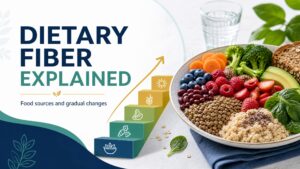
- Dietary fiber promotes fullness, supports bowel regularity, and is linked to lower chronic disease risk. Intake is commonly below recommendations in the U.S. [1][3].
- General adult targets (DRI) are roughly 25 g/day for adult women and 38 g/day for adult men (lower after age 50); individual needs vary [3].
Meal tactics to boost fiber
- Add beans or lentils to salads and soups.
- Choose whole‑grain bread, brown rice, or oats.
- Use vegetables liberally — a non‑starchy vegetable serving at each meal adds fiber and volume.
Fats: Which to include and which to limit
- Favor unsaturated fats (olive, canola, soybean oils; nuts; seeds; fatty fish) for heart health; include small amounts at meals for flavor and nutrient absorption [1].
- Limit saturated fat and avoid trans fats; Dietary Guidelines recommend keeping saturated fat under 10% of calories and minimizing trans fats [1].
- Examples: a tablespoon of olive oil for a salad, a quarter‑cup of mixed nuts as part of a meal or snack, or a small serving of fatty fish twice weekly.
Putting it together: Balanced meal examples
All examples follow the healthy plate idea — half vegetables/fruit, quarter protein, quarter whole grains/carbs, plus a small healthy fat.
- Breakfast: Greek yogurt with berries, 1/3 cup cooked steel‑cut oats, 1 tbsp ground flaxseed, and a small handful of walnuts.
- Lunch: Large mixed salad (greens, bell pepper, shredded carrot), 1 cup cooked chickpeas, 1/2 cup quinoa, 1 tbsp tahini vinaigrette.
- Dinner: 3–4 oz grilled salmon, large portion of roasted Brussels sprouts and sweet potato wedges (small serving), side of mixed greens with olive oil.
- Vegetarian swap: Lentil curry (1 cup cooked lentils), brown rice (1/2 cup), side of steamed broccoli and a small avocado slice.
Adjust portion sizes to match calorie needs and activity level (see When to adjust below).
Practical swaps and portion tips
- Swap refined → whole: white rice → brown rice or barley; white bread → whole‑grain bread.
- Swap saturated → unsaturated: butter → olive oil; fatty red meats → beans or fish.
- Fiber boost: add a vegetable or 1/4 cup beans to a sandwich; choose fruit over juice.
- Plate size trick: using a smaller plate naturally reduces portion sizes without changing meal balance.
When to adjust and when to ask a clinician
- Pregnancy, breastfeeding, children, older adults, and people with chronic disease (diabetes, kidney or liver disease, heart disease) often need tailored guidance. For example, kidney disease can change recommended protein and potassium intake [3].
- If you take prescription medicines (warfarin, some diabetes drugs, others), are on a restricted diet, have food allergies, or a history of eating disorder, consult your clinician or registered dietitian before making major changes.
- If you have unexplained weight loss/gain, persistent digestive symptoms, or other health concerns, seek medical evaluation.
How to compare products later
When comparing packaged foods or supplements later, focus on these label attributes and quality signals:
– Serving size and calories per serving.
– Grams of protein, total carbohydrates, fiber, and added sugars.
– Amounts of saturated and trans fats; aim for low saturated fat.
– Sodium content.
– Ingredient list: shorter and recognizable ingredient lists generally indicate fewer additives.
– Allergen declarations (milk, soy, nuts, gluten).
– For supplements or protein powders: check for third‑party testing or certificates of analysis, expiration date, and whether the product lists exact amounts of active nutrients. See FDA and NIH guidance for dietary supplement safety basics [4].
[Affiliate product comparison block—add verified iHerb links after approval]
How to compare meals (quick framework)
- Balanced: half vegetables/fruit + protein + whole‑grain/legume + small healthy fat.
- Nutrient density: choose foods providing multiple nutrients (e.g., salmon for protein and omega‑3s).
- Satiety: include fiber + protein to feel full longer.
- Simplicity: favor minimally processed ingredients for predictable nutrient content.
Bottom line
A balanced plate combines plenty of vegetables and fiber‑rich carbohydrates, a moderate portion of protein, and small amounts of healthy fats. Use the healthy plate method as a visual starting point, choose whole and minimally processed foods most of the time, and tailor portions to your age, activity level, and health conditions. When in doubt — especially during pregnancy, chronic disease, or if you take medications — consult a clinician or registered dietitian.
Editorial note
VitaEvidence Editorial Team. Last reviewed: August 2026. For general education, not personal medical advice. Read our Editorial Policy.
References
[1] Dietary Guidelines for Americans 2020–2025. U.S. Department of Agriculture and U.S. Department of Health and Human Services. https://www.dietaryguidelines.gov/
[2] MyPlate. U.S. Department of Agriculture. https://www.myplate.gov/
[3] Office of Dietary Supplements, National Institutes of Health — fact sheets and nutrient guidance. https://ods.od.nih.gov/factsheets/list-all/
[4] Food and Drug Administration — Dietary Supplement information. https://www.fda.gov/food/dietary-supplements
[5] Centers for Disease Control and Prevention — Physical activity basics (context for calorie needs and pairing diet with activity). https://www.cdc.gov/physical-activity/about/index.html
[6] (Contextual review) Nutrients 2025 systematic review of dietary supplement interventions and sleep quality. https://doi.org/10.3390/nu17243952