In this guide
- Key takeaways
- What kinds of FDA notices you might see
- What an FDA warning usually means
- What an FDA warning does not mean
- A short table to help interpret common FDA communication types
- Practical steps if you see an FDA warning about a product
- How to reduce your risk before buying supplements or “natural” products
- Limitations and what to watch for
- When to contact a clinician
- Safety disclaimer
- Safety disclaimer
- References
- Related VitaEvidence reading
Category: Supplement Safety Basics
Understanding what an FDA warning or notification actually signifies can help you make safer choices about supplements, over‑the‑counter products, and online health claims. FDA communications vary in purpose and legal weight. Some are alerts based on laboratory testing or inspections; others are notices about questionable marketing claims. None should be treated as individualized medical advice. This guide explains what common FDA warnings mean, what they do not mean, and practical steps you can take.
Key takeaways
- An FDA warning or notification signals a regulatory concern—examples include contamination, hidden active drugs, mislabeling, or misleading claims—but it does not automatically mean every product with a similar name or by the same manufacturer is unsafe.
- FDA action is often postmarket: the agency typically acts after testing, inspections, or consumer reports. Not every lot or formulation is necessarily tested.
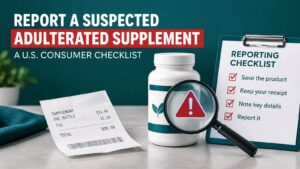
- If you suspect a product is unsafe, stop using it, keep packaging for identification, report it to FDA (MedWatch), and contact a clinician if you have symptoms or take prescription medications that might interact.
- Be especially cautious with products marketed for sexual enhancement, weight loss, energy, or “natural” performance boosts—these categories have repeatedly been found to contain hidden active drug ingredients.
What kinds of FDA notices you might see
FDA communicates in several ways. The language and intended audience differ, and so do the practical implications. Common examples include:
- Health Fraud Notifications / Medication Health Fraud notices: Announcements that specific products made unproven health claims or were found to contain undeclared prescription drugs or other active ingredients. These often target weight‑loss, sexual‑enhancement, energy, or pain‑relief products.
- Consumer updates or safety alerts: Posts intended for the public that explain safety concerns, testing results, or recommended actions.
- Warning letters: Formal communications to companies about violations found during inspections or in claims/labeling that may require corrective actions.
- Product listings in the FDA Health Fraud Product Database: Public records that list products the agency has identified as fraudulent or tainted.
For examples and searchable public notices, see the FDA’s health fraud pages and product database.
What an FDA warning usually means
An FDA warning typically indicates one or more of the following, based on testing, inspection, or investigation:
- Adulteration or contamination: The product contains substances (microbes, chemicals, or other contaminants) that make it unsafe or not what the label claims.
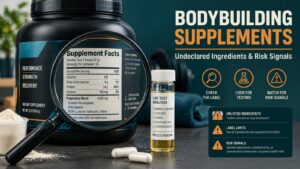
- Hidden or undeclared active drug ingredients: Some products—especially sexual‑enhancement, weight‑loss, and certain “natural” remedies—have been found to contain prescription‑only drugs or analogs that are not listed on the label.
- Misbranding or misleading claims: Marketing statements that make unverified health claims, imply FDA approval, or otherwise violate labeling rules.
- Quality control or manufacturing problems: Problems that raise concerns about consistency, potency, or product purity.
These findings are often posted so consumers and clinicians can be aware of known risks and so manufacturers can be held to regulatory standards. See FDA guidance on hidden ingredients and the health fraud product database for concrete examples.
What an FDA warning does not mean
- It does not automatically apply to every product with a similar name or to every product made by the same company. FDA notices usually specify the product(s) and sometimes lot numbers involved; do not assume all versions are affected unless the notice says so.
- It is not an individualized medical directive. An FDA notice is informational and regulatory—if you have symptoms or health concerns, you still need medical evaluation.
- It is not the same as FDA approval or certification. Most dietary supplements are not reviewed or approved by FDA before they are sold. FDA actions are generally postmarket.
- It is not always a final legal determination. Investigations can be ongoing, and communications may reflect preliminary findings, enforcement priorities, or settlement conditions.
- It does not mean the product caused harm in every case. A finding of an undeclared ingredient or mislabeling indicates risk, but individual outcomes vary.
A short table to help interpret common FDA communication types
| Type of communication | What it may indicate | Practical consumer action |
|---|---|---|
| Health Fraud Notification / Medication Health Fraud | Products marketed with false or unsupported medical claims, or found to contain hidden drug ingredients | Check the FDA notice for product names and lot numbers; stop use of implicated product; report adverse events; consult a clinician if symptomatic |
| Consumer safety update / alert | Summaries of test results, contamination concerns, or product hazards | Read details for affected products and recommended steps; follow instructions if a recall or stoppage is advised |
| Warning letter to a company | Regulatory violations in labeling, claims, or manufacturing uncovered by FDA inspection | Not typically a direct consumer advisory, but may signal systemic problems; follow FDA public notices for any affected products |
| Health Fraud Product Database listing | Public record of products FDA has identified as fraudulent or tainted | Search the database for product names before purchase or use; exercise caution with high‑risk categories |
Practical steps if you see an FDA warning about a product
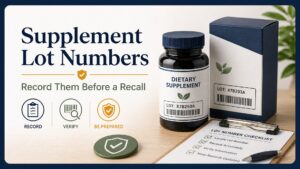
- Read the FDA notice carefully. Note exact product names, SKUs, and lot numbers if listed.
- Stop using the specific product immediately if it’s named or if you have symptoms you think are related.
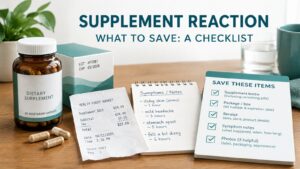
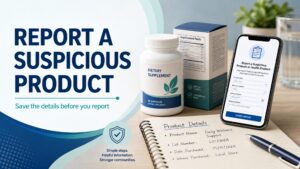
- Keep the product, packaging, and receipt—these can help clinicians and regulators identify the lot and ingredients.
- Report problems: use FDA’s reporting systems (see FDA guidance on ways to contact the agency about human drugs/MedWatch) and your state health department if applicable.
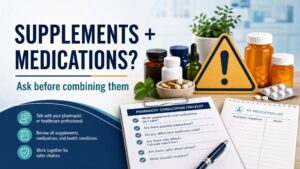
- Seek medical care for adverse reactions. Tell your clinician about the product and any ingredients listed on the label. If you take prescription medicines, consider discussing potential interactions—see VitaEvidence resources on supplements and drug interactions (/supplements-medication-interactions-questions/).
- Check the FDA Health Fraud Product Database and related FDA pages for updates before resuming use or buying similar products.
How to reduce your risk before buying supplements or “natural” products
- Be skeptical of products that promise quick fixes, dramatic improvements, or claim to “replace” prescription drugs—these are common red flags for hidden ingredients.
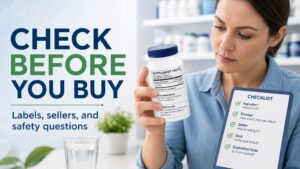
- Read labels using the Supplement Facts panel and ingredient list; learn more at our guide on reading supplement labels (/how-to-read-supplement-facts-label/) and the FDA’s labeling guidance.
- Avoid buying from unverified online sellers or marketplaces that lack seller information.
- Pay attention to product categories with a history of problems—sexual enhancement, weight‑loss, and certain “energy” or “herbal” products have more frequent FDA notices about hidden prescription drugs or adulterants.
- Remember that “natural” does not equal safe or effective. The Federal Trade Commission (FTC) and FDA both address misleading health claims; review FTC guidance on health claims for how marketers must substantiate statements.
Limitations and what to watch for
FDA actions are important but not exhaustive. The agency cannot test every product or lot, and enforcement is often reactive—based on consumer reports, inspections, or targeted testing. Because of this, absence of an FDA notice does not guarantee a product’s safety, and conversely, a notice does not always mean that every single product of a brand is unsafe.
When to contact a clinician
- You develop new or concerning symptoms after using a product that has an FDA notice.
- You suspect a supplement or “natural” product interacted with your prescription medications.
- You’re considering stopping an essential medication because of concerns about another product—talk with your clinician first.
If your condition is an emergency (chest pain, severe breathing problems, fainting, severe allergic reaction), seek emergency care immediately.
Safety disclaimer
This article is for educational purposes and does not provide personalized medical advice, diagnosis, or treatment. If you have specific health concerns, talk with a qualified clinician.
Safety disclaimer
This article provides general information and is not medical advice. It is not a substitute for professional medical evaluation. If you have health concerns, consult a licensed clinician.
References
- https://www.fda.gov/drugs/medication-health-fraud/avoiding-products-contaminated-hidden-ingredients
- https://www.fda.gov/consumers/health-fraud-scams/tainted-honey-based-products-hidden-active-drug-ingredients
- https://www.fda.gov/consumers/health-fraud-scams/health-fraud-product-database
- https://www.fda.gov/food/dietary-supplements
- https://www.fda.gov/food/information-consumers-using-dietary-supplements/questions-and-answers-dietary-supplements
- https://www.fda.gov/food/dietary-supplements-guidance-documents-regulatory-information/dietary-supplement-labeling-guide
- https://www.fda.gov/drugs/medication-health-fraud-notifications/sexual-enhancement-and-energy-product-notifications
- https://www.fda.gov/drugs/medication-health-fraud/medication-health-fraud-notifications
- https://www.ftc.gov/news-events/topics/truth-advertising/health-claims
- https://www.ftc.gov/business-guidance/resources/health-products-compliance-guidance
- https://www.fda.gov/about-fda/cder-contact-information/ways-consumers-contact-fda-about-human-drugs
Last reviewed: August 2026
VitaEvidence Editorial Team