In this guide
- Key Takeaways
- Price: Compare the Cost of What You Will Eat
- A practical price checklist
- Quality: Look Beyond the “Local” Label
- What the evidence can—and cannot—say
- Storage: Match the Purchase to Your Kitchen
- When a Grocery Store May Be the Better Fit—and When a Market May Be
- Safety/When to Seek Care
- A Simple Decision Rule
- References
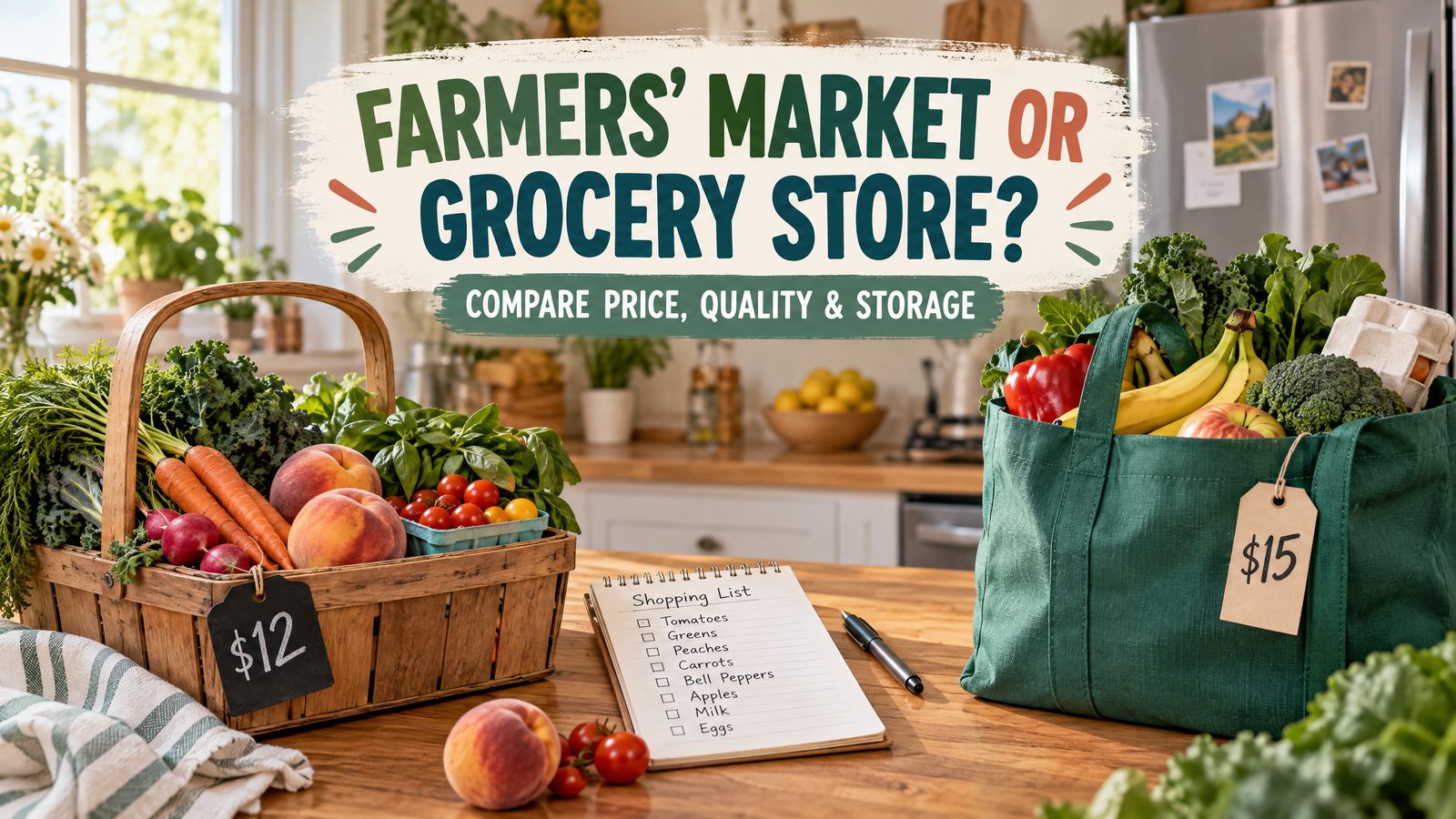
A farmers’ market can offer just-picked vegetables, unusual varieties, and a chance to buy directly from growers. A grocery store may provide broader selection, predictable hours, year-round availability, and easier price comparison. Neither setting automatically produces healthier food. For most shoppers, the better choice is the one that makes it easier to buy produce you can afford, store safely, and actually eat.
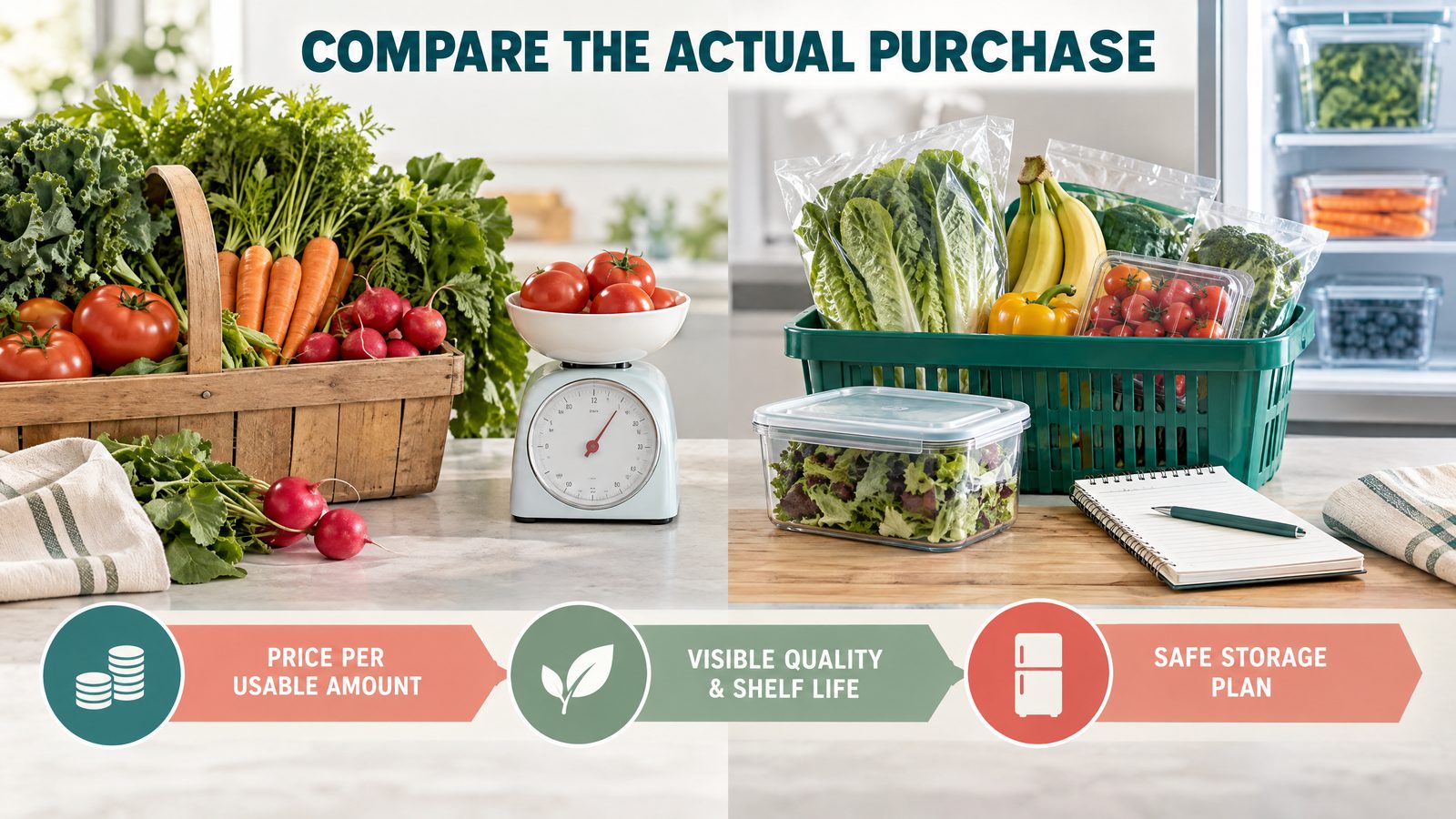
“Seasonal” usually means produce that is naturally available in a particular region and time of year. It does not guarantee that an item is local, less expensive, more nutritious, or safer. Use a practical comparison: price per usable amount, visible quality and expected shelf life, and the storage plan you can follow at home.
Key Takeaways
- Farmers’ markets may have more locally sourced produce and, in some settings, very fresh-looking items, but prices and variety vary widely.
- Grocery stores often make it easier to compare unit prices and choose among fresh, frozen, canned, and packaged options.
- “Fresh” is not a nutrition guarantee. The best purchase is the produce that is in good condition, fits your budget, and will not be wasted.
- Ask how an item was grown or handled if that information matters to you; a farmers’ market sign alone does not establish organic certification or eliminate food-safety risks.
- Store perishable produce promptly, keep the refrigerator at 40°F or below, and wash produce under running water before eating or preparing it.
Price: Compare the Cost of What You Will Eat
A farmers’ market price may look higher or lower than a grocery-store price, but comparisons can be misleading. One vendor may sell by bunch and a store by package. Compare the unit price—dollars per pound, ounce, or item—then adjust for edible portions and waste.
A useful shopping calculation is:
Effective cost = purchase price ÷ the amount you expect to use.
A bruised basket that must be discarded is not a bargain. Consider travel, parking, and the likelihood of an extra grocery trip as part of the practical cost.
The evidence does not support a universal rule that farmers’ markets are cheaper. In the USDA Agricultural Research Service’s Delta Produce Sources Study, researchers compared three farmers’ markets and 12 grocery stores in five rural Mississippi Delta towns. Across 13 fruits and 32 vegetables assessed from June 2019 through March 2020, farmers’ markets had fewer items and higher prices for most products, with four exceptions. This was one regional observational study, not a national price index.
USDA’s Economic Research Service likewise notes that local-food prices depend on the product, location, and market conditions. Check the specific item and week rather than relying on a general reputation.
A practical price checklist
- Compare dollars per pound or another common unit.
- Check whether the market price includes a bunch, container, or pound.
- Estimate how much will be eaten before spoilage.
- Look for grocery-store sales, store brands, and frozen or canned alternatives when appropriate.
- Ask whether the vendor accepts SNAP or participates in a nutrition-incentive program if affordability is a concern.
Quality: Look Beyond the “Local” Label
Quality can mean appearance, flavor, texture, maturity, handling, or how long an item remains usable. The Delta study found that quality produce was more prevalent at the farmers’ markets it examined, but also found less variety and higher prices overall. Treat those findings as context, not a promise about every market or farm.
At either venue, choose produce that is reasonably firm and free of extensive bruising, leaking, mold, or decay. Cosmetic blemishes do not necessarily affect safety or taste, and appearance is not a complete measure of nutrient content. A grocery item may have traveled farther yet still be excellent; a market item may be fresh but delicate.
“In season” is not the same as “picked today.” Ask the vendor when produce was harvested. In a store, check display condition, package integrity, and whether refrigerated items are cold.
What the evidence can—and cannot—say
Compare real products and shopping environments rather than treating one retail format as inherently superior. A farmers’ market can support direct relationships and local sourcing; a grocery store can offer convenience and broader choices, including frozen or preserved produce. Neither venue, by itself, proves a particular health effect.
Do not assume that “natural,” “local,” or “farm fresh” means organic, pesticide-free, or germ-free. If certification matters, look for the certification statement or ask the seller. Contamination can occur during growing, transport, storage, or preparation.
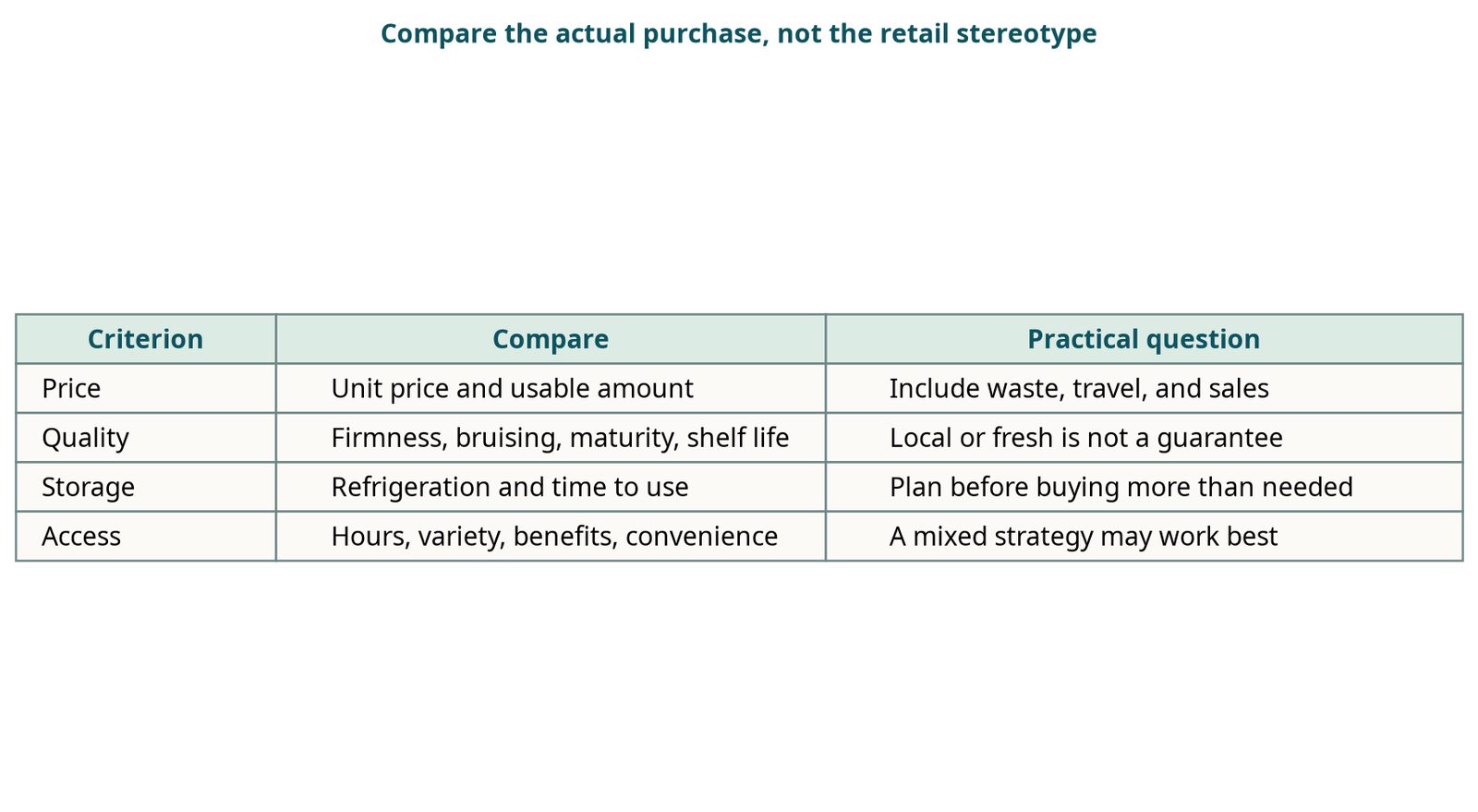
| Criterion | Compare | Practical question |
|---|---|---|
| Price | Unit price and usable amount | Will expected waste or travel change the real cost? |
| Quality | Firmness, bruising, maturity, shelf life | Is the item in good condition and likely to be eaten soon? |
| Storage | Refrigeration and time to use | Do you have a safe plan for this amount? |
| Access | Hours, variety, benefits, convenience | Would a mixed strategy reduce waste? |
Storage: Match the Purchase to Your Kitchen
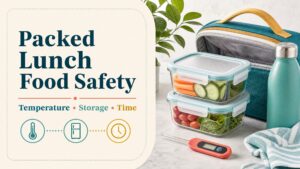
Storage is often the deciding factor. Before buying, consider when you will eat the item and whether your refrigerator has room. FDA advises refrigerating perishable produce—such as strawberries, lettuce, herbs, and mushrooms—at 40°F or below. Pre-cut or packaged produce should also be refrigerated.
Some items keep better in a cool, dry place, while others lose quality when chilled. Storage needs differ by crop and variety, so ask the grower or grocer when unsure. Keep delicate greens and berries from being crushed, and avoid buying more than you can use. Freezing or cooking surplus can reduce waste, although quality after freezing varies.
Transport matters too. Do not leave perishable produce in a hot car. At home, separate produce from raw meat, poultry, and seafood. Wash hands, cutting boards, and counters, and rinse produce under running water. FDA does not recommend soap, detergent, or commercial produce washes. Washing reduces surface bacteria but does not eliminate every risk; cooking adds protection.
A farmers’ market may not have the same refrigeration setup as a grocery display, and outdoor heat can affect delicate items. Inspect the product and plan a prompt trip home. For cut or packaged produce, choose items that are refrigerated or surrounded by ice.
When a Grocery Store May Be the Better Fit—and When a Market May Be
Choose a grocery store when you need predictable availability, varied price points, nutrition assistance benefits, or a one-stop trip. It may also be practical for frozen vegetables, canned tomatoes, or packaged options that help you use produce consistently.
Choose a farmers’ market when you value direct contact with growers, want local varieties, or can use items promptly. Ask about harvest date, storage, growing practices, and nutrition benefits. Do not buy more than you can afford or store.
A mixed strategy is often most realistic: buy especially delicate or seasonal items in a quantity you will eat soon, then use the grocery store for staples, frozen produce, and items with longer storage life. The health advantage comes from making produce a regular part of meals—not from choosing a particular retail setting every time.
Safety/When to Seek Care
Fresh produce from either venue can carry harmful germs. People who are pregnant, older, very young, or immunocompromised may be more vulnerable to severe foodborne illness. Avoid raw or lightly cooked sprouts if you are in a higher-risk group.
Seek medical advice promptly for concerning symptoms after eating produce, especially bloody diarrhea, fever, repeated vomiting, signs of dehydration, severe abdominal pain, or symptoms that are worsening or not improving. Foodborne illness can resemble other conditions, so do not try to diagnose the cause from the food source alone. If a product is recalled, follow the recall instructions and discard it rather than tasting it.
A Simple Decision Rule
Before buying, ask three questions: Is the price reasonable for the amount I will use? Is the item in good condition? Do I have a safe storage and preparation plan? If the answer is yes, either venue can be a sound choice. Compare specific items, not stereotypes about farmers’ markets or grocery stores, and let budget, access, preferences, and expected use guide the decision.
References
- U.S. Department of Agriculture Agricultural Research Service: Farmers’ market versus grocery store produce—results of the Delta Produce Sources Study
- USDA Economic Research Service: Local Food Systems: Concepts, Impacts, and Issues
- U.S. Food and Drug Administration: Selecting and Serving Produce Safely
- Centers for Disease Control and Prevention: Preventing Food Poisoning
- U.S. Department of Agriculture: Farmers Market Directory and Local Food Resources