In this guide
- Key Takeaways
- Start With a Modular Grocery List
- A Month-by-Month Produce Framework
- January and February: Lean on Storage Crops and Citrus
- March and April: Add Tender Greens and Spring Vegetables
- May: Bridge Spring and Summer
- June, July, and August: Use High-Variety Produce
- September: Shift Gradually Toward Fall
- October and November: Favor Squash, Roots, and Hardy Greens
- December: Keep the Plan Flexible
- What the Evidence Supports—and What It Does Not
- Safety and When to Seek Care
- A Practical Monthly Reset
- References
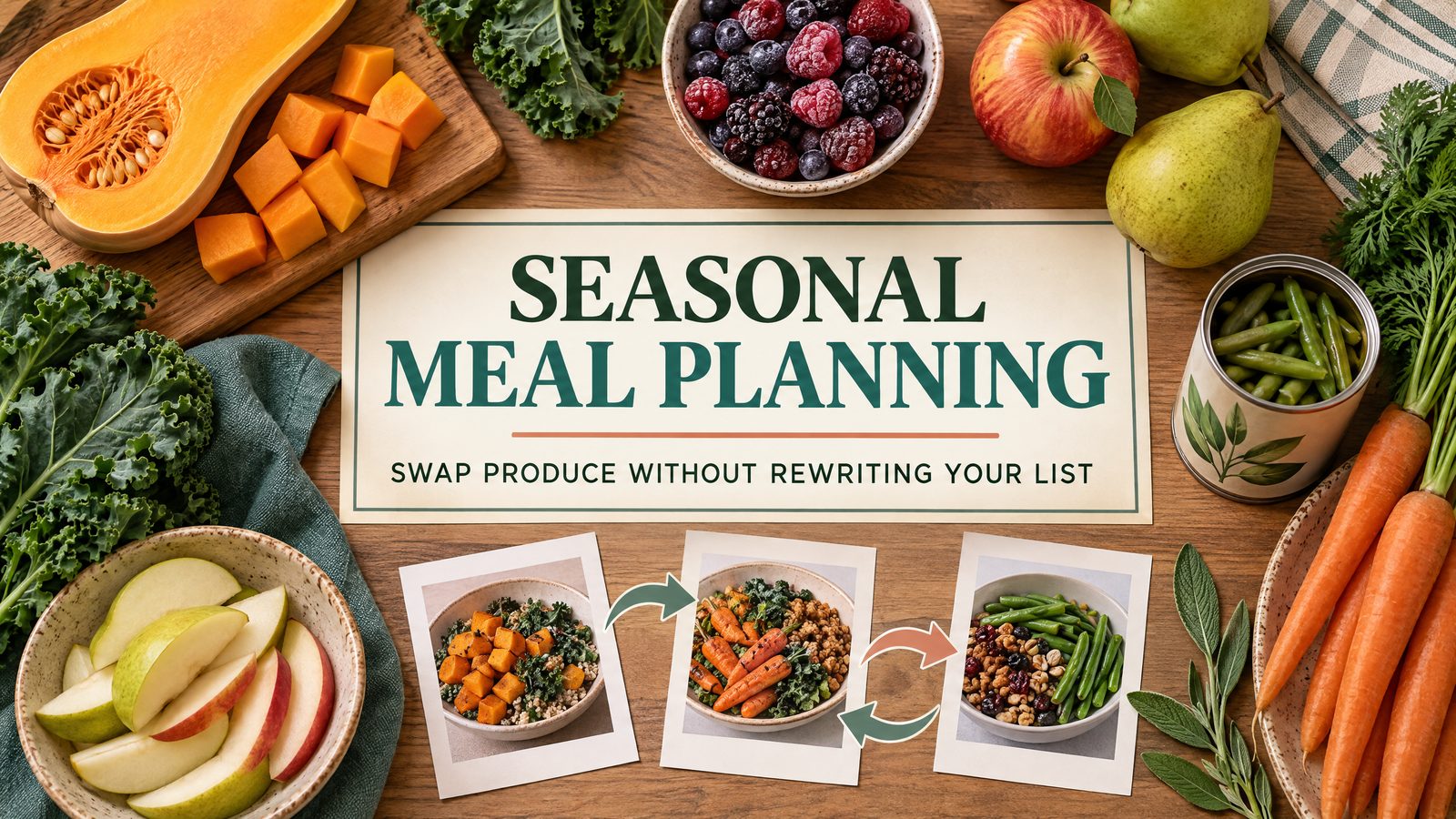
Seasonal eating does not require a new recipe collection every few weeks. A more practical approach is to keep the same meal structure—such as a grain bowl, soup, sheet-pan dinner, or yogurt breakfast—and change only the fruit or vegetable that fills that role. The result is a grocery list that stays familiar while making room for what is available, affordable, or appealing where you live.
The U.S. Department of Agriculture (USDA) notes that seasonal availability varies with growing conditions and weather. The month-by-month guide below is therefore a planning framework, not a promise that every item will be local or at peak season everywhere.
Key Takeaways
- Build your list around produce roles, not one irreplaceable ingredient.
- Use the same meal template and swap within a similar role: leafy green for leafy green, roasting vegetable for roasting vegetable, or tart fruit for tart fruit.
- Fresh, frozen, canned, and dried fruits and vegetables can all fit a healthful eating pattern; compare added sugar, sodium, and preparation needs.
- Seasonality may affect availability, flavor, price, and variety, but it does not prove that a seasonal item is always more nutritious or better for health.
- Wash and store fresh produce safely, and seek care for suspected foodborne illness or a serious allergic reaction.
Start With a Modular Grocery List
Instead of writing a list around a recipe, choose four or five categories:
- Leafy or tender vegetables: spinach, kale, lettuce, chard, or cabbage.
- Roasting or cooking vegetables: carrots, broccoli, cauliflower, squash, beets, or eggplant.
- Fresh fruit: apples, citrus, berries, melon, stone fruit, or pears.
- Flavor builders: onions, garlic, herbs, peppers, or lemons.
- Convenience backup: frozen berries, frozen vegetables, or no-salt-added canned produce.
Match each category to meals already in your routine. Spinach can go into eggs, soup, pasta, or a grain bowl. If it is wilted or expensive, kale, chard, frozen spinach, or shredded cabbage may serve a similar purpose. These foods do not have identical nutrients or cooking times.
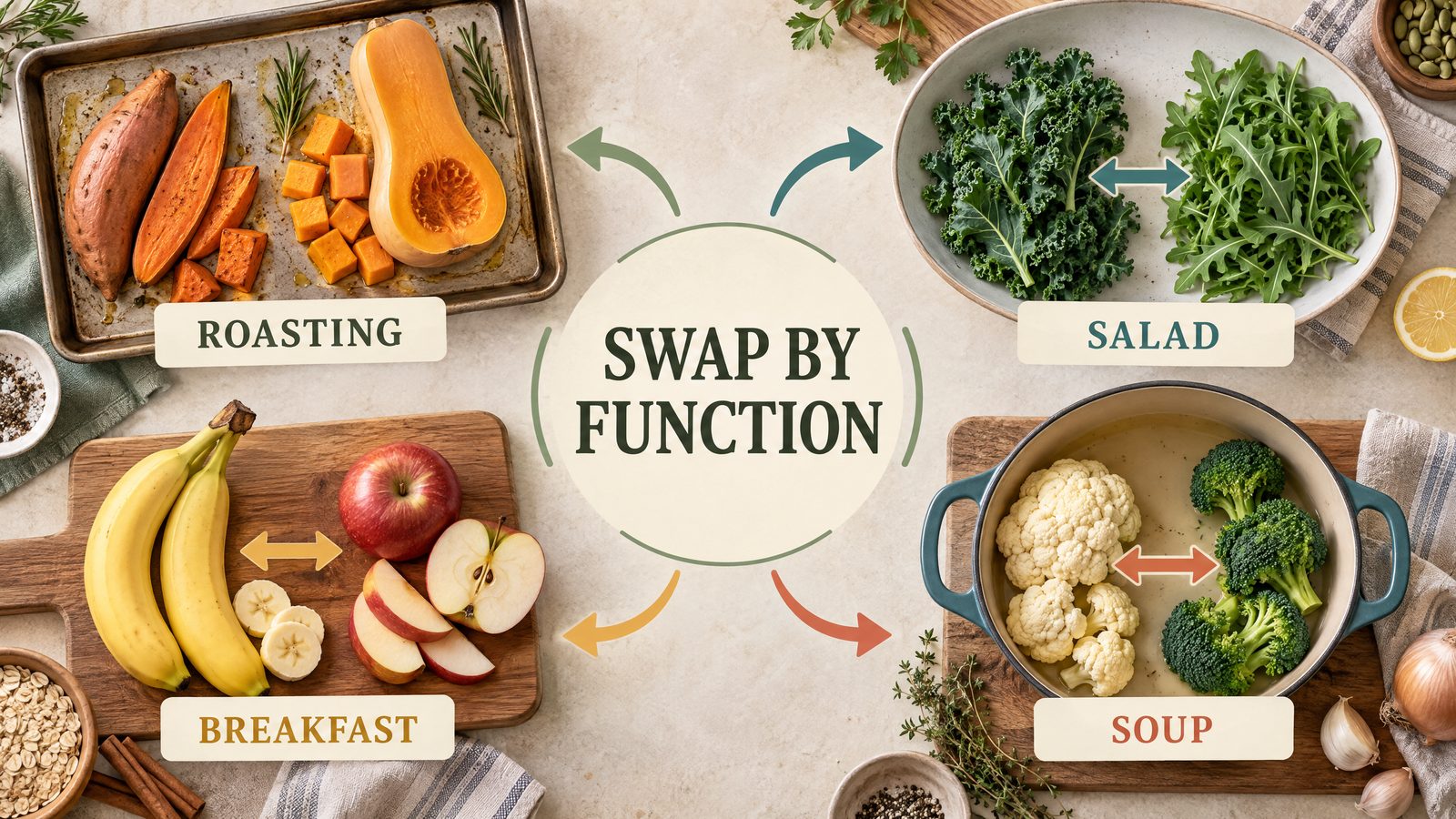
A useful rule is to swap by function:
- For roasting, choose another firm vegetable and adjust cooking time for size and water content.
- For salads, use another crisp or tender vegetable and keep the dressing unchanged.
- For breakfast, substitute fruit that provides a similar texture or level of tartness.
- For soups and stews, prioritize vegetables that hold their shape or use frozen options near the end of cooking.
A Month-by-Month Produce Framework
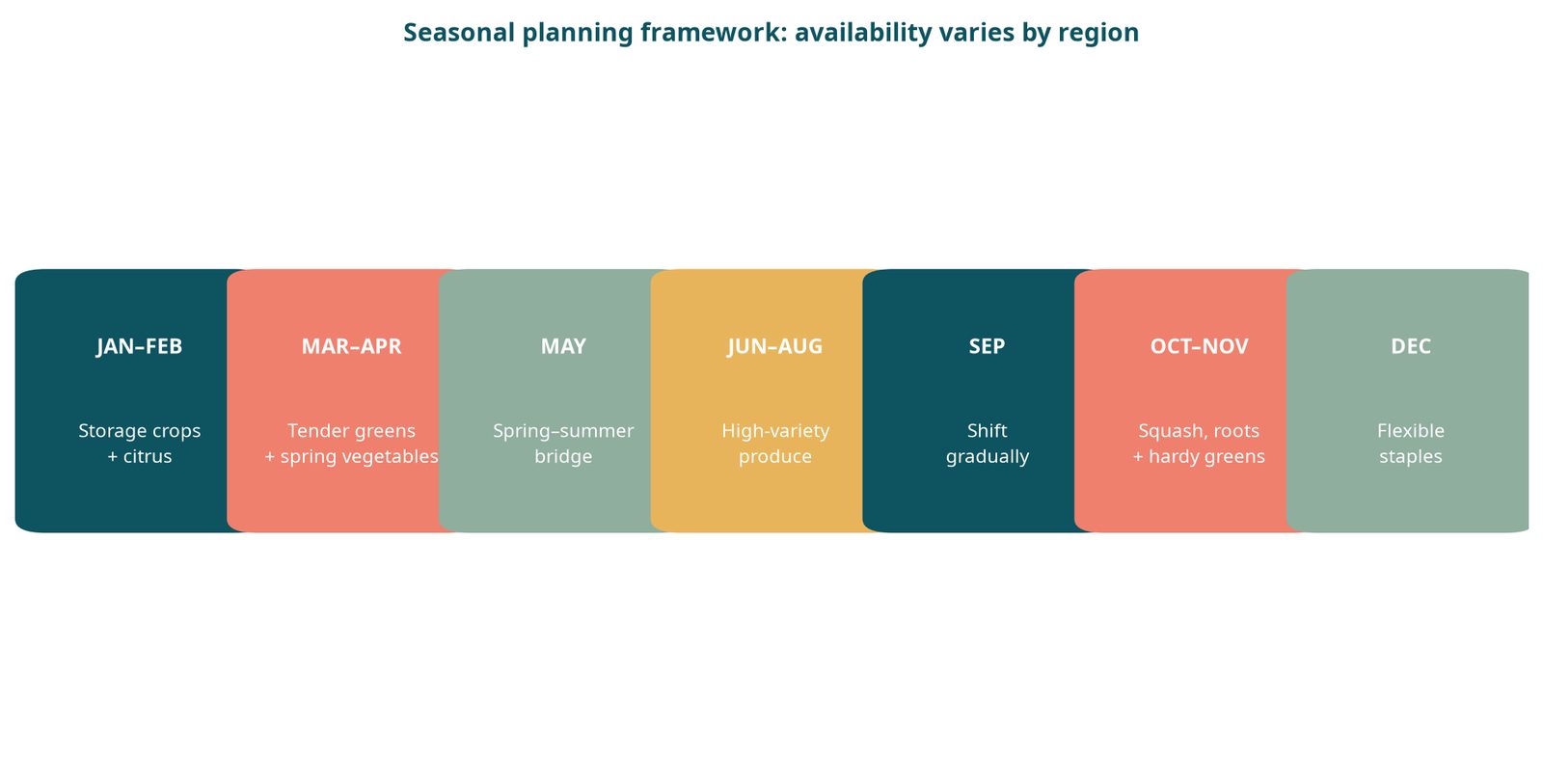
The examples below are common U.S. patterns drawn from the USDA seasonal produce guide. “Available” does not necessarily mean locally grown or in season in your specific community.
January and February: Lean on Storage Crops and Citrus
Apples, pears, citrus, cabbage, carrots, beets, Brussels sprouts, winter squash, and sturdy greens are useful cold-weather choices. Frozen berries can stand in for fresh berries, while canned tomatoes support soups and sauces.
Swap example: If a recipe calls for fresh green beans, use broccoli, Brussels sprouts, or frozen green beans. If a snack plan uses berries, try citrus segments, apples, or frozen berries without added sugar.
March and April: Add Tender Greens and Spring Vegetables
Depending on region, asparagus, peas, radishes, spinach, lettuce, herbs, broccoli, and strawberries may become more prominent. Spring produce often works well in quick-cooking meals.
Swap example: Replace roasted winter squash with asparagus or peas in a grain bowl, but shorten the cooking time. Use radishes or snap peas where a salad plan previously used cucumber.
May: Bridge Spring and Summer
Leafy greens, strawberries, peas, asparagus, carrots, and—in some regions—early berries or cherries can add variety. Keep both frozen and fresh options available because weather can change availability quickly.
Swap example: Use strawberries, blueberries, or sliced peaches in the same yogurt or overnight-oats template. For a pasta dish, substitute peas or spinach for a vegetable that is no longer at its best.
June, July, and August: Use High-Variety Produce
Summer often brings tomatoes, corn, cucumbers, zucchini, bell peppers, green beans, eggplant, melons, stone fruit, grapes, and berries. These foods can be used raw, grilled, roasted, or added to cold meals.
Swap example: A tomato-cucumber salad can become a pepper-corn salad or a tomato-peach salad with the same basic dressing. Zucchini, eggplant, or bell peppers can fill the roasting-vegetable role in a sheet-pan meal. If fresh fruit spoils quickly, buy smaller quantities and keep frozen fruit as a backup.
September: Shift Gradually Toward Fall
Apples, pears, grapes, broccoli, cauliflower, greens, carrots, beets, and winter squash often become practical choices. You do not need to remove summer produce immediately; use a mixed list while temperatures and availability change.
Swap example: Keep a familiar chili or grain-bowl formula and exchange summer corn or zucchini for cauliflower, kale, or winter squash. Apples or pears can replace peaches in oatmeal, salads, or a snack plan.
October and November: Favor Squash, Roots, and Hardy Greens
Pumpkin and other winter squash, sweet potatoes, Brussels sprouts, cabbage, kale, carrots, apples, pears, and cranberries may be easier to find in many regions. Citrus may be starting in some warmer areas, while frozen produce remains useful everywhere.
Swap example: Replace a summer sheet-pan vegetable with cubed squash, carrots, or Brussels sprouts. If a recipe uses fresh cranberries but they are unavailable, use another tart fruit in a cooked dish; do not assume dried fruit is an equivalent swap because it is more concentrated and may contain added sugar.
December: Keep the Plan Flexible
Citrus, apples, pears, cabbage, carrots, potatoes, winter squash, and frozen produce can make a dependable list. Holiday meals may add variety, but everyday meals can remain simple.
Swap example: Use oranges or grapefruit in a fruit plan, cabbage or carrots in a slaw, and frozen broccoli or spinach for a quick cooked side. If a fresh item is costly, choose a canned option packed in water or its own juice, or a frozen option without added sauces.
| Produce role | Seasonal examples | Practical swap |
|---|---|---|
| Roasting or cooking | Squash, carrots, broccoli, cauliflower | Swap within firm vegetables and adjust cooking time. |
| Leafy or tender | Kale, spinach, cabbage, chard | Use another green or frozen option when needed. |
| Fresh fruit | Apples, pears, citrus, berries | Choose a similar texture or tartness; frozen can work. |
| Convenience backup | Frozen vegetables, canned produce | Check added sodium, sugar, and preparation needs. |
What the Evidence Supports—and What It Does Not
The CDC supports eating a variety of nutrient-dense foods and specifically recognizes fresh, frozen, and canned fruits and vegetables as useful choices. It advises looking for canned fruit packed in water or its own juice and checking frozen or canned vegetables for added salt. That supports a flexible, access-conscious approach rather than a fresh-only rule.
Seasonal planning may help variety and adherence by making produce more interesting and reducing pressure to buy an unavailable item. However, a calendar month does not automatically make a food healthier. Nutrient content is also influenced by ripeness, storage, processing, cooking, and time since harvest. A systematic review in Japanese adults found inconsistent seasonal results for many nutrients and food groups, so its findings cannot be directly generalized to every U.S. household.
There is also no reliable basis for promising that seasonal eating will “detox” the body, prevent illness, or produce a particular weight change. The stronger evidence supports an overall eating pattern that includes vegetables, fruits, whole grains, protein foods, and other nutrient-dense choices—not a specific month’s shopping list.
Safety and When to Seek Care
Wash fresh produce under running water before cutting or eating it, even when you will remove the peel. Do not use soap or household detergent on produce. Refrigerate perishable cut produce and keep raw produce separate from raw meat, poultry, and seafood. The FDA notes that washing reduces—but does not eliminate—bacteria, and that cooking can reduce foodborne-illness risk.
People who are pregnant, older, very young, or immunocompromised may be more vulnerable to severe foodborne illness; they should use extra care with raw or lightly cooked sprouts and other higher-risk foods. If you think you have foodborne illness, contact a healthcare professional. Trouble breathing, swelling of the lips or tongue, or other signs of a serious allergic reaction require emergency care.
A Practical Monthly Reset
At the start of each month, choose one item from each produce category, check local availability, and select one frozen or canned backup. Keep three repeatable meals on your list and change only the produce component. This preserves your grocery routine while allowing for season, budget, storage space, and preference.
The goal is not to eat a perfect list of local foods. It is to make fruits and vegetables easier to buy, use, and replace—month after month—without turning meal planning into a rewrite of your entire routine.
References
- Centers for Disease Control and Prevention (CDC): Tips for Healthy Eating for a Healthy Weight
- USDA SNAP-Ed: Seasonal Produce Guide
- U.S. Food and Drug Administration (FDA): Selecting and Serving Produce Safely
- Adachi R, et al. Seasonal Variation in the Intake of Food Groups and Nutrients in Japan: A Systematic Review and Meta-analysis