
In this guide
- What melatonin gummies are — and how the law treats them
- Reading the label: what to check on a melatonin gummy bottle
- Timing: what to look for and how to approach timing questions
- Commonly reported side effects and uncertainties
- Interactions and contraindications — questions to raise with your clinician or pharmacist
- Practical “safer” questions to ask at the store or clinic
- When to seek care
- Bottom line
- References
Editorial note: This draft is for editorial review and is not personal medical advice. The information below summarizes official federal guidance about dietary supplements, label information tools, and general safety considerations.
What melatonin gummies are — and how the law treats them
Melatonin gummies are sold as dietary supplements. In the United States, dietary supplements are regulated differently from prescription or over‑the‑counter drugs: manufacturers are responsible for product safety and label accuracy, and the U.S. Food and Drug Administration (FDA) does not pre‑approve most dietary supplements before they are sold. That means product claims, doses, and quality can vary. The FDA and National Institutes of Health (NIH) offer resources to help consumers compare products and understand labeling rules.
Reading the label: what to check on a melatonin gummy bottle
When you examine a supplement label, look for these elements required or recommended on dietary supplement packaging:
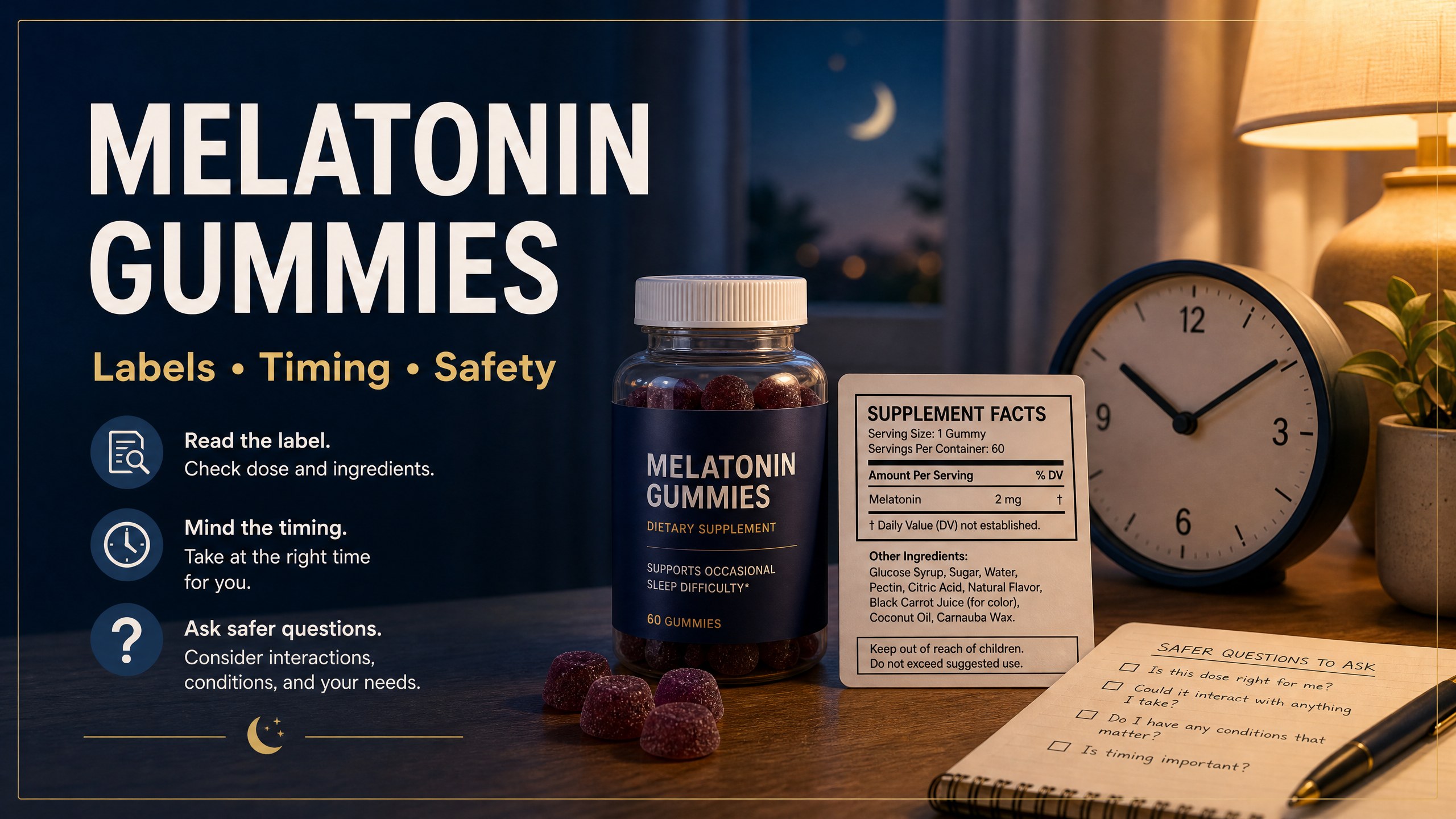
- Supplement Facts panel: serving size and amount per serving for each listed ingredient (this is where any stated melatonin amount should appear).
- List of other ingredients: fillers, sweeteners, colors, and potential allergens (important for people with food allergies or sensitivities).
- Manufacturer or distributor contact information: a phone number or website for questions or reporting adverse events.
- Directions for use: many labels include recommended timing and serving instructions; follow these unless a clinician advises otherwise.
- Lot number and expiration or “best by” date: useful if quality concerns arise.
Use available federal databases to check labels and ingredient listings: the NIH Office of Dietary Supplements maintains the Dietary Supplement Label Database (DSLD), which lets you view label information reported by manufacturers. The Dietary Supplement Ingredient Database (DSID) contains analytical data for some ingredients and can help users understand reported versus tested ingredient amounts.
Timing: what to look for and how to approach timing questions
Product labels often include timing instructions (for example, when to take a gummy relative to bedtime). Because timing recommendations can vary by product and by individual needs, review the label directions and ask a clinician or pharmacist if you have questions about timing, especially if you take other sedating medicines or need to be fully alert the next day. Remember that supplements can have pharmacologic effects and may affect activities like driving.
Commonly reported side effects and uncertainties
Dietary supplements, including melatonin gummies, can cause side effects. Public health agencies advise consumers to be alert for unwanted effects and to report them. Side effects that people commonly associate with sleep‑related supplements include drowsiness or impaired alertness; however, individual responses vary. If a product causes an unexpected or severe reaction, stop using it and contact a health professional or the product manufacturer.
Because manufacturers are responsible for safety and labeling, actual ingredient amounts or contaminants can vary between products. Use databases (DSLD, DSID) and contact manufacturers for testing and quality information when available.
Interactions and contraindications — questions to raise with your clinician or pharmacist
Supplements can interact with prescription or over‑the‑counter medicines and with medical conditions. Before using melatonin gummies, ask your clinician or pharmacist about:
- All prescription, over‑the‑counter, and herbal products you take (to check for interactions).
- Medical conditions that might change how you respond to a sleep‑related supplement.
- Whether the supplement could affect your ability to operate vehicles or machinery.
- Whether there are safer non‑supplement options to address sleep concerns (behavioral or lifestyle approaches supported by evidence for sleep issues).
If you are pregnant, breastfeeding, planning pregnancy, or giving supplements to children, discuss use with a clinician; federal guidance emphasizes extra caution for these groups.
Practical “safer” questions to ask at the store or clinic
- Can you show me the Supplement Facts panel and list of other ingredients?
- Is there third‑party testing or a certificate of analysis available for this product?
- What is the exact amount of melatonin per serving, and how many servings are in a package?
- Are there any warnings about next‑day drowsiness or interactions with medications I take?
- Who should I contact if I have an adverse reaction?
When to seek care
- Stop use and seek immediate medical care for signs of a severe allergic reaction (difficulty breathing, swelling of the face or throat, hives).
- Contact a clinician if you have persistent or worsening symptoms after taking a supplement, unusual bleeding, severe dizziness, or prolonged excessive drowsiness.
- Report adverse events to the product manufacturer and to the FDA’s MedWatch program so regulators can monitor safety concerns.
Bottom line
Melatonin gummies are dietary supplements and are not pre‑approved by the FDA. Read the Supplement Facts panel and other label information, use federal label databases to check product details, and talk with a clinician or pharmacist about timing, possible side effects, and interactions with medications or health conditions. If you experience severe or unexpected reactions, stop the product and seek medical care.