In this guide
What is L‑theanine and why do people take it?
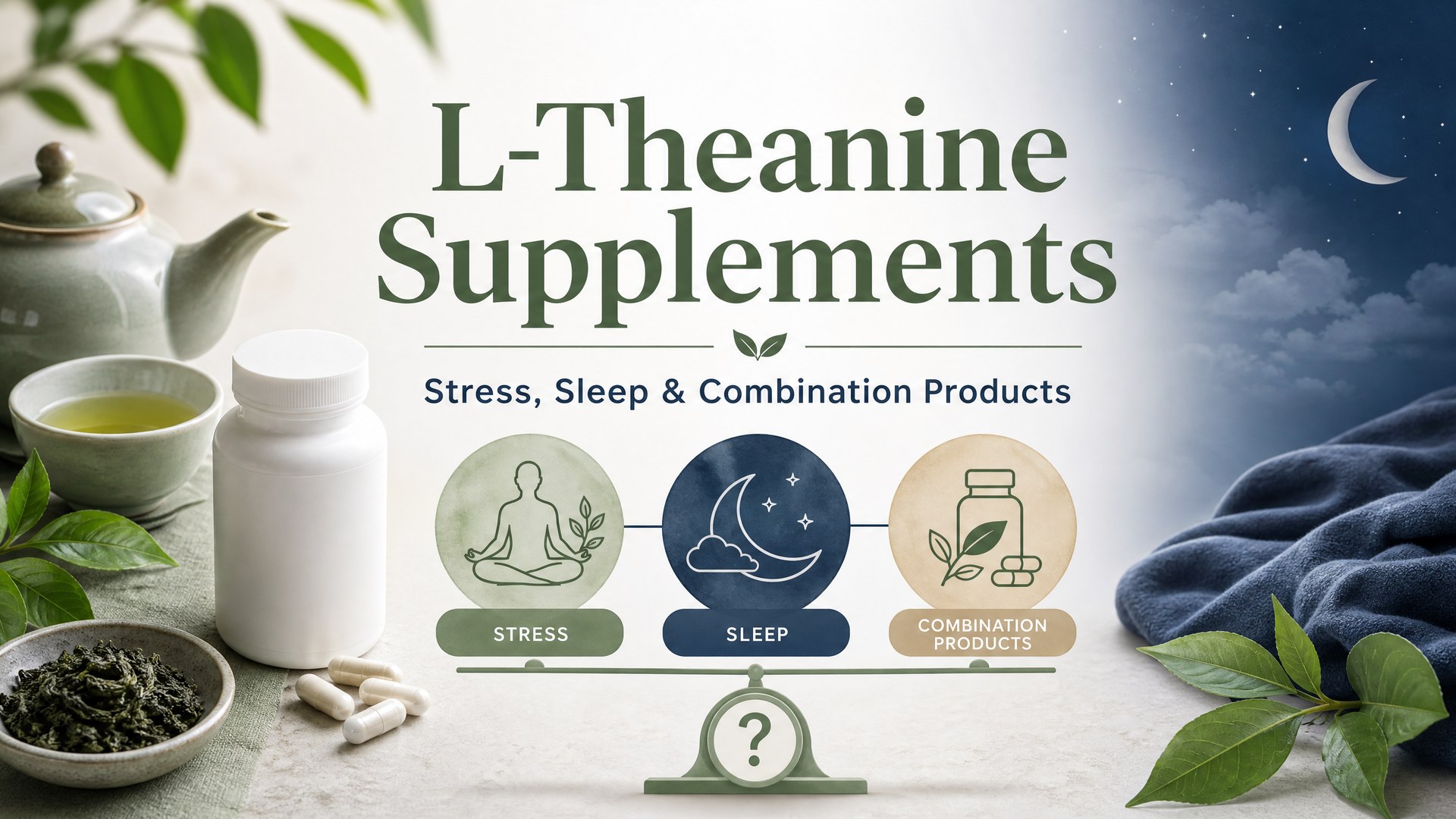
L‑theanine is an amino acid commonly associated with tea and is available as a dietary supplement. Manufacturers market it for relaxation, reducing stress, and supporting sleep. Like other dietary supplements in the U.S., L‑theanine products are regulated as foods, not as drugs; manufacturers are responsible for safety and labeling, and the U.S. Food and Drug Administration (FDA) does not approve dietary supplements for safety or effectiveness before they are sold.
Established guidance from federal agencies
Official sources such as the National Institutes of Health Office of Dietary Supplements (ODS) and the FDA provide broad guidance about dietary supplements: they explain how supplements are regulated, encourage consumers to check labels, and recommend talking with a health care professional before use—especially when you take prescription medicines, are pregnant or breastfeeding, or have a medical condition. These sources also emphasize that evidence quality varies widely across ingredients and products.
What the evidence says about stress and sleep
Evidence for L‑theanine’s effects on stress and sleep is limited and mixed. Small or preliminary studies exist in the research literature, but authoritative federal consumer guidance stresses that supplements often lack the high-quality, large clinical trials required to draw firm conclusions about benefits or long-term safety. In practice, individual responses vary and product formulations differ, so results seen in a study of a specific product may not apply to all L‑theanine supplements.
Takeaway: Current federal guidance indicates uncertainty—some people report benefits, but high-quality, conclusive evidence is lacking and more research is needed.
Combination products and interactions
Manufacturers often sell L‑theanine combined with other ingredients (for example, caffeine, melatonin, or herbal extracts). The effects and safety of combination products depend on all ingredients together, so evidence for single‑ingredient L‑theanine does not automatically apply to combinations. Because combinations can change how a product acts and increase the likelihood of side effects or interactions, evaluate each product’s complete ingredient list and dosing.
Official federal resources recommend discussing supplement use with your clinician, particularly if you take prescription or over‑the‑counter medications. Although specific interactions for L‑theanine are not established in the federal consumer pages, many authoritative sources advise caution because supplements can interact with medications or medical conditions.
Practical label‑reading tips
- Look for a complete “Supplement Facts” panel that lists active ingredients and the amount per serving.
- Avoid products that list a “proprietary blend” without amounts for each ingredient—this makes it hard to know what you’re actually getting.
- Check for other active ingredients (for example, melatonin, caffeine, or herbs) and their amounts so you can anticipate combined effects.
- Note serving size, total daily dose, directions for use, expiration or lot number, and manufacturer contact information.
- Use publicly available databases—such as the NIH Dietary Supplement Label Database (DSLD) and the Dietary Supplement Ingredient Database (DSID)—to compare labels and learn what products contain.
- Third‑party testing seals (e.g., independent organizations that test supplements) can add information about quality, but a seal does not mean a product is safe or effective for your condition.
Safety, interactions, and contraindications
Federal consumer guidance emphasizes general safety principles for dietary supplements: quality and safety vary, labels can be inaccurate, and some supplements interact with medicines or health conditions. Specific to L‑theanine, authoritative U.S. agency pages do not establish conclusive safety profiles or approved uses, so assume uncertainty and use caution.
- Talk with a clinician before taking L‑theanine if you are pregnant, breastfeeding, planning pregnancy, or giving supplements to a child—official guidance commonly notes limited data in these groups.
- Tell your clinician about all supplements you use; if you take prescription medicines (especially those that affect the nervous system or blood pressure) your clinician can advise on possible interactions.
- Discontinue use and seek care if you experience signs of a serious allergic reaction (hives, swelling, difficulty breathing), severe dizziness, fainting, or other worrying symptoms.
When to seek medical care
- Immediate emergency care for breathing difficulty, swelling of the face/throat, fainting, or severe chest pain.
- Contact your clinician if you have new or worsening symptoms after starting a supplement—such as palpitations, severe drowsiness that interferes with daily activities, or other unexpected side effects.
- Discuss routine use with a clinician if you plan to take supplements long term or if you have chronic medical conditions.
Bottom line
L‑theanine supplements are widely marketed for relaxation, stress reduction, and sleep. Federal consumer and regulatory sources advise caution: the quality of evidence is limited, product formulations vary, and dietary supplements are not FDA‑approved drugs. If you consider trying L‑theanine, read labels carefully, check credible databases for product information, and discuss use with your health care provider—especially if you take other medicines, are pregnant or breastfeeding, or have a chronic medical condition.
References
- Office of Dietary Supplements (ODS) — What You Need to Know About Dietary Supplements (Consumer)
- U.S. Food and Drug Administration — Dietary Supplements
- Dietary Supplement Label Database (DSLD) — NIH
- Dietary Supplement Ingredient Database (DSID) — NIH
- National Center for Complementary and Integrative Health — Herbs at a Glance (index)