
In this guide
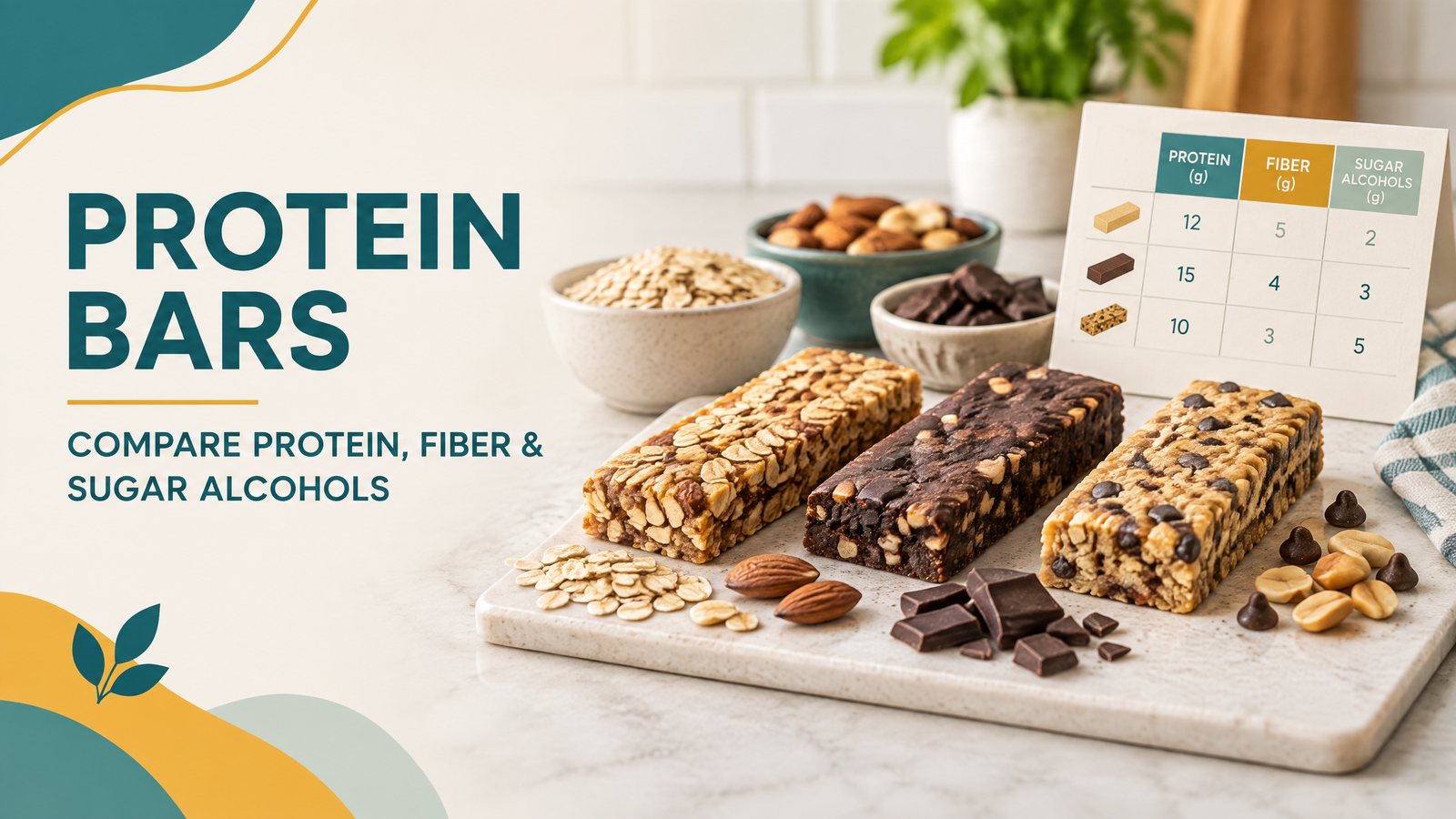
This article explains how to compare protein bars with respect to protein, fiber, sugar alcohols (polyols), and digestive tolerance. It summarizes what scientific and official sources say about common claims, describes what to look for on labels, and gives practical precautions for people with medical conditions. This is editorial information, not personal medical advice.
What to look for on the label
- Serving size and calories. Compare bars by the serving size shown on the label — some are half a bar per serving.
- Protein amount and source. Note grams of protein per serving and the protein source (whey, milk, soy, pea, rice, mixed plant proteins). Protein quality and digestibility vary by source; choose based on dietary needs and allergies.
- Fiber type and amount. Labels list total fiber (grams). Fiber types (inulin, chicory, soluble/insoluble fiber) can affect digestion and benefit. Official guidance on fiber emphasizes gradual increases to avoid GI upset.
- Added sugars and sugar alcohols (polyols). Check “Sugars” and the ingredient list for sweeteners named like erythritol, xylitol, sorbitol, maltitol, or “sugar alcohols.” These are counted separately from sugars on some labels and may affect tolerance.
- Other ingredients and claims. Look for caffeine, herbal extracts, vitamins/minerals, and allergen statements (milk, soy, tree nuts, peanuts). Note whether the product is sold as a food or a dietary supplement — that affects how it’s regulated.
- Manufacturer contact and third‑party testing. A manufacturer that lists contact info, batch numbers, or third‑party testing may be easier to verify via consumer databases.
Evidence, marketing claims, and uncertainty
Established evidence: Protein and fiber play known roles in diet. Protein contributes to muscle repair and satiety around exercise when total dietary protein needs are met; fiber supports bowel regularity and other aspects of digestive health. These general roles are summarized by federal health offices focused on nutrition and exercise.
Marketing claims: Bars are often marketed as “high‑protein,” “meal replacement,” “post‑workout,” or “weight loss” aids. Be aware that marketing language does not equal proof of safety or effectiveness. Dietary supplement labels are not pre‑approved by the U.S. Food and Drug Administration (FDA) in the same way drugs are; manufacturers are responsible for label accuracy and safety before marketing.
Uncertainty and limitations: The nutritional quality and effects of protein bars vary by ingredients and the person using them. For uses such as aiding weight loss, athletic performance, or replacing meals, evidence depends on the whole diet, caloric balance, exercise habits, and product composition. Claims that a particular bar will produce specific health outcomes should be treated cautiously.
Sugar alcohols and tolerance
Sugar alcohols (also called polyols) are common low‑calorie sweeteners in bars. While they reduce added sugar, some people experience digestive symptoms — for many, small amounts are well tolerated, but in sensitive individuals they can cause bloating, gas, or loose stools. Because tolerance varies, try one small portion first if you are unfamiliar with a product and increase gradually.
If a bar lists multiple sugar alcohols or large amounts of added fiber, be especially cautious if you have a history of sensitive digestion.
Practical label‑reading checklist
- Confirm serving size and calories per serving.
- Compare protein grams and identify the protein source (animal vs. plant; isolate vs. concentrate).
- Note total fiber grams and check the ingredient list for fiber types (e.g., inulin, soluble fiber).
- Scan the ingredient list for sugar alcohols (erythritol, maltitol, sorbitol, xylitol) and for other sweeteners.
- Look for caffeine, herbal extracts, or added vitamins/minerals and check whether the product is labeled as a “dietary supplement.”
- Check for allergen statements and manufacturer contact info; use databases such as the Dietary Supplement Label Database (DSLD) or the Dietary Supplement Ingredient Database (DSID) to learn more about ingredients when available.
Interactions, contraindications, and who should be careful
Bars that include herbal ingredients, concentrated botanicals, or stimulants (e.g., caffeine) can interact with prescription medications or worsen certain medical conditions. Federal health offices advise caution with herbal products and recommend consulting health professionals if you take prescription medicines, are pregnant or breastfeeding, or have chronic medical conditions.
People with known food allergies or intolerances should read allergen statements carefully. Those with sensitive digestion or history of irritable bowel symptoms should test tolerance to small portions before regular use.
When to seek care
- Seek immediate care for signs of an allergic reaction (difficulty breathing, swelling, hives).
- Talk with a clinician promptly if you develop severe or persistent gastrointestinal symptoms after eating a product (severe abdominal pain, prolonged vomiting, or diarrhea causing dehydration).
- Consult your clinician before using bars that contain herbal extracts or high levels of stimulants if you take prescription medicines, have heart disease, high blood pressure, are pregnant, or have other chronic conditions.
For general consumer guidance about supplements, labeling, and FDA oversight, see the federal resources listed below. When in doubt about a specific product, contact the manufacturer and consult a healthcare professional.
Evidence snapshot
Protein and fiber are established dietary components with known roles in nutrition and exercise recovery. The effects and tolerability of sugar alcohols and added fibers vary individually. Product claims about performance, weight loss, or medical benefits are variable and should be evaluated against ingredient lists and overall diet. Official federal resources provide guidance on label interpretation and the limits of regulatory oversight for dietary supplements.
References
- What You Need to Know (Consumer) — Office of Dietary Supplements (ODS)
- Fiber — Consumer Fact Sheet (ODS)
- Exercise and Athletic Performance — Fact Sheet (ODS)
- Weight Loss — Consumer Fact Sheet (ODS)
- Dietary Supplements — U.S. Food and Drug Administration (FDA)
- Dietary Supplement Label Database (DSLD) — ODS
Bottom line
Practical guidance for comparing protein bars by protein source and amount, type and amount of fiber, presence of sugar alcohols, and how to judge tolerance and safety. Includes label-reading tips, interactions/contraindications, and when to seek care.