In this guide
- Key takeaways
- Why this question matters
- What “FDA‑approved facility” usually implies — and why that’s misleading
- What the FDA does do about supplement safety
- Why “FDA‑approved” is not the same as “tested and safe”
- How consumers can evaluate supplement safety claims
- Practical steps before using a supplement
- When to be concerned and contact a clinician
- Limitations and realistic expectations
- Safety disclaimer
- Safety disclaimer
- References
- Related VitaEvidence reading
Category: Supplement Safety Basics
Key takeaways
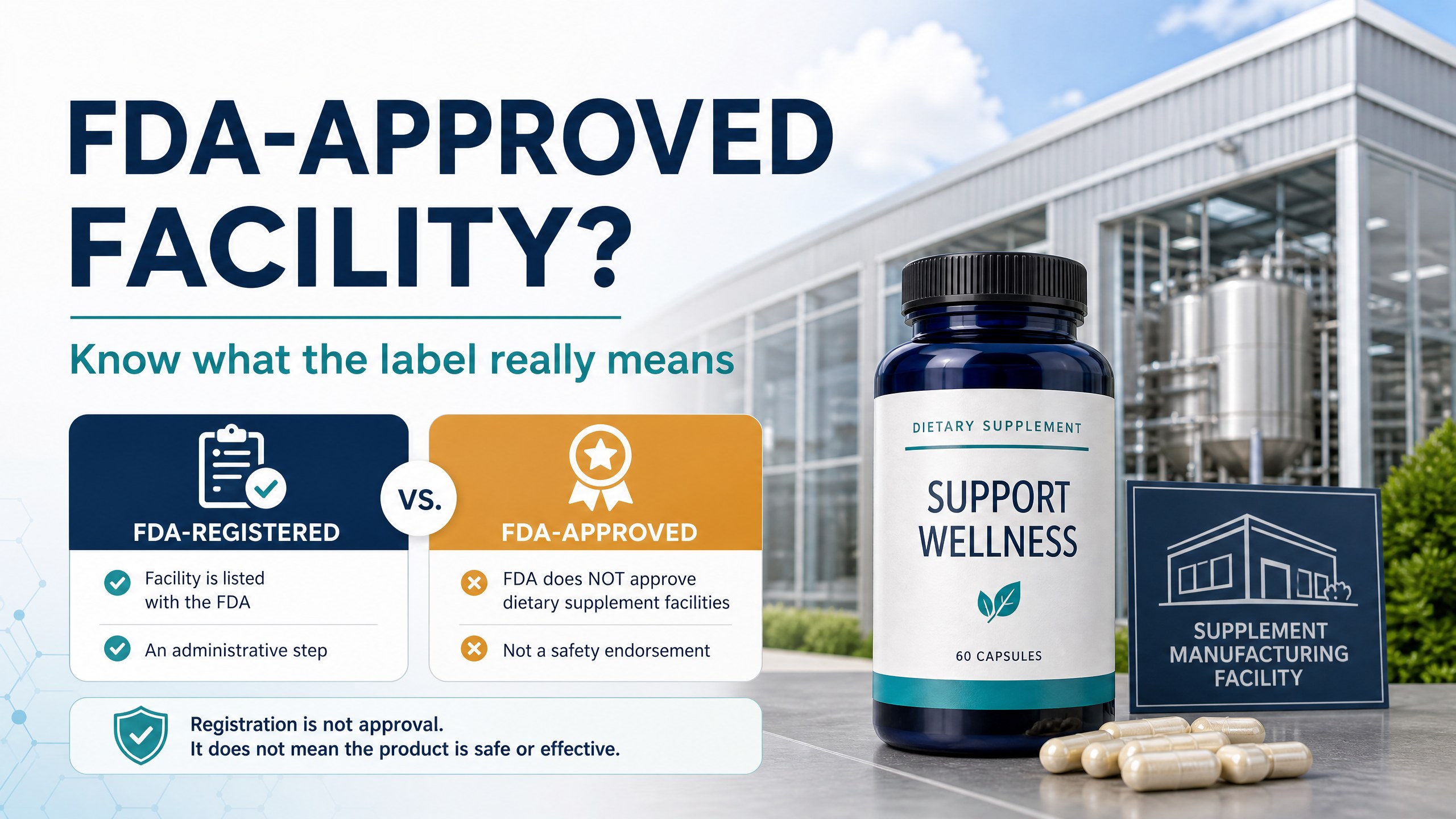
- The FDA does not approve dietary supplements or routinely “approve” the facilities that make them. Claims such as “manufactured in an FDA‑approved facility” can be misleading.
- The FDA sets manufacturing standards (current Good Manufacturing Practices, cGMPs) for supplements and can inspect facilities and take action when products are unsafe or contain hidden drugs — but that is different from an approval program for facilities or products.
- Look for transparent labeling, third‑party test reports, and reputable company practices; check FDA databases and notifications for known tainted products; and report suspect products or adverse events to the FDA and your health care provider.
Why this question matters
Many people assume that an “FDA‑approved” label or marketing phrase means a product or the place that made it was reviewed and cleared for safety. For prescription drugs and certain medical devices the FDA approves specific products, after evaluating data submitted by manufacturers. Dietary supplements, however, operate under a different regulatory system. This difference affects what claims on packaging or websites actually mean for product safety.
What “FDA‑approved facility” usually implies — and why that’s misleading
- Some supplement labels and ads say things like “Made in an FDA‑Approved Facility,” “Manufactured in an FDA Registered Facility,” or simply “FDA‑Approved.” These phrases suggest the FDA actively reviewed and approved the maker or the product.
- According to the FDA, dietary supplements are not approved by the agency before they go to market. Manufacturers are primarily responsible for ensuring their products are safe and properly labeled (FDA: Questions and answers on dietary supplements). The FDA’s role centers on oversight, inspections, and enforcement after a product is on the market (FDA: Dietary supplements).
- In short: there is no general FDA program that pre‑approves every supplement facility. A phrase claiming such approval is therefore not a reliable indicator that the product has been safety‑vetted by the FDA.
What the FDA does do about supplement safety
- Sets and enforces current Good Manufacturing Practices (cGMPs) for dietary supplements to help ensure identity, purity, strength and composition (FDA: Dietary supplements).
- Inspects manufacturing facilities, issues warnings and recalls, and posts medication‑health‑fraud notifications when products are found to contain hidden, unauthorized pharmaceutical ingredients (FDA: Medication health fraud notifications; FDA: Sexual enhancement and energy product notifications).
- Publishes lists and database entries about specific tainted or fraudulent products so consumers and clinicians can check whether an item has been reported (FDA: Health Fraud Product Database; FDA: Tainted honey‑based products and hidden active ingredients).
Why “FDA‑approved” is not the same as “tested and safe”
- Approval implies a premarket scientific review of safety and effectiveness. For most dietary supplements, that premarket review does not happen.
- The FDA’s inspections and actions are important, but they are reactive: the agency relies on reports, product testing, and its own investigations to find problems. That means some unsafe or adulterated products can reach consumers before any FDA action occurs (FDA: Avoiding products contaminated with hidden ingredients).
- Because of that gap, third‑party testing and transparent manufacturer practices can add useful information, but neither equals FDA preapproval.
How consumers can evaluate supplement safety claims
Below is a simple comparison of claim language you may see and what it actually signals.
| Claim or label you may see | What it usually means | What to do |
|---|---|---|
| “FDA‑approved facility” or “Made in an FDA‑approved facility” | Misleading: FDA does not have a general preapproval program for supplement facilities or products. | Treat as a marketing claim. Look for other evidence of quality and verify product safety via FDA notifications and third‑party information. |
| “Complies with cGMP” or “Manufactured under cGMPs” | Manufacturers are required to follow cGMPs; the FDA enforces cGMP compliance through inspections. | This is a regulatory standard; consider it reassuring but not a guarantee of product safety. |
| “Third‑party tested” or seals from testing labs | Indicates independent testing by an outside lab or verifier — specifics depend on the certifier and what they test for. | Ask which tests were done (identity, potency, contaminants) and which organization performed them. Look up that organization’s standards. |
| “No hidden ingredients” | Voluntary claim by the manufacturer; not independently verified unless supported by third‑party reports or FDA findings. | Verify via label transparency, certificate of analysis (COA), and FDA databases for known adulterants. |
Practical steps before using a supplement
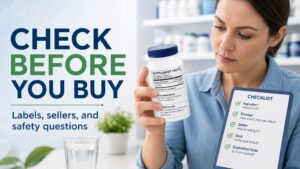
- Read the label carefully: check the Supplement Facts panel for dosages and full ingredient names (FDA: Dietary supplements; see our guide /how-to-read-supplement-facts-label/ for help).
- Look for independent verification: ask the seller or manufacturer for a current certificate of analysis (COA) from an independent lab that shows testing for identity, potency, and contaminants. Be aware that seals vary in scope and rigor.
- Search FDA resources: check the FDA’s Health Fraud Product Database and medication‑health‑fraud notifications for the product name or ingredients to see if it has been flagged (FDA: Health Fraud Product Database; FDA: Medication health fraud notifications).
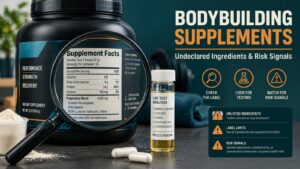
- Beware product categories with frequent problems: the FDA often finds hidden active drugs in sexual‑enhancement, weight‑loss, and some “energy” products; other categories have also been reported (FDA: Sexual enhancement and energy product notifications; FDA: Tainted honey‑based products).
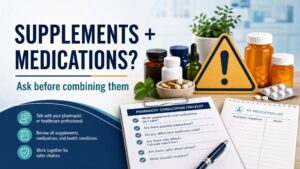
- If you take prescription medicines, check for interactions and talk with your clinician (see our resource /supplements-medication-interactions-questions/).
When to be concerned and contact a clinician
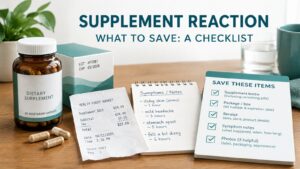
- Stop taking the supplement and seek medical help if you develop worrying symptoms after starting a product (for example, allergic reaction, chest pain, severe headache, vision changes, fainting, rapid heartbeat, or other new serious symptoms).
- If a physician suspects an adverse reaction, they may report it to FDA and evaluate for hidden ingredients or interactions.
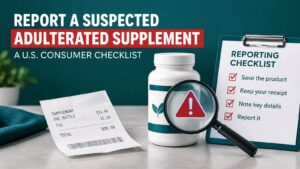
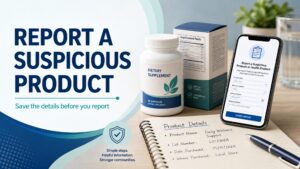
- If you believe a product is contaminated, adulterated, mislabeled, or caused an adverse effect, report it to the FDA (FDA: Ways consumers contact FDA about human drugs) and keep the product packaging and any receipts.
Limitations and realistic expectations
- No claim on packaging (including “FDA‑approved facility”) replaces careful checking of ingredients, manufacturer transparency, third‑party testing details, and official FDA advisories.
- Third‑party testing and certifications can add information but are not uniformly regulated; the rigor and scope differ among certifiers.
- Even with good manufacturing practices and testing, some products may still be adulterated or mislabeled; vigilance and use of official FDA resources are important.
Safety disclaimer
This article is educational and not a substitute for professional medical advice. If you suspect a supplement caused harm, contact your health care provider promptly. To report a potentially dangerous or fraudulent product to the FDA, use the agency’s contact options (FDA: Ways consumers contact FDA about human drugs).
Safety disclaimer
This article provides general information and is not medical advice. It is not a substitute for professional medical evaluation. If you have health concerns, consult a licensed clinician.
References
- https://www.fda.gov/drugs/medication-health-fraud/avoiding-products-contaminated-hidden-ingredients
- https://www.fda.gov/consumers/health-fraud-scams/tainted-honey-based-products-hidden-active-drug-ingredients
- https://www.fda.gov/consumers/health-fraud-scams/health-fraud-product-database
- https://www.fda.gov/food/dietary-supplements
- https://www.fda.gov/food/information-consumers-using-dietary-supplements/questions-and-answers-dietary-supplements
- https://www.fda.gov/food/dietary-supplements-guidance-documents-regulatory-information/dietary-supplement-labeling-guide
- https://www.fda.gov/drugs/medication-health-fraud-notifications/sexual-enhancement-and-energy-product-notifications
- https://www.fda.gov/drugs/medication-health-fraud/medication-health-fraud-notifications
- https://www.ftc.gov/news-events/topics/truth-advertising/health-claims
- https://www.ftc.gov/business-guidance/resources/health-products-compliance-guidance
- https://www.fda.gov/about-fda/cder-contact-information/ways-consumers-contact-fda-about-human-drugs
Last reviewed: August 2026
VitaEvidence Editorial Team