In this guide
- Why calcium matters after 50
- Good food sources of calcium
- How absorption works and the role of vitamin D
- Ways to support calcium absorption
- Supplements: what to know
- Common questions
- Can I get enough calcium without supplements?
- Does menopause affect calcium needs?
- Are plant sources as good as dairy?
- When to seek care
- References
Bone loses and hormone changes that occur with aging make calcium an important nutrient to consider after age 50. This article reviews common calcium-rich foods, factors that affect how your body absorbs calcium, frequently asked questions about supplements, and practical steps you can take. It is a general information summary for editorial review and not personal medical advice.
Why calcium matters after 50
Calcium is a major component of bone. As people get older—particularly around and after menopause for people assigned female at birth—bone breakdown can outpace bone formation. Adequate calcium intake is one part of strategies to support bone health. Vitamin D and other factors also influence how well calcium is used by the body.
Good food sources of calcium
Getting calcium from food is preferred when possible because foods provide other nutrients (protein, potassium, magnesium) that support bone health.
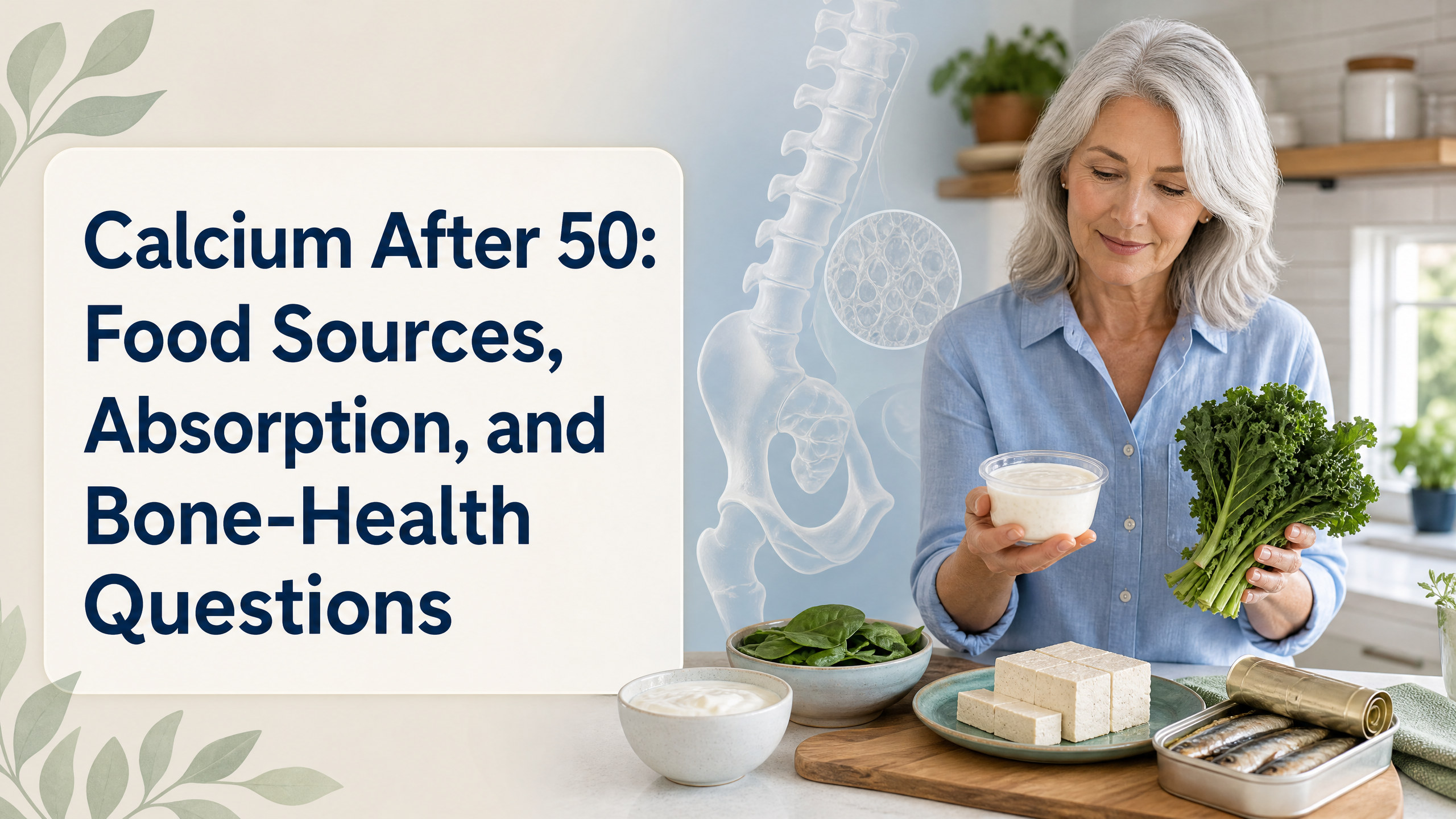
- Dairy foods: milk, yogurt, and cheese are commonly rich in calcium.
- Fortified plant milks and juices: many almond, soy, oat, and orange juices are fortified with calcium.
- Leafy green vegetables: collards, kale, and bok choy provide calcium; note that some greens (for example, spinach) contain oxalates that reduce calcium absorption.
- Canned fish with bones: salmon and sardines (when eaten with soft bones) supply calcium.
- Calcium-set tofu and some tempeh or legumes.
- Fortified cereals and some fortified breads.
- Seeds and nuts: chia seeds, sesame (tahini), and almonds contribute smaller amounts.
Food labeling and nutrition databases (and the U.S. Office of Dietary Supplements) can help you compare the calcium content of specific products.
How absorption works and the role of vitamin D
Not all the calcium you eat is absorbed. Vitamin D helps the intestine absorb calcium. The amount absorbed depends on factors including the vitamin D level in the body, the calcium source, and age. Older adults and people with low vitamin D levels may absorb less calcium from the diet.
Because vitamin D status affects calcium use, many guidance sources discuss vitamin D alongside calcium. If you have questions about vitamin D testing or intake, consult your clinician. The U.S. Office of Dietary Supplements provides consumer information on vitamin D and its role in calcium metabolism.
Ways to support calcium absorption
- Include vitamin D–containing foods or discuss testing if you’re at risk of low vitamin D.
- Choose calcium sources with good bioavailability (for example, dairy and certain fortified products).
- Be mindful that very high sodium intake and high amounts of caffeine may increase urinary calcium losses.
- Spread calcium-containing foods across the day rather than consuming very large single doses to improve absorption.
Supplements: what to know
Supplements can help people who cannot meet needs from food alone. However, supplements carry risks and benefits that vary by individual.
- Regulation: In the United States, dietary supplements are regulated as foods. The Food and Drug Administration (FDA) does not review or approve supplements for safety and effectiveness before they are marketed. Labels can vary in quality and accuracy.
- Potential harms: Taking more calcium than needed — especially from supplements — may increase the chance of side effects in some people. Talk with your clinician before starting a supplement if you have kidney disease, a history of kidney stones, or take medications that affect calcium or bone metabolism.
- Medication interactions: Calcium supplements can interact with certain medicines (for example, some antibiotics and thyroid medicines). Discuss timing and interactions with your pharmacist or prescriber.
If your clinician recommends a supplement, they can advise on product selection, dose, and timing to fit your overall health and medications.
Common questions
Can I get enough calcium without supplements?
Many people can meet their calcium needs through a mix of dairy or fortified alternatives, leafy greens, fish with bones, tofu, and fortified foods. If you have restricted eating patterns, lactose intolerance, or limited access to fortified foods, supplements may be considered after discussing with a clinician.
Does menopause affect calcium needs?
Menopause is associated with changes in bone turnover that can increase fracture risk over time. Health care professionals often consider calcium intake together with vitamin D status, weight-bearing exercise, and other risk factors when discussing bone health after menopause.
Are plant sources as good as dairy?
Some plant foods and fortified products provide calcium that is well absorbed; others contain compounds (for example, oxalates) that reduce absorption. Comparing calcium content and choosing low-oxalate greens or fortified foods can help if you do not consume dairy.
When to seek care
- Talk with your clinician about calcium and bone health if you have a recent fracture, sudden height loss, or increasing back pain that might suggest a spinal compression fracture.
- See a clinician if you have kidney disease, a history of kidney stones, or are taking medicines that might interact with calcium.
- If you plan to start a calcium or vitamin D supplement, or if you’re unsure whether your diet meets your needs, ask your clinician or a registered dietitian for personalized advice.
Bone health after age 50 is influenced by multiple factors. Adequate calcium intake from food, attention to vitamin D status, regular weight-bearing activity, and regular conversations with your health care team form a practical approach to maintaining bone strength.