In this guide
This article explains what a 25-hydroxyvitamin D test (often written 25(OH)D) actually measures, how to interpret what laboratories report, and practical points to consider before and after testing. The information here summarizes guidance from the U.S. National Institutes of Health Office of Dietary Supplements (ODS) and related U.S. regulatory information.
What the 25-hydroxyvitamin D test measures
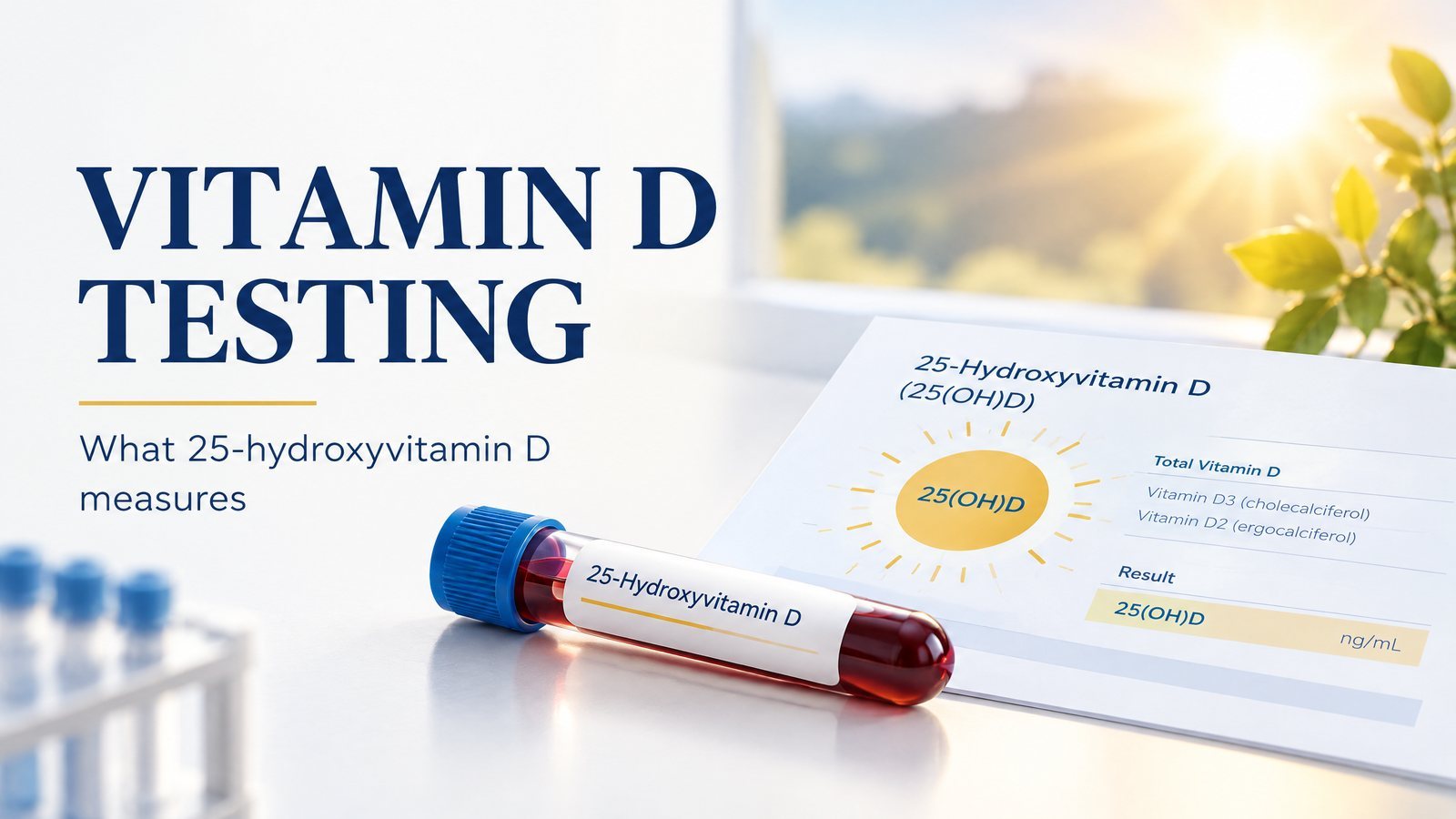
When clinicians check “vitamin D” with a blood test, they most commonly measure 25-hydroxyvitamin D (25(OH)D). This is the main circulating form of vitamin D in the bloodstream and reflects vitamin D that comes from sunlight, food, and supplements. Because it circulates at higher concentrations and has a longer half‑life than the active hormone, 25(OH)D is the standard marker used to assess vitamin D status in clinical practice.
By contrast, the hormonally active form of vitamin D—1,25-dihydroxyvitamin D—is tightly regulated by the body and is not a reliable indicator of overall vitamin D stores except in specific medical situations. For most people, measuring 1,25-dihydroxyvitamin D does not help assess vitamin D status.
(Sources: ODS Vitamin D fact sheet.)
What influences your 25(OH)D result?
- Recent sun exposure: Ultraviolet B (UVB) exposure from sunlight stimulates vitamin D production in the skin and affects 25(OH)D levels.
- Diet and supplements: Foods and vitamin D supplements contribute directly to circulating 25(OH)D.
- Body and health factors: Age, body composition, malabsorption, liver or kidney disorders, and some medications can change how vitamin D is absorbed, stored, or metabolized.
- Season and geography: Time of year and where you live influence UVB exposure and therefore 25(OH)D levels.
- Laboratory and assay differences: Different labs or test methods can yield slightly different numeric results; units reported may vary (labs use different unit systems).
ODS describes these and other factors that affect vitamin D status and the interpretation of tests.
Limitations of the 25(OH)D test
- The test is an indirect marker: it reflects recent total vitamin D input and stores, but not necessarily vitamin D activity at every tissue or the biologic effects you may be concerned about.
- Assay variability: Not all laboratories use the same method; small differences between labs or over time can occur.
- Not a stand‑alone screen for all conditions: Measuring the active hormone 1,25-dihydroxyvitamin D can be appropriate in certain disorders of calcium metabolism or rare diseases, but it is not useful for routine vitamin D status assessment.
Practical advice before and after testing
- Tell your clinician about supplements and prescription medicines you take. Some drugs change vitamin D metabolism; your clinician can advise whether to test and how to interpret results.
- Ask the lab what units and reference range they use. Laboratories report results in different units and may list their own reference ranges.
- Repeat testing only when clinically indicated. Because 25(OH)D reflects recent intake and sun exposure, your clinician will decide whether follow‑up testing is useful after a change in treatment or exposure.
Label‑reading tips for vitamin D supplements
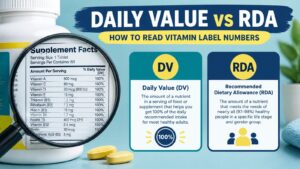
- Check the Supplement Facts panel to confirm the type of vitamin D listed (for example, colecalciferol or ergocalciferol) and the amount per serving.
- Recognize that dietary supplements are not reviewed and approved by the FDA for safety or effectiveness before they are marketed. The U.S. Food and Drug Administration provides guidance on dietary supplement regulation and what that means for consumers.
- Consider products from manufacturers that use third‑party quality testing; independent verification can help ensure the product contains the stated ingredient and amount.
Interactions and precautions
Some prescription medications and health conditions can alter vitamin D metabolism or change how your body handles calcium. If you take prescription drugs, have liver or kidney disease, or have conditions that affect nutrient absorption, discuss testing and supplement use with your clinician. Excessive vitamin D intake can increase blood calcium, which has health risks; monitoring and medical supervision are appropriate if high‑dose supplements are being used.
(Sources: ODS Vitamin D fact sheet; FDA dietary supplements page.)
When to seek care
- If you have symptoms that could reflect low or high calcium (for example, persistent bone or muscle symptoms, marked weakness, or gastrointestinal symptoms), contact your clinician.
- Talk with your clinician before starting high‑dose vitamin D supplements, especially if you take other medications or have chronic medical conditions.
- If a 25(OH)D test result is unexpected or markedly different from prior results, follow up with the clinician who ordered the test to review possible causes and next steps.
Bottom line
A 25‑hydroxyvitamin D blood test measures the main circulating form of vitamin D and is the standard laboratory marker for assessing vitamin D status. Results reflect sun exposure, diet, supplements, and a variety of individual and laboratory factors. The test has limits—different assays, medical conditions, and medications can affect interpretation—so results should be reviewed with a clinician. Dietary supplements are not FDA‑approved before marketing, so review labels carefully and consider products with independent quality checks.
Editorial note
Draft for editorial review. This is general information and not a substitute for medical advice. Discuss test results and treatment with your health care provider.