In this guide
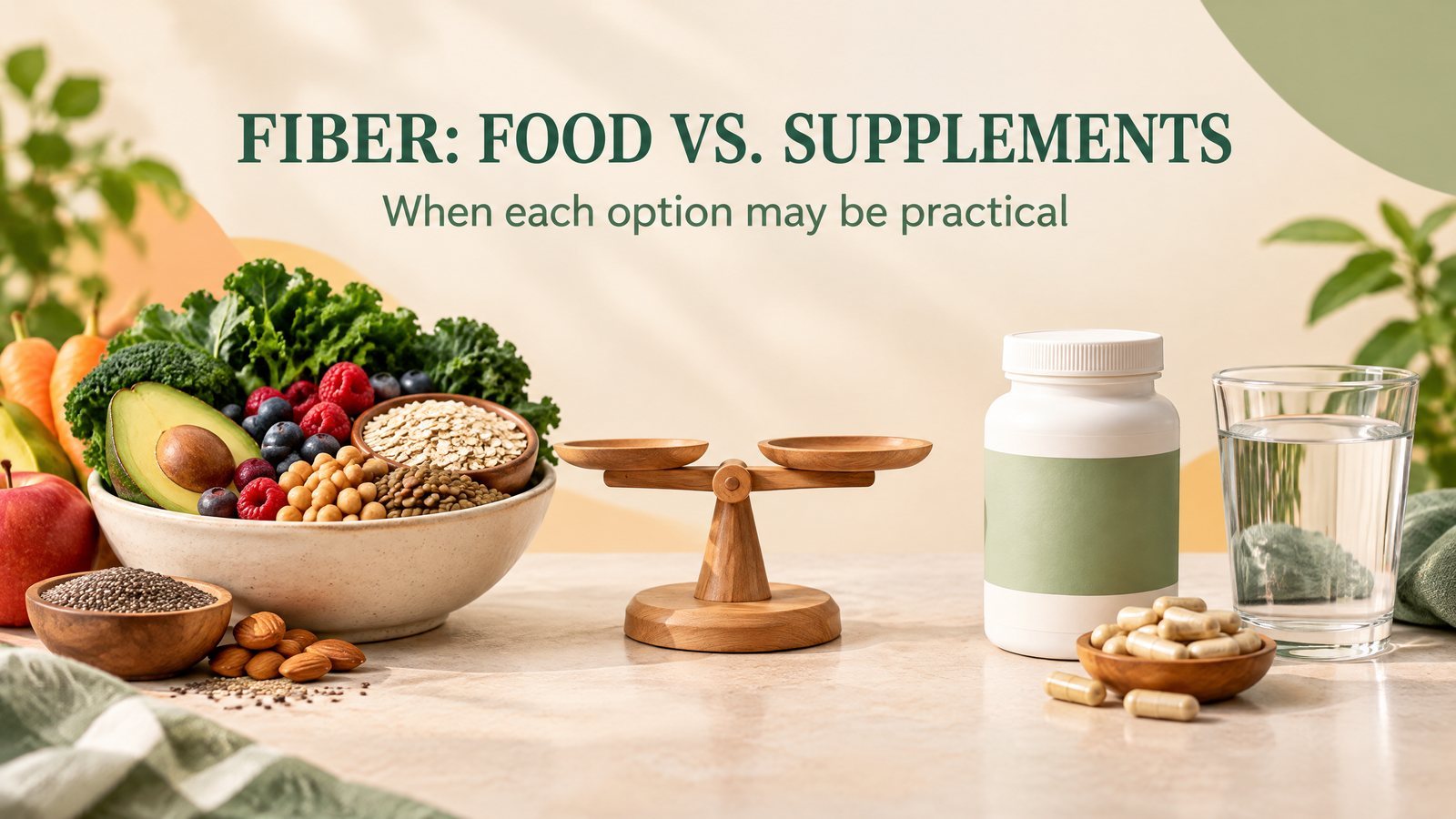
This article helps you compare fiber from whole foods with fiber supplements and explains practical situations when a supplement may be useful. It’s a general information piece, not medical advice. For personalized guidance, talk with a clinician or registered dietitian.
Why fiber matters
Dietary fiber describes plant-based carbohydrates that your body doesn’t fully digest. Diets higher in fiber are associated with healthier bowel function and may be linked with lower risks of chronic conditions such as heart disease and type 2 diabetes. Public health guidance emphasizes getting fiber through a variety of plant foods because whole foods provide fiber plus vitamins, minerals, and other beneficial components.
Established evidence
Key points supported by government health information:
- Whole foods are the preferred source of fiber because they deliver fiber along with other nutrients and bioactive compounds.
- Fiber helps with regularity for many people and can be part of approaches to overall healthy eating.
- Some people find fiber supplements useful when they can’t reach recommended fiber intakes from foods alone or need short-term help with constipation.
These conclusions are summarized in consumer guidance from the Office of Dietary Supplements (ODS) at the National Institutes of Health and other federal resources.
When a fiber supplement may be practical
Situations where a supplement can be a practical option include:
- Difficulty eating enough high-fiber foods due to limited access, poor appetite, or specific eating restrictions.
- Short-term need for more fiber to relieve mild, occasional constipation when other measures (fluids, activity, dietary changes) are insufficient.
- Following a clinician’s or dietitian’s plan that includes a specific type or amount of supplemental fiber.
Supplements can offer a predictable amount of fiber per serving, which some people find easier to track than estimating fiber from mixed meals.
When whole foods are better
- For long-term health goals, eating a variety of fiber-containing foods (vegetables, fruits, legumes, whole grains, nuts, seeds) provides nutrients and plant compounds not in isolated fiber powders.
- If you want to improve overall diet quality rather than address a single symptom, food-based changes are usually the first-line approach.
Types of fiber in supplements and marketing claims
Fiber supplements come in different forms (e.g., bulk-forming fibers, soluble fibers, fermentable prebiotic fibers). Marketing often highlights specific benefits such as “supports digestive health” or “promotes regularity.”
Marketing claims are not the same as proven therapeutic effects. Unlike prescription drugs, dietary supplements are not approved by the U.S. Food and Drug Administration (FDA) for safety or effectiveness before they are sold.
Use caution with claims that sound like treatments for disease. If a product claims to treat or cure a condition, that claim should be reviewed with a healthcare professional because such statements may not be supported by reliable evidence and may reflect improper marketing.
Practical label-reading checklist
Before buying a fiber supplement, check the product label (look for a “Supplement Facts” panel) and consider these items:
- How many grams of fiber are in a single serving and what type(s) of fiber are listed (ingredient names).
- Other active ingredients, added sugars, or large amounts of other nutrients that could matter for your health.
- Directions for use, including the amount of liquid recommended and whether it should be taken with or away from medications.
- Warnings, lot number, expiration date, and manufacturer contact information.
- Use the Dietary Supplement Label Database (DSLD) to compare ingredient lists and label claims across products.
Safety, interactions, and contraindications
General safety considerations:
- Take fiber supplements with plenty of water. Some bulk fibers can swell and cause choking or blockage if swallowed without adequate fluid.
- Fiber supplements can reduce the absorption of some medications if taken at the same time. Stagger supplement and medication timing and check with a clinician or pharmacist about specific medicines.
- People with certain gastrointestinal conditions (for example, some forms of intestinal obstruction or specific motility disorders) should avoid some bulk-forming fibers; a clinician can advise based on diagnosis.
How to add fiber safely
- Increase fiber gradually to reduce gas and bloating.
- Prioritize whole foods where possible, and use supplements as a short-term or situational aid unless advised otherwise by a healthcare professional.
- Keep hydration up when increasing fiber intake.
When to seek care
Contact a healthcare professional promptly if you experience:
- Severe or persistent abdominal pain, vomiting, or inability to pass stool or gas.
- Signs of allergic reaction (hives, swelling, difficulty breathing) after taking a supplement.
- New or worsening symptoms after starting a supplement, or if you’re unsure about interactions with prescription medications.
Bottom line
Whole foods remain the preferred source of dietary fiber for most people because of their broader nutrient benefits. Fiber supplements can be practical in specific situations—such as short-term relief of constipation or when food intake is limited—but they are not a substitute for a balanced diet. Read labels carefully, stay well-hydrated, and discuss supplements with your healthcare team when you have health conditions or take other medications.