In this guide
This draft is for editorial review and is not a substitute for medical advice. A bone density scan is an imaging test that estimates how much mineral is in your bones and can help doctors understand fracture risk. Women may face increased bone loss at certain life stages and with some health conditions. Below we explain common reasons a clinician might consider a bone density test, what different results generally mean, and practical steps that often follow testing.
What a bone density scan measures
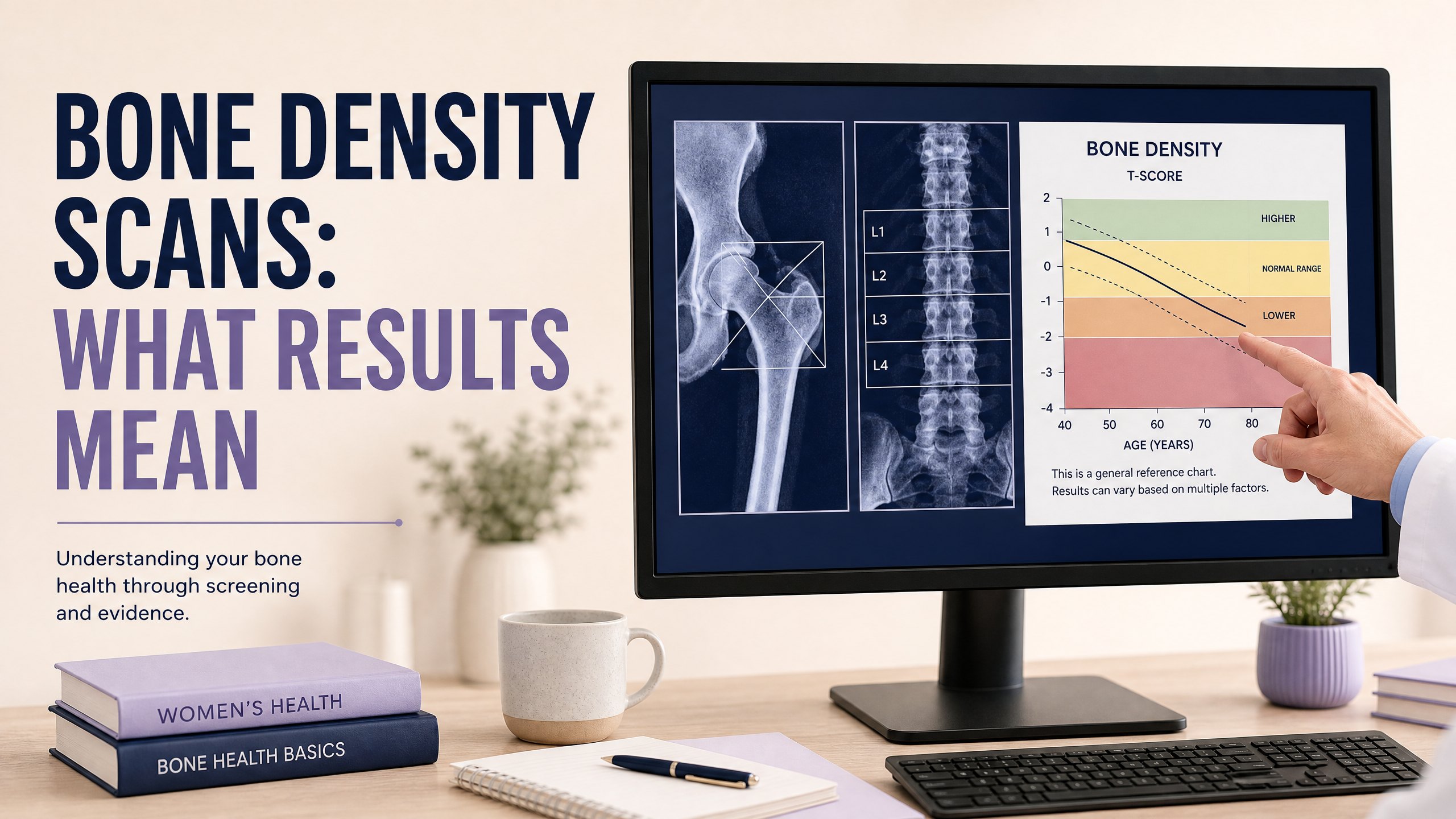
Bone density scans (often called DEXA or DXA scans in clinical settings) produce a measurement of bone mineral content in selected bones. The results are used together with your medical history, age, and other health factors to judge whether your bones are stronger or weaker than expected for your situation.
Who may be offered testing
Decisions about bone density testing are individualized. Clinicians commonly consider testing when there is concern that a woman may be losing bone faster than usual or may be at higher risk of fracture. Reasons that can prompt a clinician to recommend a bone density scan include:
- Changes linked to menopause: The drop in estrogen around menopause is associated with increased bone loss, so menopausal status and symptoms are an important part of the discussion.
- Periods that are absent or very irregular: Prolonged low estrogen states related to missed periods can affect bone health, especially in younger women.
- A history of a broken bone after a minor fall or bump (a possible sign of weaker bones).
- Other health conditions or medications that could affect bone strength — clinicians will evaluate your full medical history and medicines you take.
- Strong family history of osteoporosis or hip fracture may prompt earlier evaluation.
Because testing and treatment decisions depend on many personal factors, it’s best to discuss whether a scan makes sense for you with your clinician.
How to understand the results
Results from a bone density scan are interpreted in context. In general terms:
- Higher bone density measurements usually indicate a lower risk of fracture.
- Lower bone density measurements suggest a higher risk of fracture compared with people with stronger bones.
- Doctors combine the scan result with other information — age, health conditions, medicines, prior fractures, and fall risk — to decide whether further testing, monitoring, or treatment is appropriate.
A single test is only part of the picture. For many women, a clinician will discuss lifestyle measures to support bone health and may recommend repeat testing at intervals or additional steps depending on how the results fit with overall fracture risk.
Common next steps after testing
Actions that health professionals commonly consider after a bone density scan include:
- Reviewing diet and nutrient intake, with attention to calcium and vitamin D, which are important for bone health.
- Discussing changes in physical activity and fall-prevention strategies to lower fracture risk.
- Considering whether medications or treatments are appropriate based on the test results and other risk factors; this is individualized and depends on a woman’s overall health and preferences.
- Planning follow-up: some people are monitored with repeat scans or clinical checks over time.
If supplements are discussed, remember that dietary supplements are regulated differently than prescription medicines. Talking with your clinician or pharmacist about which supplements (if any) are appropriate for you, and about safe doses and interactions, is recommended.
Practical steps to support bone health
Whether or not you have a scan, simple measures can help support bone health across adult life:
- A balanced diet that includes calcium-containing foods (for example, dairy or fortified alternatives, leafy greens, and other calcium-rich choices) and adequate vitamin D from food sources or safe sun exposure as appropriate.
- Maintaining overall health by addressing conditions that affect hormones and bone health.
- Talking with your clinician about any medications you take that might affect bone strength so that risks and benefits can be weighed.
Calcium and vitamin D play important roles in bone health; if you are considering supplements, discuss them with a clinician who knows your medical history.
When to seek care
Contact your health care provider if you have:
- A broken bone after a minor fall or bump.
- New, persistent back pain or a noticeable loss of height, which can be signs of vertebral fractures.
- Long periods of missed menstrual cycles (amenorrhea) or early menopause — these can be associated with changes in bone health and are worth evaluation.
- Concerns about medications or medical conditions that might affect your bones.
If you have immediate severe pain after a fall or a suspected fracture, seek urgent care.
Talking with your clinician
Decisions about bone density testing and treatment are individualized. If you are wondering whether you should have a scan, bring a list of your medical conditions, medicines, family history, and any prior fractures to your appointment. Ask how testing would change management and what lifestyle or medical options are reasonable for you based on results.
Because recommendations depend on personal health details, your clinician can help you balance the potential benefits and harms of testing and of possible treatments.