
In this guide
- What is manganese and why does the body need it?
- Food sources
- Do many people have manganese deficiency?
- When might a clinician consider manganese testing or supplementation?
- Risks of excess manganese
- Interactions and precautions
- Label-reading tips if you’re evaluating a supplement
- When to seek care
- Bottom line
- References
Note: This article is an informational draft for editorial review and is not personalized medical advice. It summarizes information from the U.S. National Institutes of Health Office of Dietary Supplements (ODS) and U.S. Food and Drug Administration (FDA) materials.
What is manganese and why does the body need it?
Manganese is an essential trace mineral involved in many normal biological processes. It helps support metabolic reactions and is present in small amounts across the body. Most people obtain manganese from food, and the U.S. government’s Office of Dietary Supplements (ODS) provides a consumer fact sheet that summarizes known roles, sources, and safety issues.
Food sources
Manganese occurs naturally in a variety of plant-based foods. According to the ODS, good dietary sources include whole grains, nuts, legumes, leafy green vegetables, and some teas. For most people who eat a varied diet, these foods supply adequate manganese without the need for a separate supplement.
Do many people have manganese deficiency?
Deficiency of manganese in people eating typical diets is uncommon. The ODS notes that overt deficiency is rare, and evidence about mild deficiency symptoms in humans is limited. Much of the data showing problems with very low manganese come from animal studies or from controlled experimental settings rather than from common real-world diets.
Certain situations could raise the theoretical risk of low manganese status (for example, very restricted diets or conditions that impair absorption), but routine testing and supplementation for manganese deficiency are not generally recommended for most healthy adults.
When might a clinician consider manganese testing or supplementation?
- When there is a clear clinical concern or laboratory reason to suspect a deficiency or imbalance (clinician judgement required).
- In specific medical situations where standard nutrition is bypassed (for example, some long-term parenteral nutrition scenarios—managed by clinicians).
Decisions about testing or giving a manganese supplement should be made by a clinician familiar with the person’s medical history and other nutrient status.
Risks of excess manganese
Excessive manganese intake is a greater concern than deficiency for many people. The ODS highlights that high manganese exposure — most importantly from inhalation in occupational settings — has been linked to neurological effects resembling Parkinson-like symptoms (tremor, difficulty walking, and changes in mood or behavior). High intakes from supplements or from contaminated sources can also raise the risk, particularly in vulnerable groups.
People with impaired liver function may be at higher risk because the body removes manganese through the bile. Infants receiving prolonged parenteral nutrition with high manganese content have also been reported to accumulate manganese because their excretory systems differ from older children and adults. These are clinical scenarios where monitoring and specialist input are important.
Interactions and precautions
- Other minerals and dietary factors can affect manganese absorption and balance; the ODS notes interactions among minerals and the complexity of nutrient competition.
- People with liver disease or neurological conditions should discuss manganese with their clinician before using supplements.
- Because dietary supplements are regulated differently from drugs in the U.S., they do not require FDA approval for safety or effectiveness before marketing. The FDA provides consumer guidance on how dietary supplements are regulated and what claims manufacturers may make.
Label-reading tips if you’re evaluating a supplement
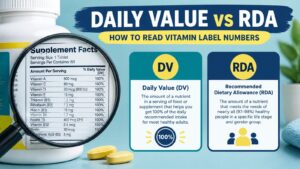
- Look for the “Supplement Facts” panel and note the amount of manganese per serving and the % Daily Value (DV) if listed.
- Check the ingredient list for the chemical form of manganese and for other minerals that may be included—these affect total intake.
- Consider total manganese from diet plus any supplement; discuss high intakes with a clinician, especially for children, pregnant or breastfeeding people, and those with liver disease.
- Remember: unlike prescription medicines, dietary supplements are not reviewed by the FDA for safety and effectiveness before they are marketed.
When to seek care
- See a clinician promptly for new neurological symptoms such as tremor, problems walking, coordination changes, or marked mood and personality shifts—these can be signs associated with high manganese exposure in some contexts.
- If you suspect you have swallowed an unusually large amount of a manganese-containing supplement, contact your clinician or Poison Control for advice.
- If you have liver disease or are on long-term parenteral nutrition, discuss manganese monitoring with your specialist.
Bottom line
Manganese is an essential trace mineral commonly found in whole grains, nuts, legumes, leafy greens, and tea. Deficiency in people eating a varied diet is rare. The bigger safety concern is excess manganese from concentrated supplements or high environmental/occupational exposure, which can affect the nervous system and is of particular concern for people with impaired liver function and for infants on certain medical nutrition regimens. Because dietary supplements are not FDA-approved before sale, talk with a clinician before starting a manganese supplement, especially if you have health conditions or take other minerals.