In this guide
This article summarizes what reputable U.S. government sources say about vitamin C: where it comes from in foods, common supplement forms, safety considerations (including upper intake concerns), practical label-reading tips, interactions and contraindications, and frequent misunderstandings. This is a general informational draft for editorial review and not personalized medical advice.
Why vitamin C matters
Vitamin C (ascorbic acid) is an essential nutrient involved in several normal body processes. It helps with collagen production, wound healing, and the function of some enzymes, and it acts as an antioxidant in the body. The U.S. National Institutes of Health Office of Dietary Supplements (NIH ODS) provides consumer-focused information on vitamin C, including functions, food sources, recommended intake ranges, and potential adverse effects.
Food sources
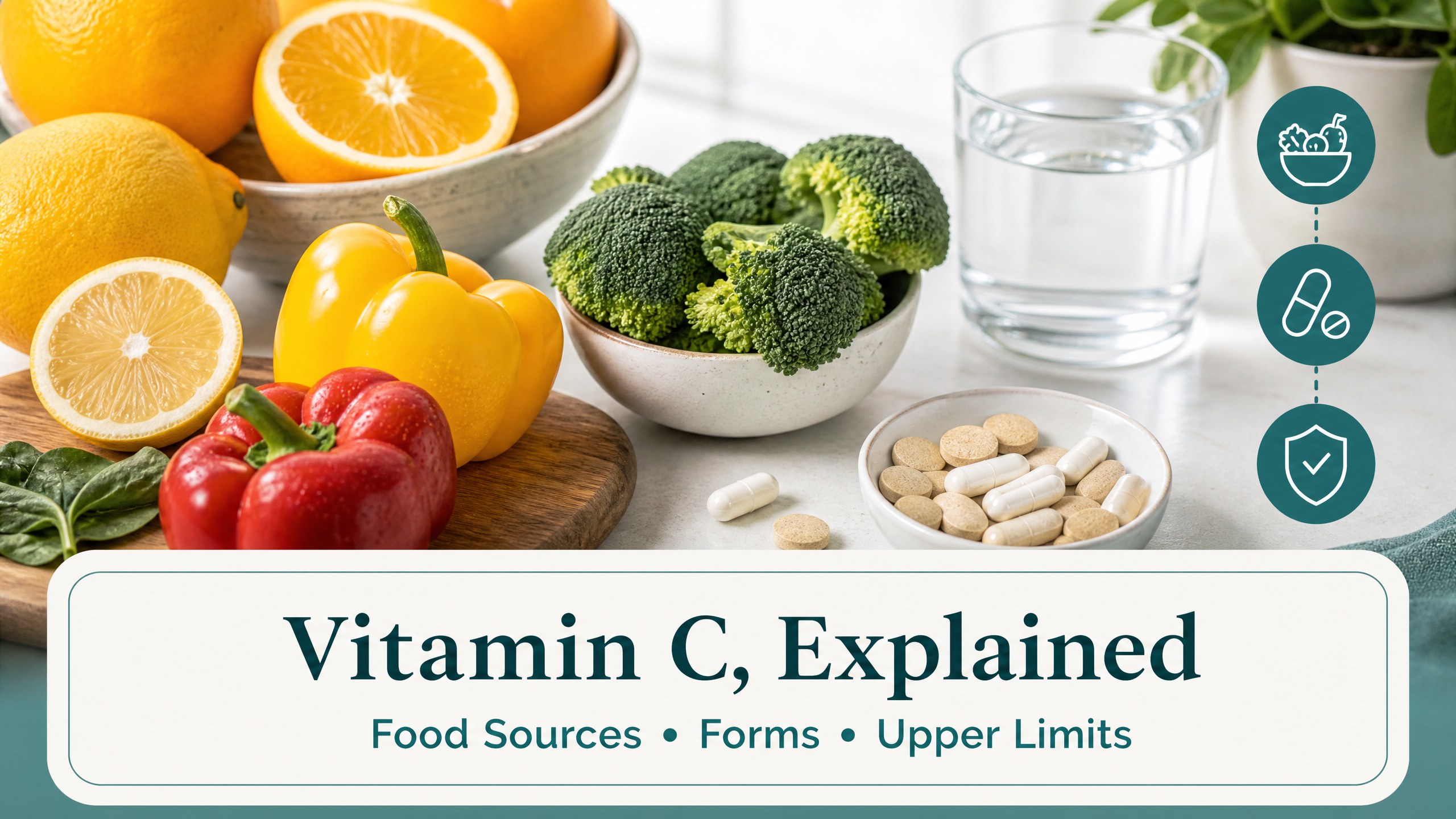
Most people can get vitamin C from a balanced diet. Common, naturally rich food sources include:
- Citrus fruits (oranges, grapefruits, lemons)
- Strawberries and kiwifruit
- Bell peppers (red and green)
- Cruciferous vegetables (broccoli, Brussels sprouts)
- Tomatoes and tomato juice
The NIH ODS vitamin C fact sheet lists these and other sources and explains that cooking can reduce vitamin C content because it is sensitive to heat and air.
Common supplement forms
Vitamin C supplements are sold in several forms. The most common are:
- Ascorbic acid — the pure, chemical form of vitamin C.
- Sodium ascorbate or calcium ascorbate — buffered forms that may be marketed as gentler on the stomach.
- Effervescent tablets, chewables, capsules, and powders — various delivery formats for convenience and dosing flexibility.
Tablets and powders may contain additional ingredients (sweeteners, flavorings, or calcium). The biologic activity of vitamin C is generally based on the ascorbic acid molecule; different salt forms mainly affect tolerance or pH rather than fundamentally different biological effects.
Upper limits and safety
NIH ODS provides recommended intake ranges and tolerable upper intake levels for vitamins, including vitamin C. Very high supplemental intakes can cause side effects in some people, most commonly gastrointestinal upset such as diarrhea. In certain susceptible individuals, large doses have been linked to an increased risk of kidney stone formation.
Because official numeric recommendations and upper limits are updated periodically, consult the NIH ODS vitamin C fact sheet and the NIH pages on nutrient recommendations and daily values for current numbers rather than relying on product marketing.
Label-reading guidance: practical steps
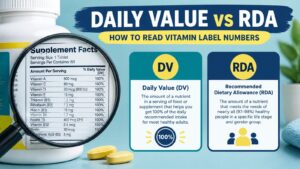
- Look at the Supplement Facts panel — note the serving size and the amount of vitamin C per serving.
- Check the % Daily Value (%DV) listed for vitamin C to see how the supplement fits with total daily intake from food and other supplements. (See NIH ODS daily values information for how %DV is determined.)
- Review the ingredient list for inactive ingredients, added calcium or sodium (in buffered products), sweeteners, and allergens.
- Note the form of vitamin C (ascorbic acid, sodium ascorbate, etc.) if you have specific tolerance concerns.
- Find the manufacturer’s contact information and lot number—this is useful if you need to report quality problems or seek batch information.
- Prefer products with transparent labeling. Remember that, unlike prescription drugs, dietary supplements do not require FDA premarket approval for safety or effectiveness.
Interactions and contraindications
- Vitamin C can enhance absorption of non-heme iron from plant foods. This is beneficial for people who need to improve iron absorption, but it may also alter iron status in some circumstances; discuss with your clinician if you are being treated for iron-related conditions.
- High supplemental intakes may cause gastrointestinal symptoms (nausea, cramps, diarrhea) and may increase kidney stone risk in susceptible individuals.
- If you take prescription medications or have medical conditions, tell your clinician about any vitamin C supplements. Although many people take modest supplements without problems, supplements can interact with medical treatments in ways that are clinically important.
Common misconceptions
- “Vitamin C prevents or cures the common cold.” Evidence does not support that routine vitamin C supplementation prevents colds in the general population. Some studies show modest reductions in duration for certain groups, but results are mixed and not conclusive. Consult the NIH ODS vitamin C fact sheet for discussion of research findings and uncertainties.
- “More is better.” Larger supplemental doses do not necessarily provide greater benefit and can increase side effects. Official guidance includes tolerable upper intake levels to help avoid adverse effects.
- “All supplement claims are verified by the FDA.” The FDA does not approve dietary supplements for safety or effectiveness before they are marketed. Manufacturers are responsible for label accuracy and safety; the FDA can take action if a product is found unsafe after it reaches the market.
When to seek care
- Seek medical attention for severe or persistent gastrointestinal symptoms after starting supplements (severe abdominal pain, vomiting, dehydration).
- Contact your clinician if you suspect a kidney stone or have new urinary symptoms while taking high-dose vitamin C.
- Discuss with your clinician before starting high-dose vitamin C if you have kidney disease, are pregnant, breastfeeding, or are being treated for iron-related disorders.
Bottom line
Vitamin C is essential and is abundant in many fruits and vegetables. Most people can meet needs through diet; supplements are available in several forms for those who need or choose them. High supplemental doses carry a risk of adverse effects, so follow official guidance, read labels carefully, and consult your clinician about interactions or conditions that may make supplementation unsafe. For current numeric recommendations and tolerable upper intake levels, refer to the NIH Office of Dietary Supplements and the FDA guidance on dietary supplements.