In this guide
- Key takeaways
- What these products are and common ingredients
- Why safety concerns exist
- What the FDA and FTC do
- A practical pre-purchase checklist
- How to use third‑party testing information
- Red flags that suggest you should avoid a product
- What the FDA has specifically done (examples and limits)
- When to contact a clinician
- How to report a suspicious product
- Limitations and realistic expectations
- Safety disclaimer
- References
- Related VitaEvidence reading
Category: Sexual Enhancement and Energy Products
Energy supplements and pre-workout products promise a quick boost in alertness, focus, or exercise performance. While many people use these products safely, some have been found to contain undeclared ingredients or misleading claims. This article explains key safety and labeling issues, summarizes how the U.S. Food and Drug Administration (FDA) and Federal Trade Commission (FTC) approach these products, and gives a practical checklist to help you evaluate products before buying.
Key takeaways
- The FDA does not approve dietary supplements for safety and effectiveness before they go to market; manufacturers are responsible for product safety and labeling. (See FDA dietary supplement guidance.)
- Some energy and pre-workout products have been found by the FDA to contain undeclared prescription drugs or stimulants. FDA public notices list specific affected products; this does not mean all products with similar names are unsafe. (See FDA medication health fraud notifications and sexual enhancement and energy product notifications.)
- Check the label for a complete Ingredients list and Supplement Facts, manufacturer contact information and lot number, clear warnings, and avoid products that promise cures or use dramatic claims. Third‑party testing seals can help but are not a guarantee.
- Talk with your clinician before using stimulant-containing supplements if you have heart disease, high blood pressure, anxiety disorders, are pregnant or breastfeeding, or take prescription medications. See “When to contact a clinician.”
What these products are and common ingredients
Energy supplements and pre-workouts are sold as dietary supplements or as other consumer products (e.g., “energy shots,” powdered mixes). Common ingredients include caffeine (from coffee, tea, guarana or synthetic sources), amino acids (like beta-alanine or citrulline), creatine, B vitamins, and herbal extracts. Some products marketed for “energy” or “performance” have also been found by FDA investigators to contain undeclared active drugs or potent stimulants. For background on how dietary supplements are regulated, see FDA guidance on dietary supplements and the FDA’s labeling guide.
Why safety concerns exist
- Adulteration with hidden drug ingredients: The FDA has identified some products that contained prescription drugs or other active pharmaceutical ingredients that were not declared on the label. These have included stimulants or other compounds that can have serious side effects or interact with medications. FDA posts notifications about specific tainted products. This is a regulatory action against particular items, not a blanket statement about all products in a category.
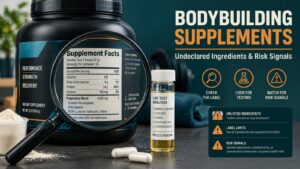
- Mislabeling and inaccurate contents: Some products may list “proprietary blends” without showing amounts of each ingredient, or may overstate ingredient amounts. The Supplement Facts panel should state the serving size and the amount of each listed dietary ingredient.
- High stimulant doses: Caffeine and other stimulants in combination may cause palpitations, anxiety, sleep disruption, or increases in heart rate and blood pressure; severe outcomes are possible, particularly with high doses or in susceptible people.
- Drug–supplement interactions: Supplements with stimulants or herbal constituents can interact with prescription drugs (for example, certain antidepressants, blood pressure medications, or stimulants). Review medications and ask a clinician if you’re unsure.
What the FDA and FTC do
- FDA: The FDA oversees labeling, inspects manufacturing facilities, investigates reports of adulterated or misbranded products, and posts public notifications when specific products are found to be tainted or dangerous. It also provides consumer guidance about avoiding products with hidden ingredients and keeps a searchable health fraud product database. (See FDA avoiding contaminated or hidden ingredients guidance, medication health fraud notifications, tainted honey product notice, and health fraud database.)
- FTC: The FTC enforces truth-in-advertising rules. Health-related claims must be truthful and backed by evidence, and advertisers cannot mislead consumers with unsubstantiated claims. (See FTC health claims and business compliance guidance.)
A practical pre-purchase checklist
Use the following checklist when comparing products. The table summarizes what to look for, why it matters, and where to find the information.
| What to check | Why it matters | Where to find it |
|---|---|---|
| Complete Supplement Facts panel and ingredient list (with amounts) | Shows what you’ll consume and approximate dose; lack of amounts or use of “proprietary blend” can hide high doses | Product label or manufacturer website |
| Total caffeine per serving and serving size | Caffeine can cause side effects and interacts with other stimulants; compare to total daily caffeine from other sources | Supplement Facts and “Other Ingredients” |
| Manufacturer name, address, lot number or expiration date, and contact info | Allows you to report problems, verify the maker, and check for recalls or FDA notices | Product label |
| Clear warnings and recommended use instructions | Important for safety (e.g., don’t use if pregnant, do not exceed stated dose) | Label warnings section |
| Third‑party testing or certification seals (e.g., NSF, USP, Informed Choice) and details of what was tested | Independent testing can confirm contents for the lot or product, but seals are not an absolute guarantee | Product label and certifier’s website |
| Search FDA health fraud database and medication health fraud notifications for product name | FDA posts specific warnings about tainted products and suspicious claims | FDA Health Fraud Product Database and Medication Health Fraud Notifications |
| Avoid products with extreme claims (cures, rapid weight loss, disease treatment) | Overstated health claims are a red flag for fraud and illegal labeling | Product packaging and advertising |
| Check seller reputation and return policies | Reputable sellers and transparent policies reduce the risk of counterfeit or expired items | Retailer site and customer reviews |
How to use third‑party testing information
Third‑party testing organizations may verify that a product contains specific ingredients and does not contain certain contaminants. If a product lists a third-party seal, look up the certifier’s website to confirm:
– The seal is valid for that brand and lot.
– What exactly was tested (identity, potency, contaminants).
A certification indicates testing of samples, not a government safety approval, and it does not eliminate all risk.
Red flags that suggest you should avoid a product
- Promises of a “miracle” effect, rapid cures, or disease treatment from a supplement.
- Labels that hide ingredient amounts behind “proprietary blends.”
- No manufacturer contact information or lot number on the product.
- Unfamiliar online sellers with little transparency or many recent complaints.
- Reports on the FDA health fraud database or medication health fraud notifications naming the product.
What the FDA has specifically done (examples and limits)
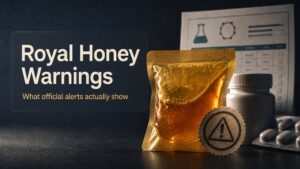
The FDA issues notices when it identifies specific products that are adulterated or contain hidden drug ingredients. For example, the agency has posted consumer warnings about certain energy and sexual enhancement products and even some honey-based products found to contain undeclared active drugs. Those notices apply to named products or batches; they do not imply the entire market is unsafe. Always check FDA notifications and the health fraud database for the exact product name or lot before assuming wider issues.
When to contact a clinician
- If you have cardiovascular disease, high blood pressure, arrhythmia, anxiety disorders, thyroid disease, kidney disease, or other chronic conditions.
- If you are pregnant, breastfeeding, trying to become pregnant, or giving supplements to children.
- If you regularly take prescription medications, especially blood thinners, antidepressants, stimulants, blood pressure drugs, or medications with narrow therapeutic windows.
- If you experience concerning side effects after taking a product (chest pain, severe headache, fainting, palpitations, shortness of breath).
For questions about interactions between supplements and medicines, consider talking with your clinician or a pharmacist; our site’s resource on supplements and medication interactions may help you prepare for that conversation (/supplements-medication-interactions-questions/).
How to report a suspicious product
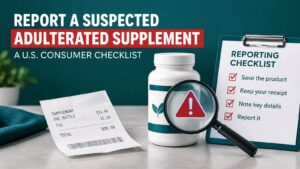
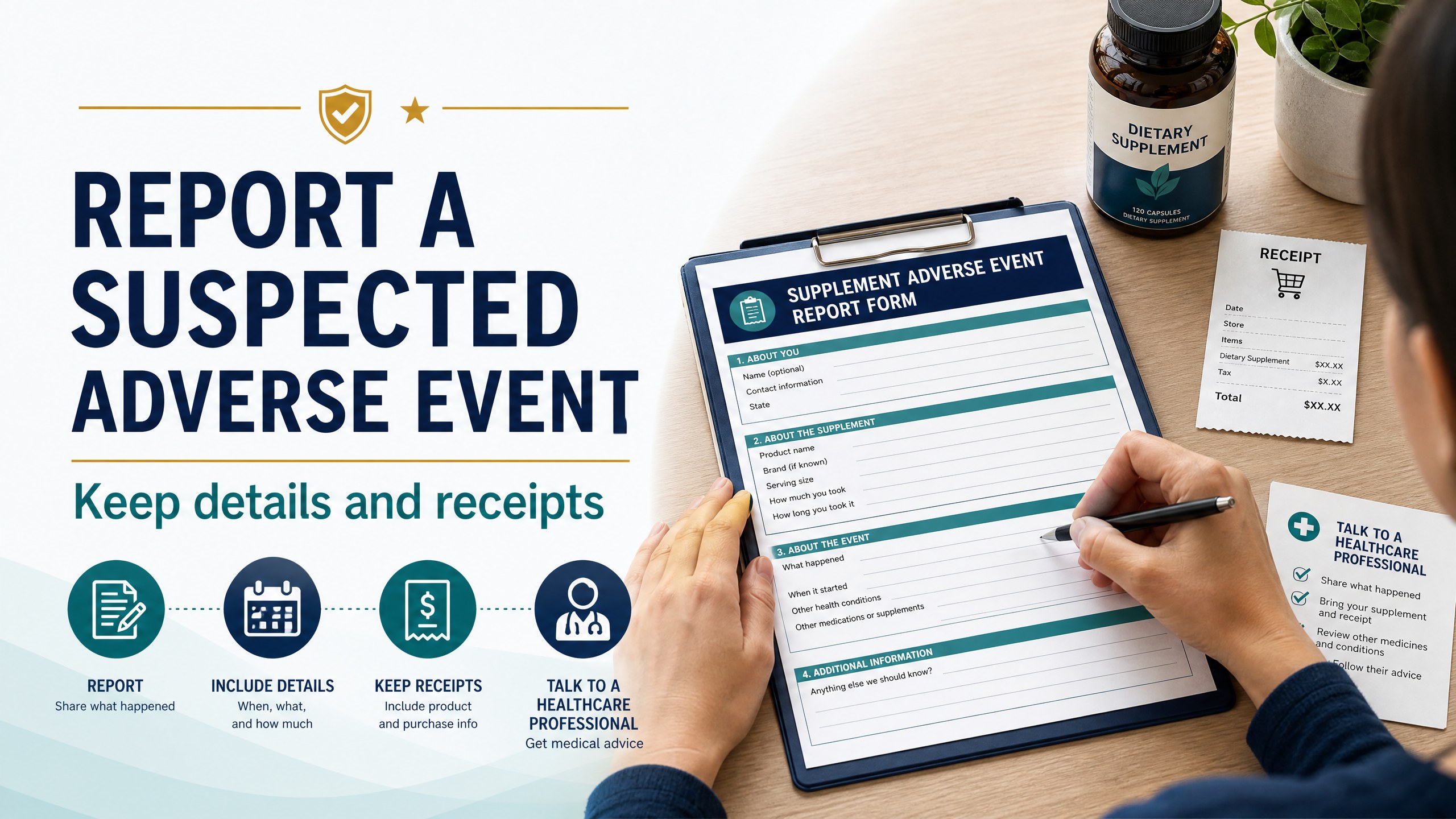
If you suspect a product is unsafe, mislabeled, or contains hidden ingredients, you can report it to the FDA. The FDA’s site provides ways for consumers to contact the agency about human drugs and supplement concerns. Reporting helps regulators track and investigate potential health threats.
Limitations and realistic expectations
- Dietary supplements are not reviewed and approved by the FDA for safety or efficacy before they are sold; manufacturers are responsible for ensuring label accuracy. The FDA acts after products are on the market if problems are reported or discovered.
- Even when a product lists ingredients accurately, individual responses vary and side effects can occur.
- Third‑party testing can reduce risk but cannot guarantee absolute safety for every lot or every consumer.
Safety disclaimer
This article provides general information and is not medical advice. It is not a substitute for professional medical evaluation. If you have health concerns, consult a licensed clinician.
References
- FDA: Avoiding Products Contaminated with Hidden Ingredients
- FDA: Sexual Enhancement and Energy Product Notifications
- FDA: Health Fraud Product Database
- FDA: Questions and Answers on Dietary Supplements
- FDA: Dietary Supplement Labeling Guide, Chapter IV
- FTC: Health Products Compliance Guidance
- NIH ODS: Dietary Supplements for Weight Loss
Last reviewed: August 2026
VitaEvidence Editorial Team