In this guide
- Key takeaways
- What is a “hidden ingredient”?
- Immediate steps to take
- What to tell your clinician
- Reporting the product and checking whether it’s known to regulators
- Immediate response checklist
- Why hidden ingredients are risky
- Practical precautions to reduce risk in the future
- Limitations and what the FDA notices mean
- When to contact a clinician — examples
- Urgency decision aid
- Safety disclaimer
- Further help and resources
- Safety disclaimer
- References
- Reporting and care flow
- Related VitaEvidence reading
Category: Supplement Safety Basics
Key takeaways
- “Hidden ingredients” are drug ingredients or other active substances that are not listed on a product’s label. The FDA has found them in some supplements and other consumer products. (See References 1–3.)
- If you think you took a product that contained a hidden ingredient, stop taking it, save the product and packaging, track what you took and when, and get medical help for concerning symptoms.
- Report the product to the FDA and check the FDA’s health-fraud listings, while remembering that absence from a listing does not prove safety, to see whether the item has been identified before. (References 3, 11.)
- For general safety when using supplements, learn to read labels, be skeptical of drug-like claims, and ask your clinician about interactions. (References 4–6, 9–10.)
What is a “hidden ingredient”?
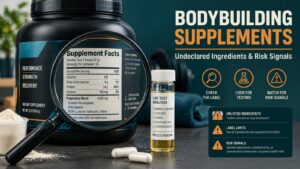
The U.S. Food and Drug Administration (FDA) uses the term to describe active drug ingredients or other substances that are present in a product but are not declared on the label. These have been found in some dietary supplements and in products marketed for weight loss, sexual enhancement, energy, pain relief, and even some honey-based products. Hidden ingredients can increase the risk of side effects, allergic reactions, and dangerous interactions with other medicines. (References 1–3.)
Immediate steps to take
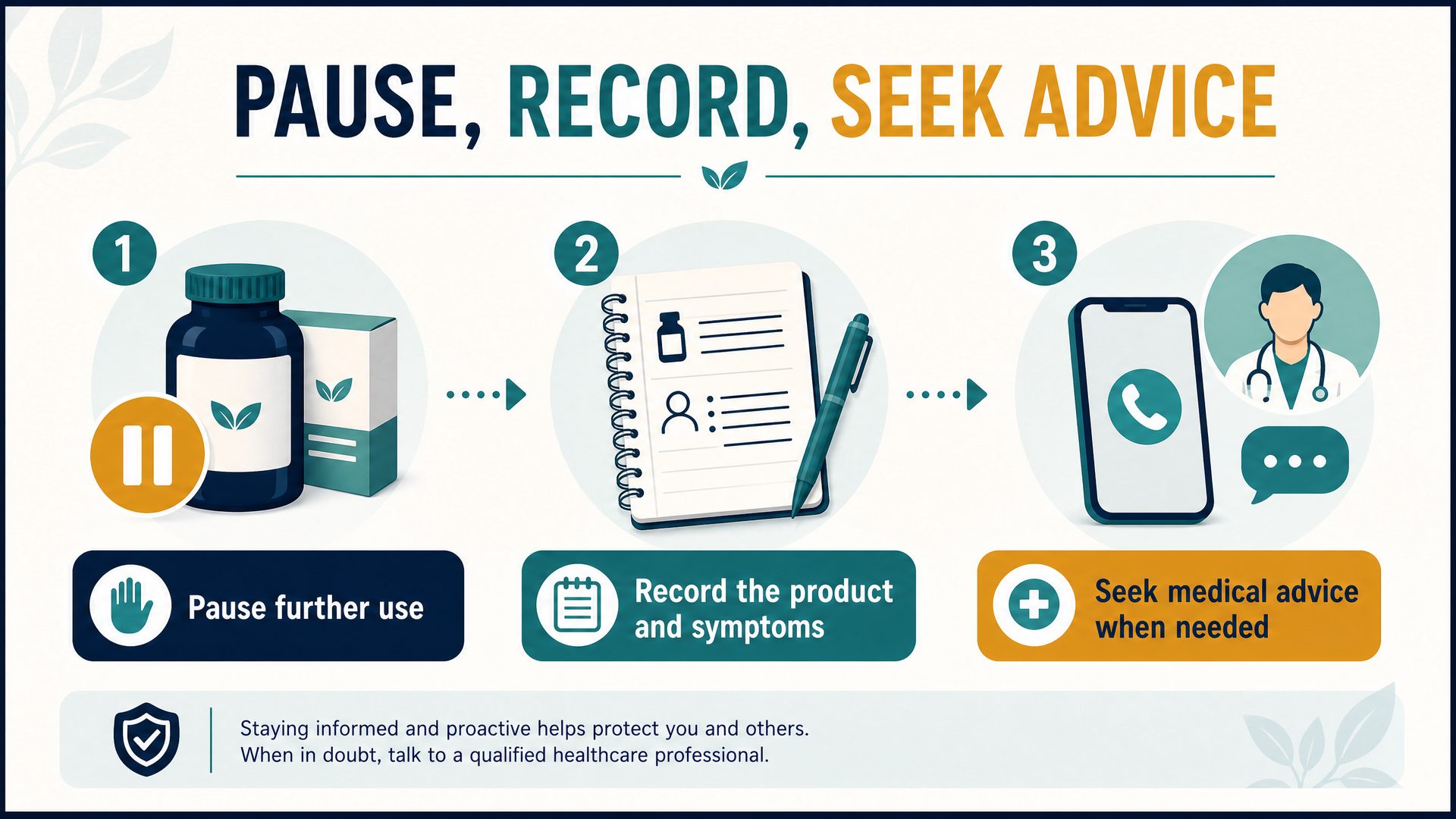
- Stop using the product. Do not take any more doses.
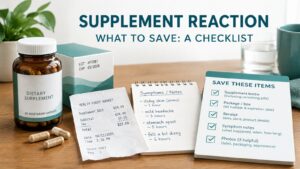
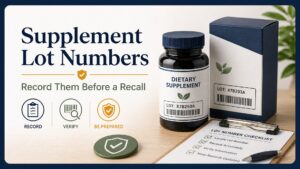
- Save the product and any packaging, including bottles, blister packs, labels, lot numbers, and receipts. These details help clinicians and regulators identify the product and track potentially hazardous batches.
- Note what you took and when. Write down dose, time(s) you took it, and any symptoms that started or changed after taking the product.
- Seek medical care if you feel unwell. For severe or life‑threatening symptoms (for example, trouble breathing, chest pain, fainting, seizures, severe allergic reaction with swelling or hives, severe bleeding, sudden extreme headache, sudden weakness or confusion), call 911 or your local emergency number, or go to the nearest emergency department.
- For non‑emergency but concerning symptoms (palpitations, persistent nausea or vomiting, fainting spells, sudden dizziness, severe headache, new or unexplained rash), contact your primary care clinician, urgent care, or other healthcare provider for advice. Bring the product and your notes to the visit.
What to tell your clinician
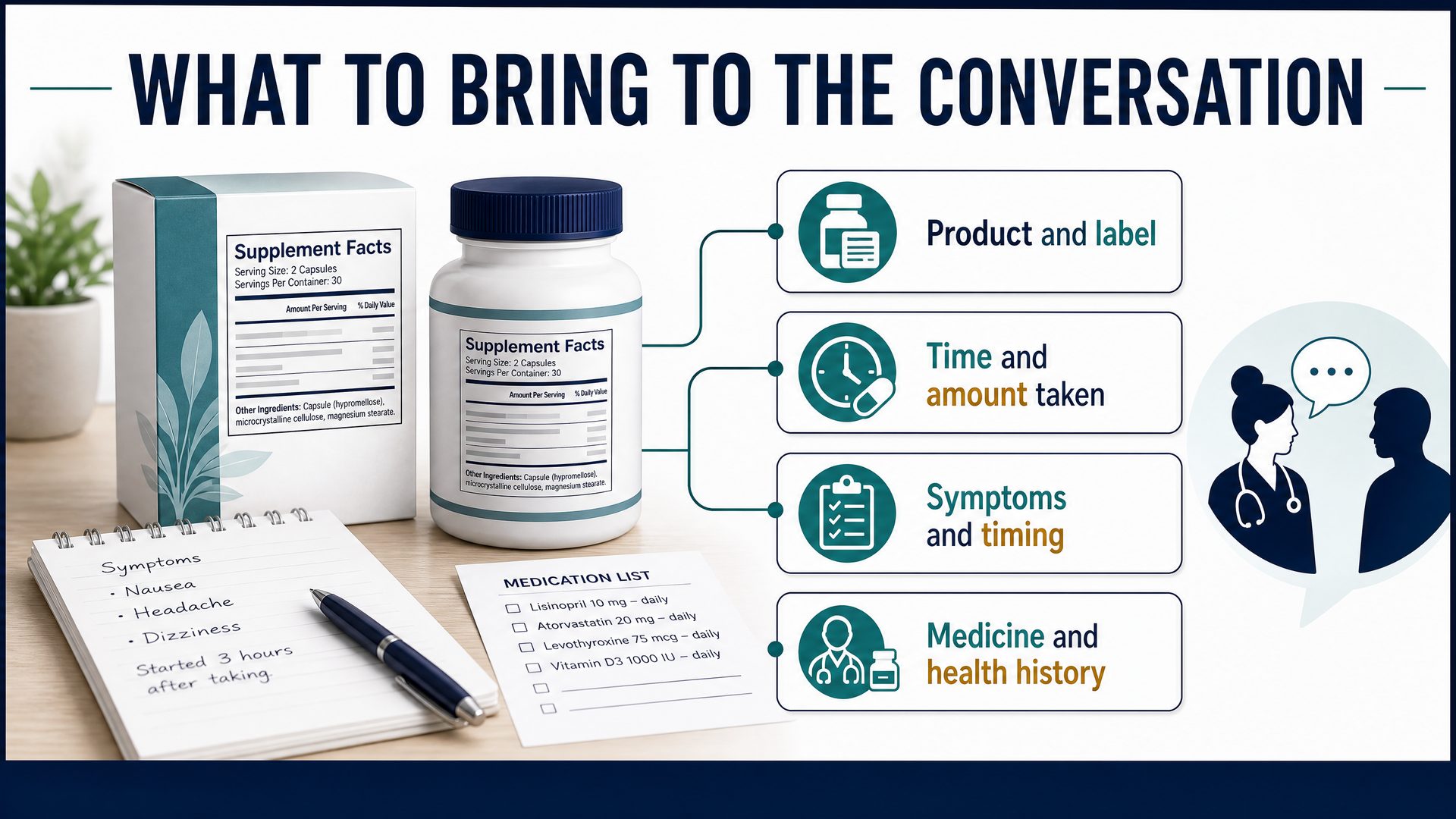
- The exact name of the product, manufacturer (if shown), lot/expiration numbers, and where you purchased it.
- The amount you took, the timing of doses, and the onset and nature of any symptoms.
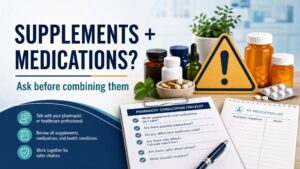
- A complete list of prescription medicines, over‑the‑counter drugs, and other supplements you are taking (including doses and timing). Hidden ingredients can interact with prescribed medicines.
If you have questions about interactions, see our related guidance at /supplements-medication-interactions-questions/.
Reporting the product and checking whether it’s known to regulators
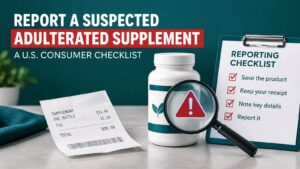
Immediate response checklist
- Pause further use while seeking guidance.
- Keep the package, label, and lot details.
- Record timing, symptoms, and other medicines.
- Use the appropriate reporting channel.
- Check the FDA’s Health Fraud Product Database and Medication Health Fraud notifications. The FDA maintains listings of products that have been found to contain undeclared active pharmaceutical ingredients or otherwise pose a health fraud risk. This can help you learn whether the product you used has been reported before. (Reference 3.)
- The FDA has posted specific notices about categories of products that are commonly adulterated, including sexual enhancement and energy products, and has identified certain honey‑based products as containing hidden active drug ingredients. Finding a listing does not necessarily mean every product with a similar name or marketing is unsafe; the FDA listings refer to specific products and lots. (References 2, 7, 8.)
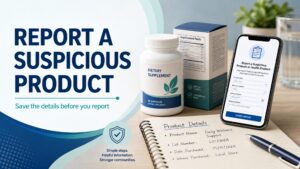
- To report a suspicious product or ask the FDA for guidance about a human drug concern, use the FDA contact options for consumers on the FDA website. This helps regulators identify trends and issue warnings or recalls when needed. (Reference 11.)
Table: Quick action checklist
| If you suspect a hidden ingredient | Do this now |
|---|---|
| You have no or mild symptoms | Stop product. Save product and packaging. Note dose/time. Check FDA health-fraud listings (Ref 3). Contact your clinician if concerned. |
| You have concerning symptoms (palpitations, severe nausea, fainting, persistent dizziness, new rash) | Contact your clinician or urgent care. Bring product and notes. Consider lab tests if recommended. |
| You have severe or life‑threatening symptoms (difficulty breathing, chest pain, collapse, seizures) | Call emergency services or go to the emergency department now. Take product/packaging if possible. |
| You want to inform regulators | Report the product to the FDA via the consumer contact options on the FDA website. (Ref 11.) |
Why hidden ingredients are risky
- Unlisted drug ingredients can cause unexpected side effects, allergic reactions, or dangerous interactions with prescription medicines and medical conditions.
- Dietary supplements do not require FDA pre‑market approval for safety or effectiveness. Manufacturers are responsible for ensuring product safety and labeling accuracy, but the FDA acts after unsafe products are reported or detected. (References 4–6.)
- Fraudulent or misleading claims (for example, promises of quick weight loss or “miracle” sexual performance) are common red flags. The Federal Trade Commission (FTC) enforces truth‑in‑advertising rules and provides guidance on health claims. (References 9–10.)
Practical precautions to reduce risk in the future
- Avoid products that promise drug‑like effects (quick cures, dramatic weight‑loss or sexual enhancement claims). These categories have frequently been linked to hidden ingredients. (References 7–8.)
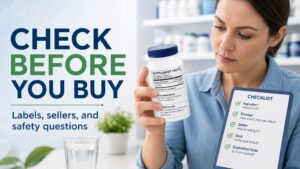
- Learn how to read supplement labels and the Supplement Facts panel. Our guide at /how-to-read-supplement-facts-label/ can help you understand what should be listed.
- Talk with your clinician or pharmacist before starting any new supplement, especially if you take prescription medicines, have chronic health conditions, are pregnant, or are breastfeeding. See /supplements-medication-interactions-questions/ for more.
- Consider products from manufacturers that provide transparent testing information from third‑party labs, although certification is not a guarantee; remain cautious and report concerns.
Limitations and what the FDA notices mean
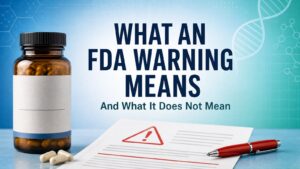
- When the FDA posts a notification or lists a product in its health‑fraud database, it is referring to specific products, batches, or lots. That does not automatically mean every product using similar names, ingredients, or branding is affected. Do not generalize a warning about one product or lot to all products with similar marketing or names.
- The absence of a product from FDA lists does not guarantee safety. The FDA can only act on products it has tested or that have been reported; many products are not routinely tested before sale. (References 3–6.)
When to contact a clinician — examples
Urgency decision aid
| Situation | Next step |
|---|---|
| Severe or rapidly worsening symptoms | Seek urgent medical care. |
| Concerning but non-emergency symptoms | Contact a healthcare professional promptly. |
| No symptoms but product concern | Keep records and ask a pharmacist or clinician. |
Seek prompt medical attention if you experience:
– New or worsening chest pain, shortness of breath, fainting, or lightheadedness.
– Fast or irregular heartbeat, severe palpitations, or sudden blood‑pressure changes.
– Severe allergic symptoms (trouble breathing, swelling of face/lips/tongue, hives).
– Seizures, sudden severe headache, sudden weakness or numbness, slurred speech — signs that could suggest stroke.
– Persistent vomiting, severe abdominal pain, prolonged bleeding, or other concerning changes that start after taking a product.
If in doubt about the severity of symptoms, contact a healthcare provider or emergency services.
Safety disclaimer
This article provides general information and does not replace individualized medical advice. If you are unwell or unsure about symptoms after taking any product, contact a healthcare professional promptly.
Further help and resources
- For general information about dietary supplements and how they are regulated, see the FDA’s consumer guidance on dietary supplements. (Reference 4–6.)
- Check the FDA’s health‑fraud product database and related notifications for specific products that have been found to contain hidden ingredients. (References 3, 7, 8.)
- To report a suspicious or harmful product to the FDA or to ask about a human drug concern, use the FDA consumer contact information provided by the agency. (Reference 11.)
Safety disclaimer
This article provides general information and is not medical advice. It is not a substitute for professional medical evaluation. If you have health concerns, consult a licensed clinician.
References
- https://www.fda.gov/drugs/medication-health-fraud/avoiding-products-contaminated-hidden-ingredients
- https://www.fda.gov/consumers/health-fraud-scams/tainted-honey-based-products-hidden-active-drug-ingredients
- https://www.fda.gov/consumers/health-fraud-scams/health-fraud-product-database
- https://www.fda.gov/food/dietary-supplements
- https://www.fda.gov/food/information-consumers-using-dietary-supplements/questions-and-answers-dietary-supplements
- https://www.fda.gov/food/dietary-supplements-guidance-documents-regulatory-information/dietary-supplement-labeling-guide
- https://www.fda.gov/drugs/medication-health-fraud-notifications/sexual-enhancement-and-energy-product-notifications
- https://www.fda.gov/drugs/medication-health-fraud/medication-health-fraud-notifications
- https://www.ftc.gov/news-events/topics/truth-advertising/health-claims
- https://www.ftc.gov/business-guidance/resources/health-products-compliance-guidance
- https://www.fda.gov/about-fda/cder-contact-information/ways-consumers-contact-fda-about-human-drugs
Last reviewed: August 2026
VitaEvidence Editorial Team