In this guide
- What this guide covers
- Key points at a glance
- Who may need zinc supplements
- Zinc food sources and practical diet tips
- Common supplement forms, doses, and label reading
- What the evidence says about benefits
- Safety, long‑term concerns, and interactions
- Practical comparison framework (how to weigh benefits vs risks)
- How to compare products later
- When to ask a clinician
- Bottom line
- Editorial note
- References
- Related VitaEvidence reading
Zinc supplements are commonly used to prevent or treat deficiency and are an ingredient in lozenges or tablets marketed for cold relief and immune support. This guide explains who may benefit from supplements, which foods supply zinc, how to compare products, and the main long‑term safety questions to discuss with a clinician.
What this guide covers
- Who is at risk for zinc deficiency and when clinicians may recommend supplements
- Common zinc food sources and practical diet tips to meet recommendations
- How zinc supplements differ by form and elemental zinc dose, plus label‑reading tips
- Evidence for common uses (deficiency, colds, athletic performance) and what is uncertain
- Long‑term safety concerns (excess zinc, interactions) and when to ask a clinician
Key points at a glance
- Zinc is an essential mineral with established RDAs: adults — men 11 mg/day, women 8 mg/day; UL for adults is 40 mg/day (total daily zinc from food, supplements, and fortified products) [1].
- Most people in the U.S. who eat a varied diet meet zinc needs; higher risk for deficiency includes strict vegetarians, people with certain gastrointestinal diseases, older adults, and those with restricted diets [1,4].
- Some evidence suggests that certain zinc lozenges started soon after cold symptoms begin may modestly shorten a cold, but results vary by formulation, elemental dose, and timing; intranasal zinc products have been linked to loss of smell and should not be used [1,2].
- Long-term high zinc intake can cause copper deficiency and other adverse effects; count zinc from all sources and discuss supplements with a clinician if pregnant, breastfeeding, taking medicines, or managing chronic disease [1,2].
Who may need zinc supplements
- Clinically confirmed zinc deficiency: diagnosed by a clinician after appropriate testing and evaluation; supplements may be prescribed to correct deficiency.
- Conditions that increase risk: malabsorption (e.g., short bowel, inflammatory bowel disease), strict vegetarian or vegan diets without zinc‑rich staples, chronic alcoholism, and some genetic conditions.
- Older adults and people with limited food variety may have lower zinc intake and can discuss targeted testing or a short course of supplementation with their clinician [1].
Zinc food sources and practical diet tips
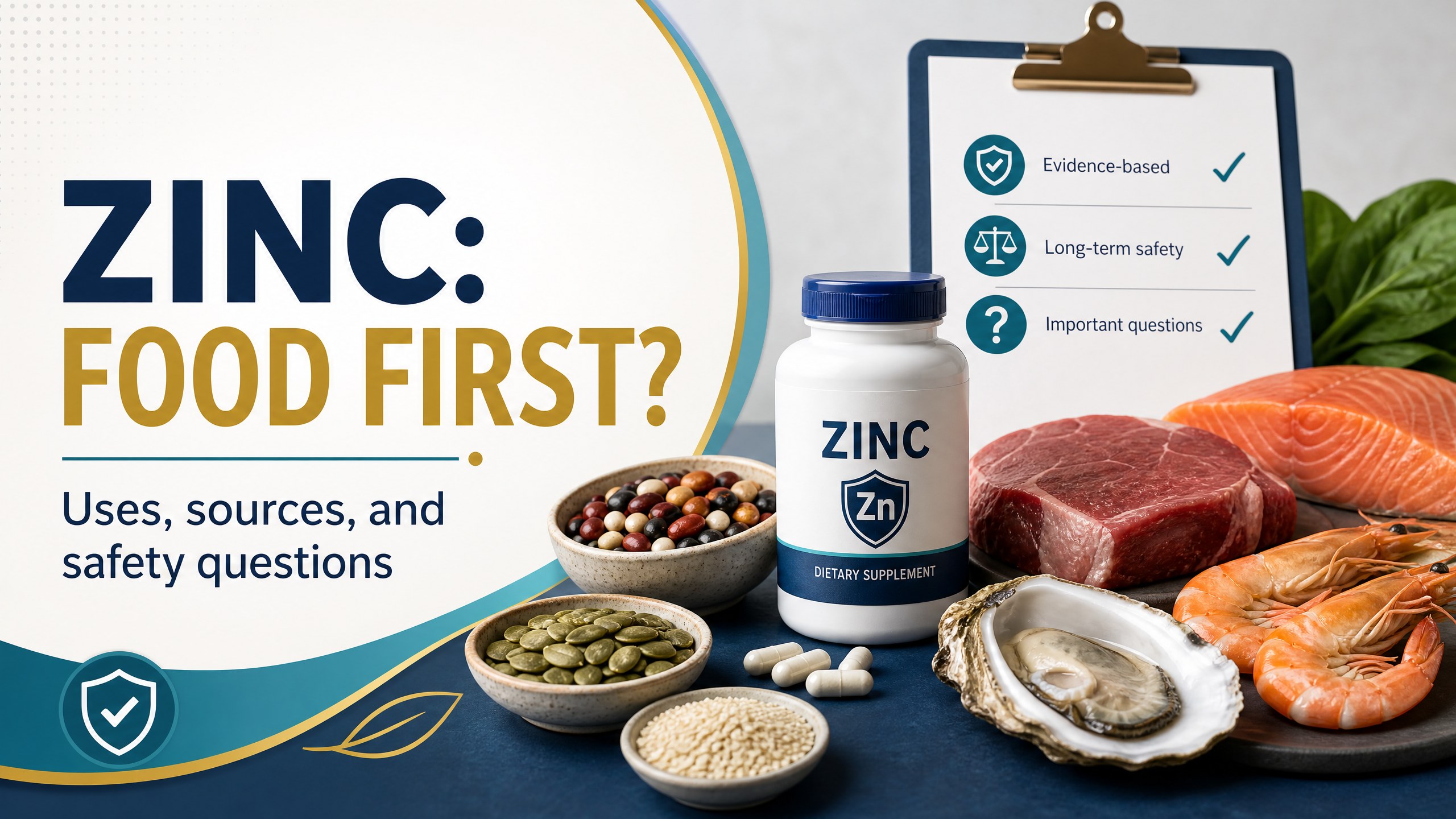
- Major food sources: oysters are among the richest sources; other good sources include red meat, poultry, dairy, beans, nuts, and fortified cereals. Whole grains and legumes contain zinc but also phytates, which can reduce absorption [1,4].
- Practical examples to increase dietary zinc without supplements:
- Choose seafood or lean red meat a few times per week if acceptable for your diet.
- Include dairy, nuts, or seeds as snacks.
- Use leavened or fermented grain preparations (e.g., sourdough, soaked/fermented beans) to reduce phytates and improve zinc absorption.
- Meeting recommendations: many people meet the RDA through food alone; consider a supplement only after assessing diet or if a clinician recommends it [1,4].
Common supplement forms, doses, and label reading
- Forms of zinc in supplements: zinc gluconate, sulfate, acetate, picolinate and others. These differ in elemental zinc content and tolerability; label indicates the amount of elemental zinc per serving (the key number).
- Elemental zinc vs. compound: a product labeled “50 mg zinc gluconate” may not contain 50 mg elemental zinc; read the Supplement Facts panel where elemental zinc should be specified.
- Typical dosing contexts:
- Preventive daily supplements for adults usually aim to provide amounts close to the RDA (8–11 mg/day), while many over‑the‑counter lozenges or cold products provide higher single doses for short periods—check total daily intake to avoid exceeding the UL (40 mg/day for adults) [1].
- Dos and don’ts for label reading:
- Check elemental zinc per serving and servings per container.
- Watch for added copper — some combination products include copper to reduce risk of zinc‑induced copper deficiency.
- Note product form (lozenge vs tablet vs capsule vs liquid) and route (avoid intranasal sprays/gel).
- Look for third‑party testing seals and an expiration or “best by” date.
What the evidence says about benefits
- Treating deficiency: strong evidence supports zinc supplementation to correct clinically diagnosed deficiency and restore normal function; dosing and duration are individualized by clinicians [1].
- Common cold: randomized trials show mixed results; some zinc lozenges (started within 24 hours of symptoms) have shortened common cold duration modestly in some studies, but effect size varies by formulation, dose, and trial quality. Benefits are not consistent enough to make a universal recommendation; discuss options with a clinician for recurrent or severe upper‑respiratory infections [1].
- Athletic performance and recovery: limited evidence suggests zinc is important for normal immune function in athletes, but routine high‑dose supplementation without documented deficiency is not clearly shown to improve performance; athletes should review needs with a sports clinician or dietitian [2,5].
Safety, long‑term concerns, and interactions
- Too much zinc (toxicity): chronic intake above the tolerable upper intake level (40 mg/day for adults) can cause nausea, copper deficiency (leading to anemia and neurologic problems), and impaired immune function—monitor total zinc from diet, supplements, and fortified foods [1].
- Intranasal zinc: intranasal zinc products have been associated with permanent loss of smell (anosmia) and are discouraged; use oral forms only and avoid intranasal zinc sprays or gels [1].
- Drug and nutrient interactions:
- Zinc can reduce absorption of certain antibiotics (tetracyclines and quinolones) if taken together—space doses as advised by a clinician or pharmacist.
- Long‑term high zinc can cause copper deficiency—clinicians sometimes recommend co‑supplementation with copper if high zinc doses are required.
- Zinc may interact with penicillamine and other mineral chelators; disclose all supplements to your clinician [1].
- Special populations: pregnancy and lactation have altered zinc needs (pregnant 11 mg/day, lactating 12 mg/day per NIH RDAs) and should be managed with clinician input. Children, people with kidney or liver disease, and those on multiple medications require individualized assessment before supplement use [1].
Practical comparison framework (how to weigh benefits vs risks)
When deciding whether to try a zinc supplement, consider:
– Why: confirmed deficiency, clinician recommendation, or short‑term cold symptom management?
– Dose needed: aim to meet, not greatly exceed, the RDA unless directed by a clinician; check elemental zinc on the label.
– Duration: short courses for colds vs months for treating deficiency — longer courses require monitoring for copper deficiency and side effects.
– Form and route: avoid intranasal products; choose oral forms with known elemental zinc amounts.
– Interactions and monitoring: list medications and health conditions to your clinician; consider blood tests if long‑term high doses are used.
How to compare products later
When you compare zinc supplements, look at:
– Elemental zinc per serving and servings per day to calculate total daily zinc.
– Zinc compound (gluconate, sulfate, acetate, picolinate) and whether elemental zinc is clearly stated.
– Formulation (tablet, capsule, lozenge) and route (avoid intranasal).
– Presence of copper or other minerals and whether the product provides a clinically balanced ratio if long‑term use is intended.
– Third‑party testing seals, clear expiration date, ingredient list (fillers, allergens), and price per mg of elemental zinc.
– Product claims (be wary of disease‑treatment claims—dietary supplements cannot legally claim to treat or eliminate disease).
[Affiliate product comparison block—add verified iHerb links after approval]
When to ask a clinician
Contact a clinician before starting zinc supplements if you are pregnant, breastfeeding, a child, have kidney or liver disease, take prescription medications (especially antibiotics), have an eating disorder, or suspect a nutrient deficiency. Seek medical advice for persistent or severe infections, or if you experience symptoms of excess zinc (nausea, copper‑deficiency signs such as fatigue and pallor, or neurologic symptoms).
Bottom line
Zinc is an essential mineral that most people can obtain from a varied diet; supplements are useful when deficiency is documented or when recommended by a clinician. Short‑term zinc lozenges may help some people with colds, but product formulation and dose matter, and intranasal zinc should be avoided because of smell loss. Long‑term high doses can cause harm—especially copper deficiency—so check total intake, read labels for elemental zinc, and consult a clinician before starting or continuing zinc supplements.
Editorial note
VitaEvidence Editorial Team. Last reviewed: August 2026. For general education, not personal medical advice. Read our Editorial Policy.
References
[1] NIH Office of Dietary Supplements — Zinc Fact Sheet for Consumers. https://ods.od.nih.gov/factsheets/Zinc-Consumer/
[2] NIH Office of Dietary Supplements — Dietary Supplements and Exercise & Athletic Performance (Health Professional Fact Sheet). https://ods.od.nih.gov/factsheets/ExerciseAndAthleticPerformance-HealthProfessional/
[3] U.S. Food and Drug Administration — Dietary Supplements. https://www.fda.gov/food/dietary-supplements
[4] USDA MyPlate — Food Groups and Dietary Guidance. https://www.myplate.gov/
[5] Frontiers in Nutrition 2025 — Systematic review of supplements and elite‑athlete performance. https://doi.org/10.3389/fnut.2025.1675654
Related guide: Zinc Lozenges: Timing, Label Dose, and Safety Questions