In this guide
- Why vitamin B6 matters
- How food intake differs from supplement doses
- Official intake benchmarks
- What “excess” means and why it matters
- Signs and symptoms of too much vitamin B6
- Who is more likely to be affected
- Label-reading: practical steps
- Interactions and contraindications
- When to seek care
- Bottom line
- References
Editor’s note: This is an informational draft based on official U.S. government guidance. It is not personalized medical advice. For individual care, talk with your clinician.
Why vitamin B6 matters
Vitamin B6 (pyridoxine and related forms) plays roles in metabolism, nervous system function, and making neurotransmitters. Most people meet their needs through a varied diet that includes poultry, fish, potatoes, bananas, and fortified foods. The National Institutes of Health Office of Dietary Supplements (ODS) provides recommended intake values you can use as a reference.
How food intake differs from supplement doses
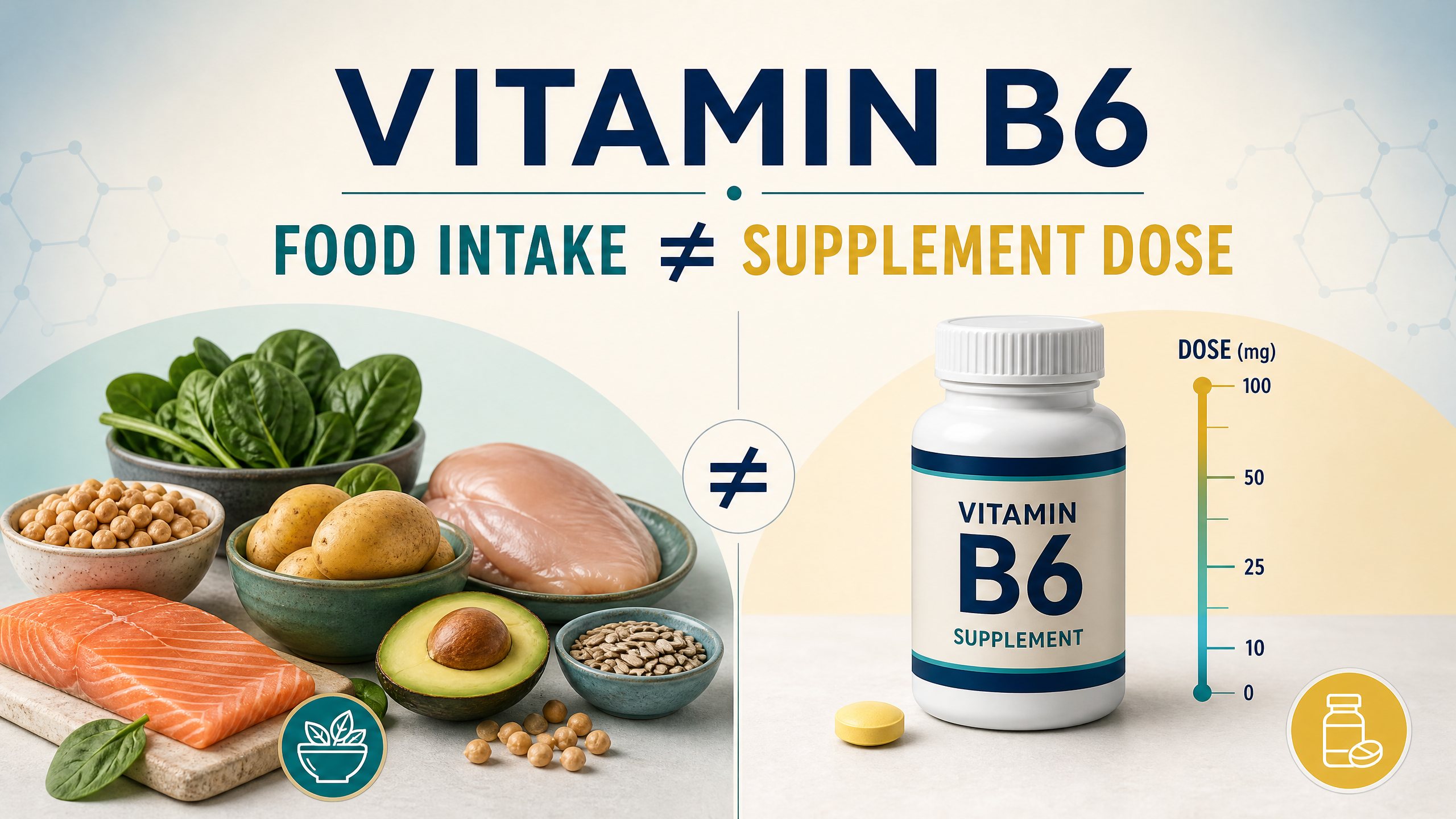
Vitamin B6 in food is present in small amounts per serving. Typical diets that follow guidance usually provide amounts close to the recommended intake levels for most adults. By contrast, dietary supplements often contain much larger amounts — sometimes tens or even hundreds of milligrams in a single pill or capsule. Those higher supplement doses are where excess intake usually occurs.
Official intake benchmarks
ODS lists recommended intakes (RDAs) and tolerable upper intake levels (ULs) for vitamin B6. For adults, RDAs are generally in the low milligram range, and the UL for adults is higher (see references). When supplement milligrams add up to well above the RDA — especially approaching or exceeding the UL — the risk of adverse effects rises.
What “excess” means and why it matters
Excess vitamin B6 from food alone is not known to cause harmful effects. Reported adverse effects are associated mainly with high-dose supplements taken chronically. The most consistent concern with very high supplemental intakes is nerve damage affecting sensation and balance (sensory neuropathy), which can cause numbness, tingling, and difficulty walking.
Signs and symptoms of too much vitamin B6
- Numbness or tingling in the hands or feet
- Burning, sharp, or aching sensations in limbs
- Unsteadiness or trouble walking
- In severe cases, loss of ability to coordinate movements
If symptoms are due to supplements, they may improve after stopping the supplement, but recovery can be slow and in some cases incomplete.
Who is more likely to be affected
People most at risk are those taking high-dose vitamin B6 supplements for long periods — especially doses far above recommended dietary amounts. Use of multiple supplements (combined products, individual B6 pills, and fortified items) can increase total daily intake without someone realizing it.
Label-reading: practical steps
- Check the serving size and the “Amount per serving” for vitamin B6 (listed in milligrams, mg).
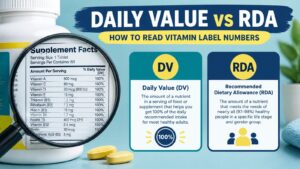
- Note the % Daily Value (%DV) if provided; %DV shows how a serving contributes to typical daily goals, but calculate the actual milligrams to compare with recommended intakes and the UL.
- Add up vitamin B6 from all sources: multivitamin(s), B-complex or B6-only supplements, and fortified foods.
- If total daily intake is substantially above the RDA or near the UL listed by ODS, consider lowering supplemental doses or discussing options with a clinician.
- Be cautious with products that promise “high-dose” B6 for energy, mood, or neuropathy without clear evidence; higher is not necessarily better and can be harmful.
Interactions and contraindications
Some medications and medical conditions can affect vitamin B6 status or require interaction-aware use of supplements. For example, clinicians sometimes give vitamin B6 with certain tuberculosis medicines to prevent nerve side effects. Because interactions can be complex, tell your healthcare provider and pharmacist about any supplements you take.
When to seek care
- See a clinician promptly if you develop new numbness, tingling, burning sensations, or worsening balance after starting a supplement.
- If symptoms are severe (falls, inability to walk, sudden loss of sensation), seek urgent medical attention.
- If you plan to take high-dose vitamin B6 for a medical reason, discuss risks, benefits, and monitoring with your clinician first.
Bottom line
Vitamin B6 from food is unlikely to cause harm, but supplements can provide doses far above dietary amounts. Adverse effects — most notably sensory nerve problems — have been associated with chronic intake of high-dose supplements. Read labels, add up all sources of B6, and check total intake against official recommendations. Talk with a clinician before taking high-dose B6, and seek care if you notice new numbness, tingling, or balance problems.