In this guide
- What niacin is and how it’s used
- Why niacin can cause flushing
- Formulations: nicotinic acid vs niacinamide and release forms
- Prescription niacin vs OTC supplements
- What the evidence and regulators say
- Safety concerns, interactions, and contraindications
- Label‑reading tips
- Practical use and cautions
- When to seek care
- Bottom line
- References
This article explains what niacin (vitamin B3) supplements are, why some cause the characteristic “niacin flush,” how different formulations and product types differ, and why broad treatment claims deserve caution. It is a general overview based on public information from the U.S. National Institutes of Health Office of Dietary Supplements (ODS) and the U.S. Food and Drug Administration (FDA). This is not personalized medical advice.
What niacin is and how it’s used
Niacin is a water‑soluble B vitamin (vitamin B3) important for energy metabolism and cell function. It occurs in foods and as an ingredient in many multivitamins and B‑complex products. In medicine, higher prescription doses of certain forms of niacin have been used to alter blood lipid levels. Over‑the‑counter (OTC) dietary supplements also provide niacin, but they are regulated differently from prescription drugs.
Why niacin can cause flushing
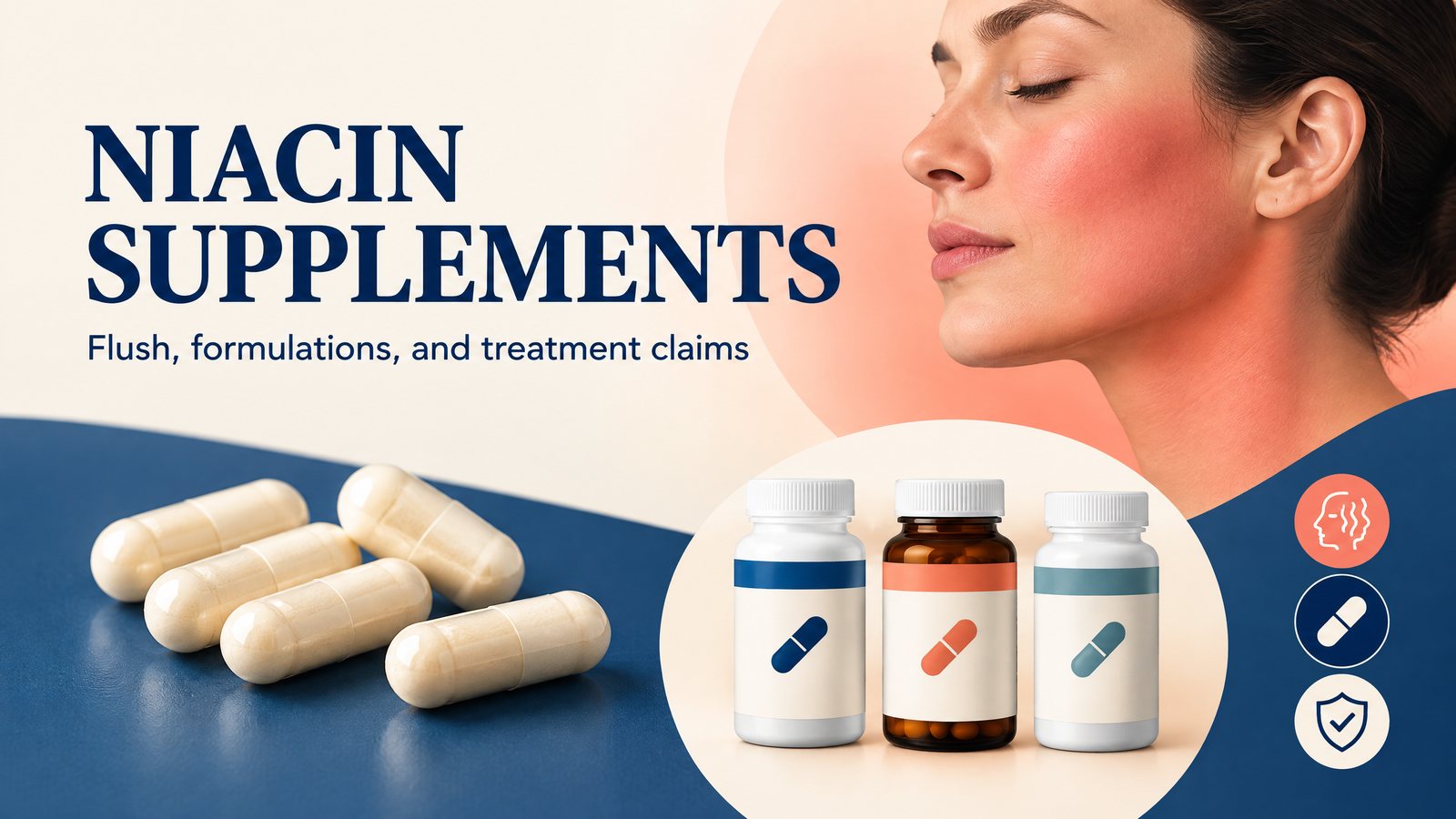
The “niacin flush” is a common, usually non‑life‑threatening reaction that causes warmth, redness, and tingling of the skin, particularly on the face and chest. It results from blood vessel dilation. The intensity and duration of flushing depend on the form of niacin, the dose, and individual sensitivity.
Formulations: nicotinic acid vs niacinamide and release forms
- Nicotinic acid (niacin): This is the form most associated with flushing and with the lipid‑modifying effects seen in clinical use. Both prescription and many OTC products list nicotinic acid or simply “niacin.”
- Niacinamide (nicotinamide): A chemically related form that does not typically cause flushing and does not have the same effects on blood lipids.
- Immediate‑release, sustained‑release, extended‑release: Release characteristics affect how quickly a dose enters the bloodstream and influence both flushing and potential liver effects. Prescription products are developed and dosed with these trade‑offs in mind; OTC supplements vary widely.
Prescription niacin vs OTC supplements
Prescription niacin products intended to treat abnormal cholesterol are regulated as drugs and have dosing recommendations and monitoring considerations. Dietary supplements containing niacin are regulated under FDA’s dietary supplement rules; they do not require FDA approval before marketing and cannot lawfully claim to treat disease. If a product is sold as a supplement but promoted as therapy, that is a regulatory concern and should be approached with caution.
What the evidence and regulators say
Public NIH/ODS information describes niacin’s nutritional role and summarizes clinical uses and safety issues. ODS explains that while niacin can affect lipids at higher doses, it also carries risks (including flushing and potential liver injury) and that clinical decisions about treating blood lipids should be made with a clinician. FDA guidance explains how dietary supplements are regulated and that manufacturers are responsible for label claims and safety.
Safety concerns, interactions, and contraindications
- Flushing: Common and uncomfortable for some people; intensity varies.
- Liver effects: High doses or some release forms have been associated with liver injury; monitoring is needed for prescription therapy.
- Blood sugar: Niacin can affect glucose metabolism in some people.
- Gout and other conditions: Niacin may worsen gout or peptic ulcer disease in susceptible people.
- Drug interactions: Tell your clinician if you take niacin with cholesterol medicines (such as statins) or other prescription drugs; combining agents can change benefits and risks and may require monitoring.
Label‑reading tips
- Look for the ingredient name: “niacin” or “nicotinic acid” versus “niacinamide” (different effects).
- Check the amount per serving and the serving size—supplements vary widely.
- Note any health claims. If a product claims to “treat” or “cure” disease, that is a red flag for an unapproved therapeutic claim.
- Look for third‑party quality verification (for example, USP, NSF) if you want independent assurance about manufacturing and label accuracy; such seals do not imply FDA approval of the product’s claims.
- Be aware that dietary supplements do not require FDA pre‑market approval; manufacturers are responsible for safety and truthful labeling.
Practical use and cautions
If you are considering niacin for cholesterol or other health purposes, discuss it with your clinician. Prescription therapy, when appropriate, comes with monitoring for liver tests and other safety checks. Avoid substituting OTC supplements for prescribed medication without medical guidance.
When to seek care
- Severe or prolonged flushing, fainting, trouble breathing, or swelling—seek emergency care.
- Yellowing of the skin or eyes, dark urine, severe abdominal pain, persistent nausea—seek prompt medical attention (possible liver injury).
- New or worsening joint pain, sudden changes in blood sugar control, or other concerning symptoms—contact your clinician.
Bottom line
Niacin is an essential vitamin and is available both as a nutrient in supplements and, at higher doses, as a prescription agent used in specific lipid disorders. OTC niacin products differ from prescription forms in formulation and regulation. The characteristic flushing and potential liver and metabolic effects mean that using high doses or combining niacin with other lipid medicines should be done under medical supervision. Read labels carefully, be skeptical of sweeping treatment claims on supplements, and talk with a clinician before starting niacin for cholesterol or other health conditions.